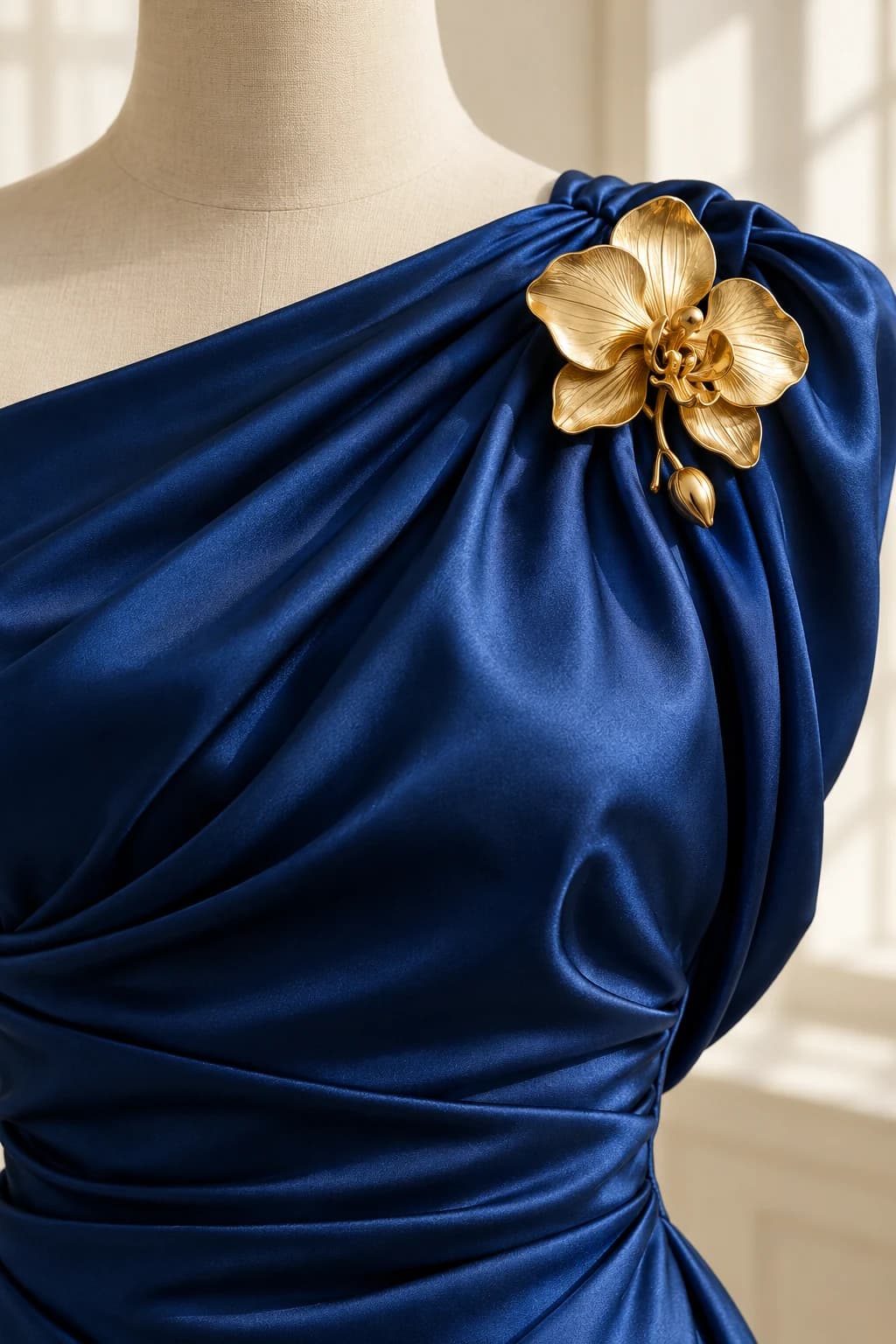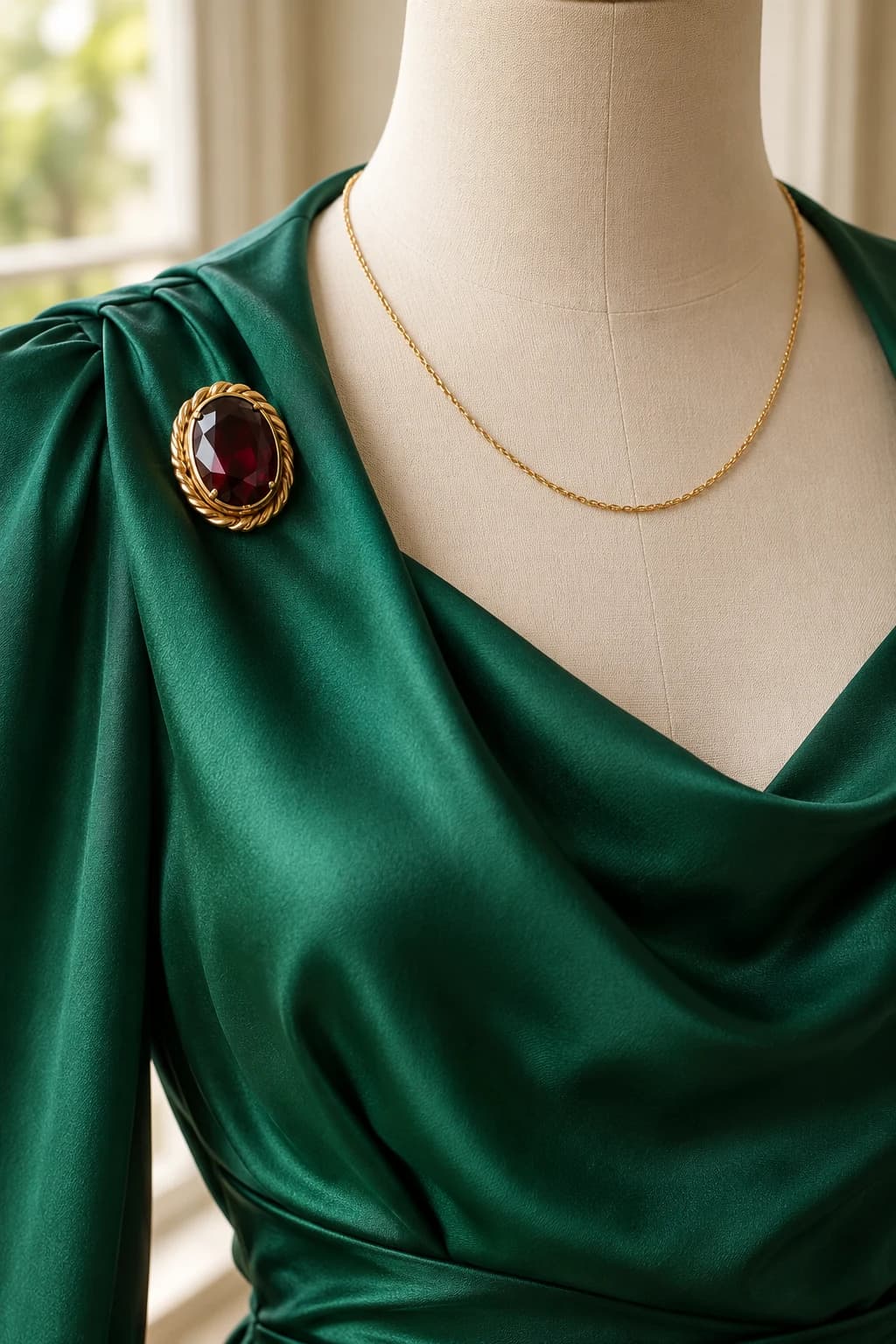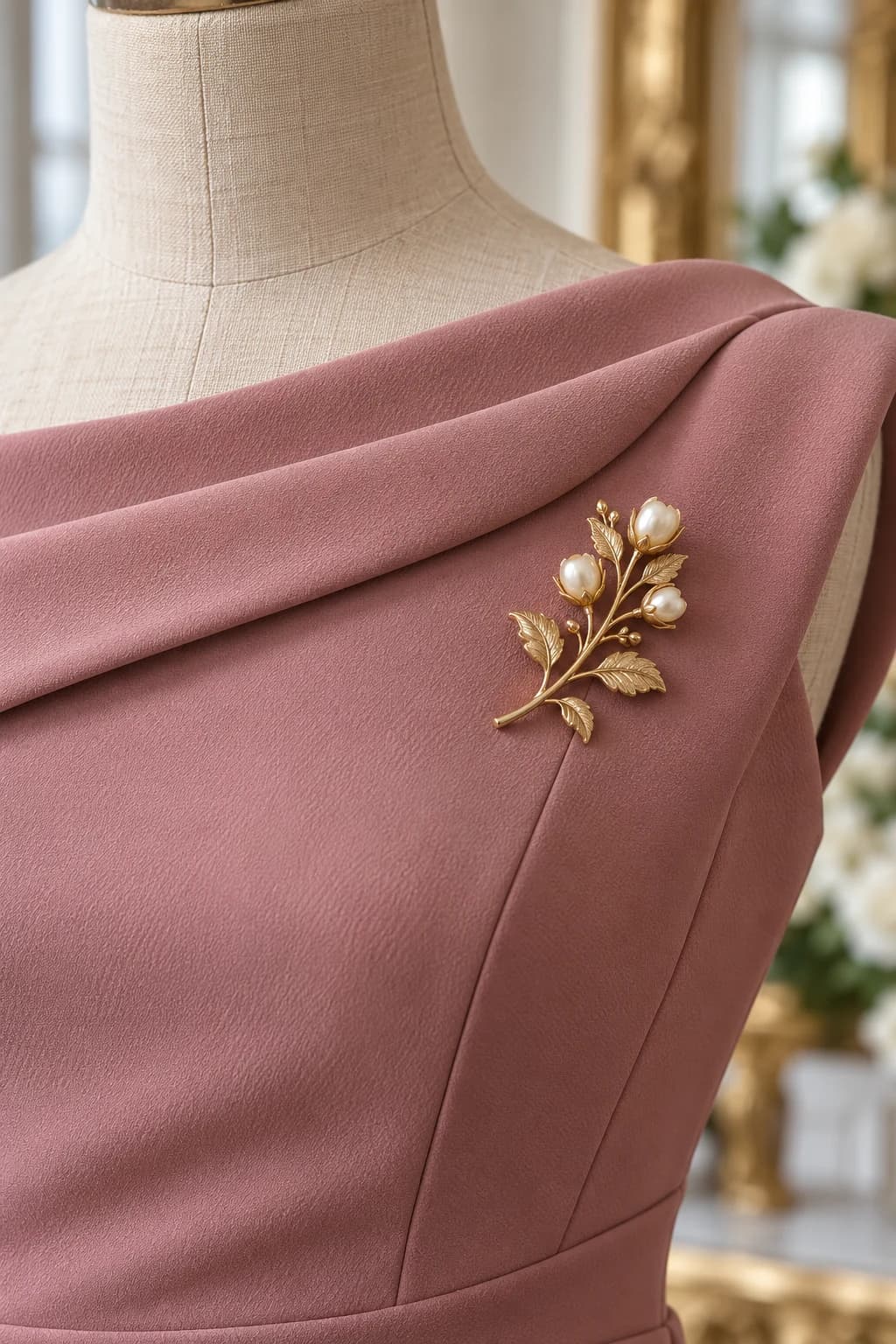
A brooch does not become old-fashioned simply because it has history. What usually dates the look is the whole combination: a traditional pin, placed in the most expected spot, with an outfit that is already formal from head to toe. Change one part of that equation and the same piece feels different. Put it on clean tailoring, a cotton shirt, dark denim or an uncomplicated dress. Leave it enough room to be noticed. The twelve ideas below begin with clothes people actually wear and treat the brooch as one deliberate detail, not a costume theme.
1. Put one brooch high on a relaxed blazer
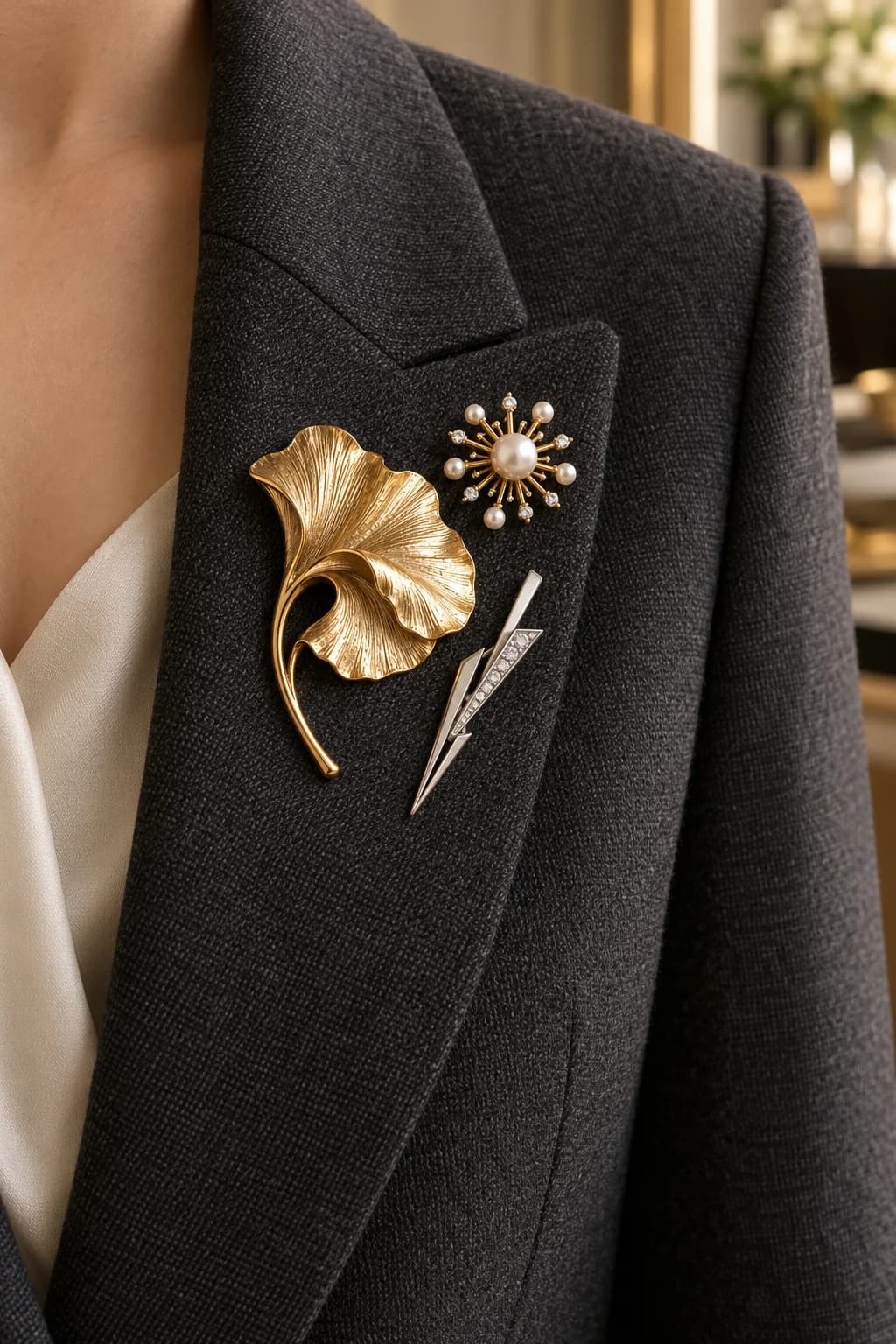
The simplest modern placement is high on the lapel, close enough to the face that it reads as part of the neckline. It works especially well on an oversized or softly tailored blazer worn with a plain T-shirt, fine knit or open-collar shirt. The contrast between an older decorative object and unfussy clothing is what keeps the result fresh.
Choose a brooch that fits inside the width of the lapel. If its edges spill across the seam or make the fabric fold, move it inward or choose a smaller piece. Wear the blazer while testing the position because the lapel changes angle once it settles on the shoulders.
2. Build a small cluster instead of wearing a matching set
Two or three small pins can look more spontaneous than one large formal brooch. Start with the strongest shape, then place the smaller pieces around it in a loose triangle. Leave visible fabric between them. A cluster needs breathing room or it becomes one indistinct patch of sparkle.
The pins do not need to match. One shared detail is enough: a repeated metal, pearl colour, geometric line or botanical theme. Arrange everything on the jacket before fastening it and take a quick photograph. The phone view makes awkward gaps and accidental straight lines easier to see.
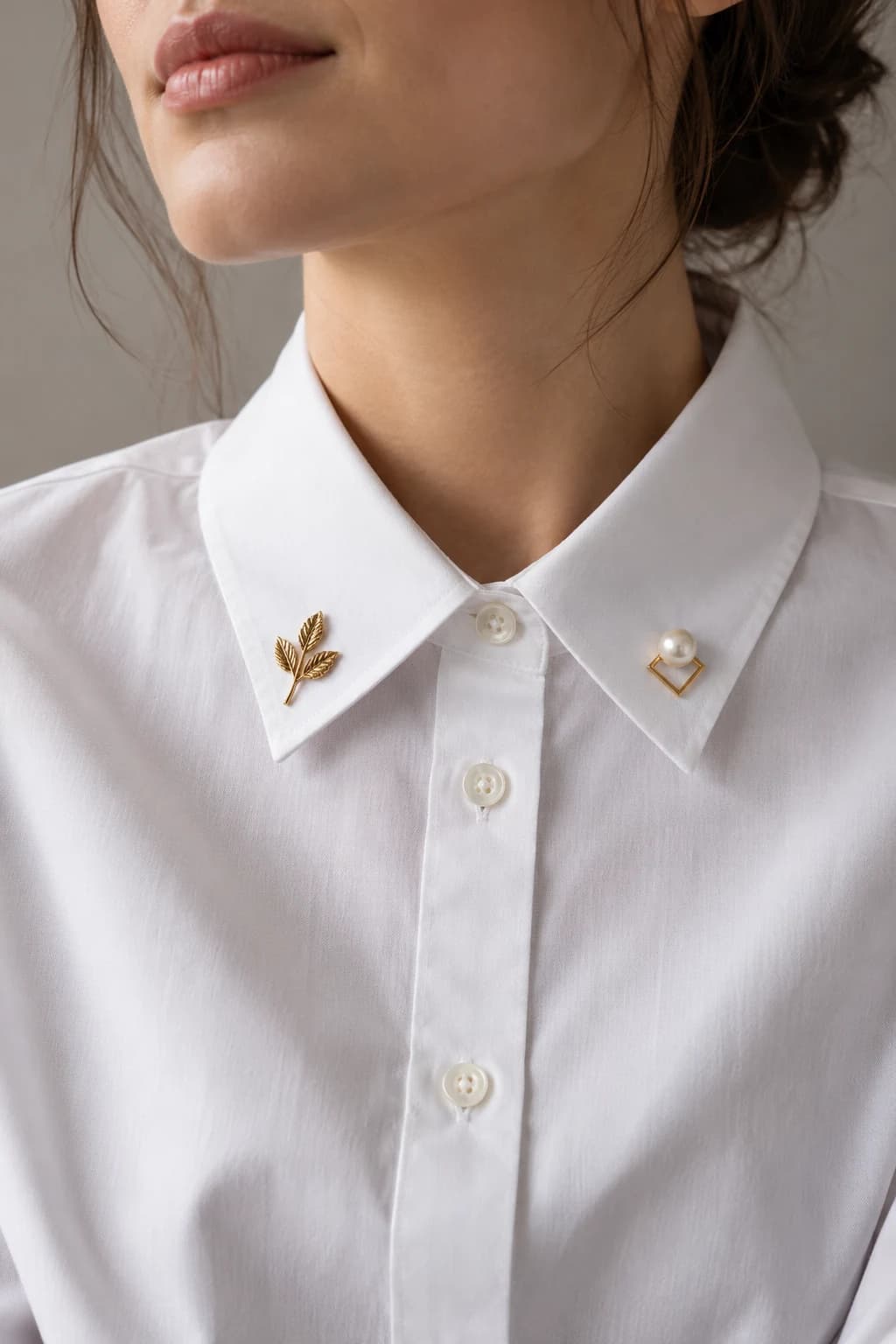
3. Use two small pins on the points of a white shirt collar
A fully buttoned white shirt gives tiny brooches a crisp, graphic setting. Place one on each collar point, using pieces that feel related without being identical. A leaf with a small pearl shape, or two different geometric pins in the same metal, looks considered without behaving like a formal matching set.
Keep the pins light. Collar fabric is supported by interfacing, but it is still a small area and can twist under heavy jewellery. Skip a necklace so the collar remains the clear focus, then add jeans or tailored trousers rather than another vintage-looking layer.
4. Pin one piece above the pocket of a denim jacket
Denim immediately takes the ceremony out of a decorative brooch. Try one sculptural, enamel or rhinestone piece above the chest pocket, leaving a little space between the pin and the seam. Dark indigo makes gold and clear stones stand out; faded denim works well with silver, enamel and coloured glass.
Do not push the pin through a thick pocket seam. Use the flat body of the jacket and check the lining before closing the catch. The best placement stays visible when the jacket is open and does not sit underneath a cross-body bag strap.
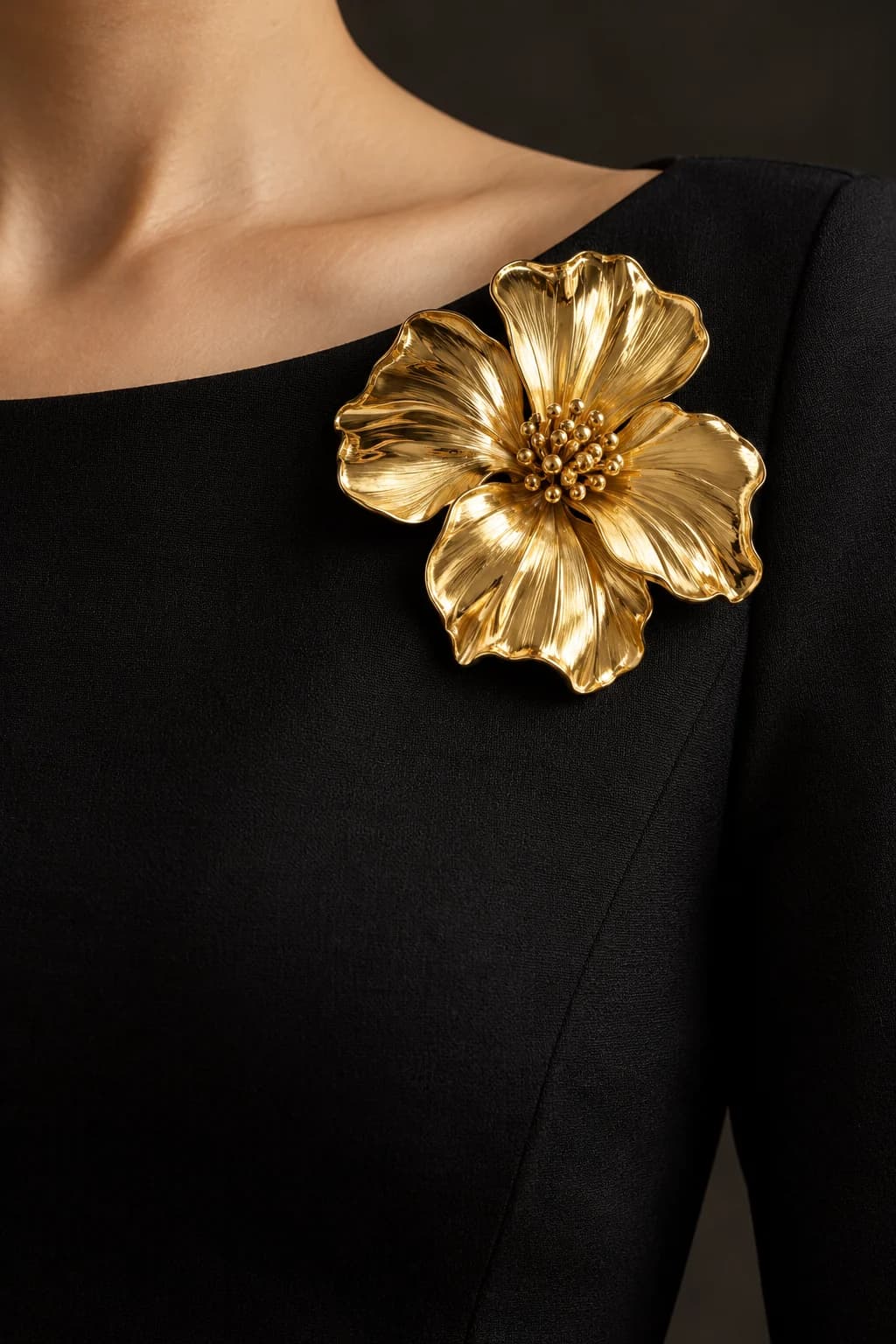
5. Follow the neckline of a simple black dress
A plain dress gives one brooch enough visual space to replace a necklace. On a boat neck or wide round neck, place it near one shoulder and follow the line of the neckline. On a V-neck, a smaller piece can sit to one side rather than directly at the point, where it may pull the fabric downward.
The dress should support the weight without puckering. A lined seam, facing or doubled neckline is safer than a single layer of fine jersey. Keep the earrings quiet and let the brooch be the one intentional flash of metal or colour.
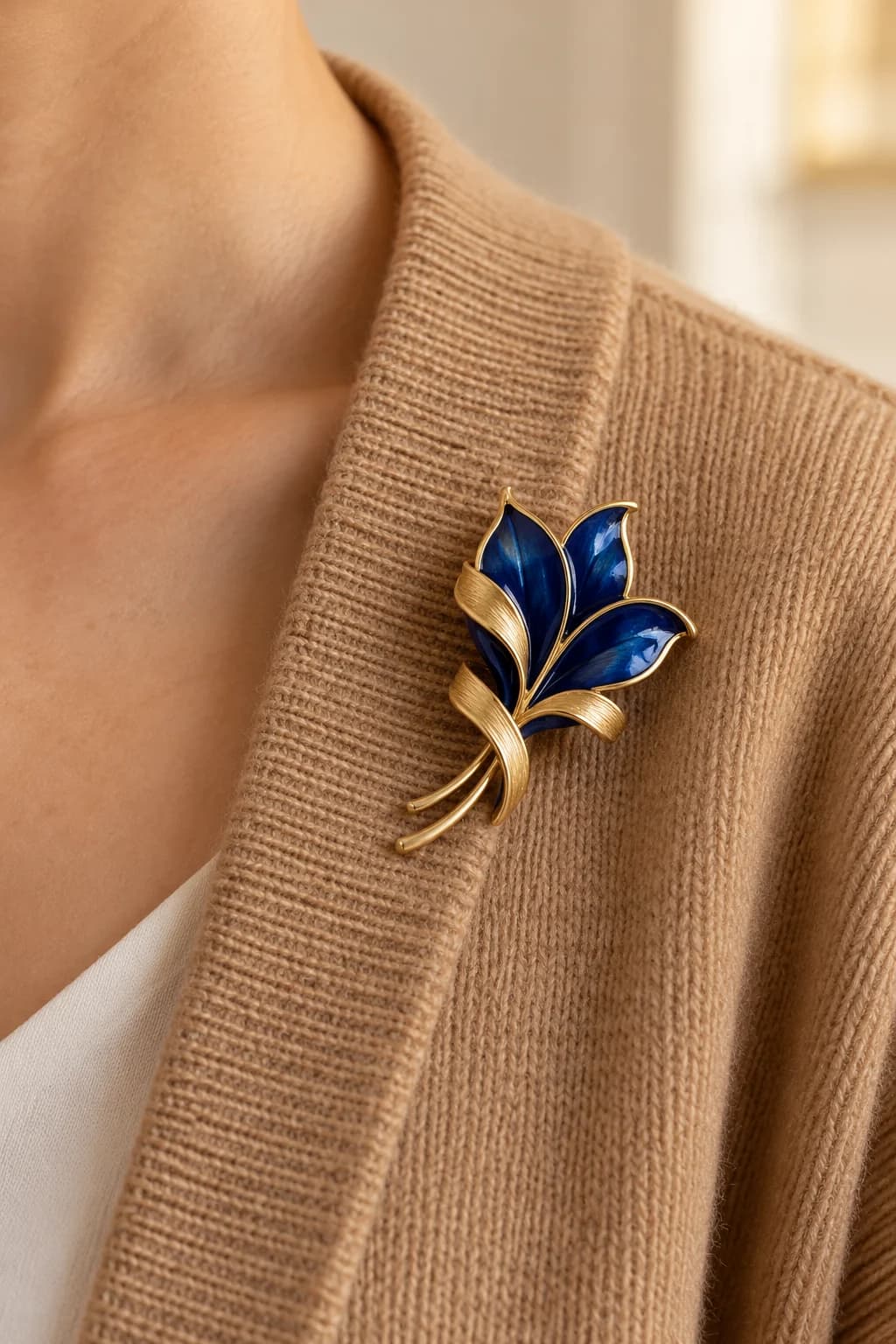
6. Fasten a cardigan at the shoulder rather than the centre
A compact brooch on the reinforced upper edge of a cardigan looks less expected than a pin placed directly between the buttons. Wear the cardigan over a plain crew-neck top, leave one or two buttons open and position the brooch near the shoulder where the knitted band can support it.
Fine knitwear needs restraint. If the brooch tilts, creates a deep fold or stretches the stitches, it is too heavy for that garment. Move it to a firmer edge or use it on the coat worn over the cardigan instead.
7. Add a pin where a sweater is draped over the shoulders
When a sweater is looped around the shoulders, a brooch can secure the two ends slightly off-centre. The placement is practical, but it also turns a familiar styling trick into something more personal. Use a rounded pin without dangling parts that could catch in the knit.
Fasten through enough fabric to hold the sweater without forcing a thick bundle onto a short pin stem. If the catch barely closes, do not rely on it. A loose brooch is not worth risking on a crowded train, restaurant chair or coat-check queue.
8. Place a larger brooch on a winter coat
A wool coat can carry more scale than a blouse or dress. Set a larger brooch high on the lapel or just above a pocket, where it will not disappear beneath a scarf. Dark navy, camel, chocolate and charcoal provide a calm background for enamel, metal and coloured stones.
Check what touches the pin as you move. A shoulder bag, seat belt or coat lapel folding over itself can knock a raised setting. Close the coat, sit down and put on your usual bag before deciding the position is secure.
9. Use a brooch to hold a scarf on structured clothing
A brooch can hold crossed scarf ends against a blazer or coat instead of piercing the scarf itself. This is useful for silk and fine wool because the sturdier garment takes the pin. Place the brooch where the scarf naturally lies rather than pulling the fabric into a tight decorative knot.
For a softer shoulder drape, choose a light pin and test the hidden layers first. The scarf should still fall naturally after it is secured. If the brooch creates tension lines, loosen the arrangement or move the fastening to the coat beneath it.
10. Give one small pin an unexpected place on a pocket
A small pin at the top corner of a shirt, blazer or coat pocket feels casual because it behaves almost like a personal badge. It is a good home for initials, tiny animals, enamel flowers and other pieces that get lost on a broad lapel.
Keep it away from the path of your hand and from anything you regularly put in the pocket. The jewellery should not scrape a phone or catch on keys. On a welt pocket, pin above the opening rather than through its thick edge.
11. Try one brooch on a sturdy fabric bag
A brooch on a canvas tote, felt bag or removable fabric strap can add personality without changing the clothes at all. Place it high enough that it will not rub against the body or strike a table when the bag is put down. This is also a useful way to wear a piece that feels too large near the face.
Avoid leather, coated fabric and valuable bags unless the maker confirms that pinholes are acceptable. Never attach an heirloom to an exposed outer pocket where it can be brushed off unnoticed.
12. Let a brooch replace one other accessory
The quickest way to make a brooch feel deliberate is to remove something else. With a strong pin near the face, skip the statement necklace. With a cluster on a blazer, choose small earrings. With a brooch on a scarf, keep the rest of the outfit quiet enough that the fastening can be understood at a glance.
Before leaving, run a finger over the catch, look for sagging and move your arms through a normal range. Then check the full outfit from several steps away. A modern brooch look is rarely about owning the newest piece. It is about placement, proportion and knowing when the outfit has enough.