A wool coat is one of the best places to wear a substantial brooch, but thick fabric is not automatically indestructible. A heavy pin can drag a soft lapel forward, a blunt stem can force apart close fibres, and a perfectly placed brooch can still be knocked loose by a scarf or shoulder bag. The safest method is simple: match the jewellery to the cloth, use a supported part of the coat and check the fastening from both sides before you leave.
1. Start with the upper lapel
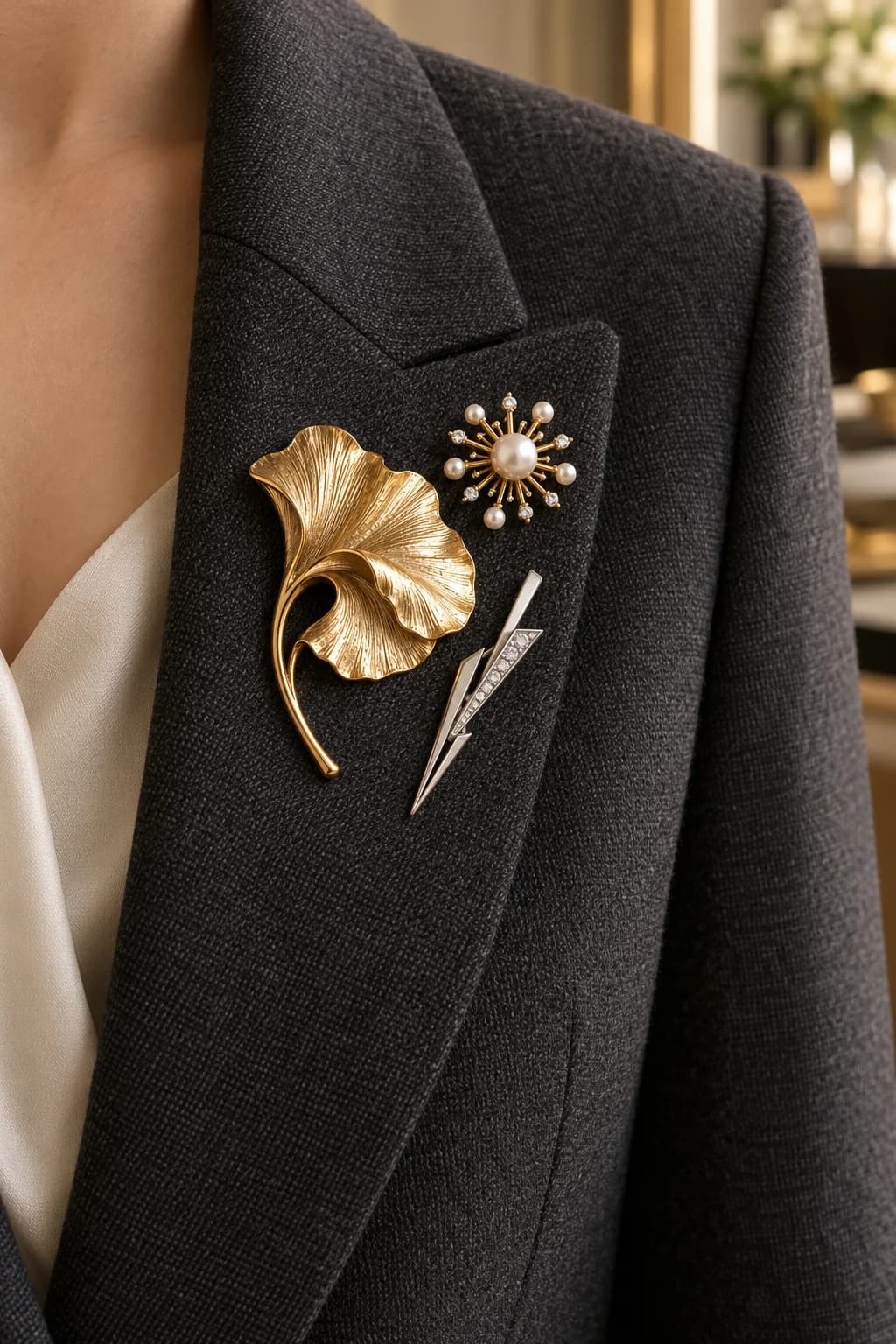
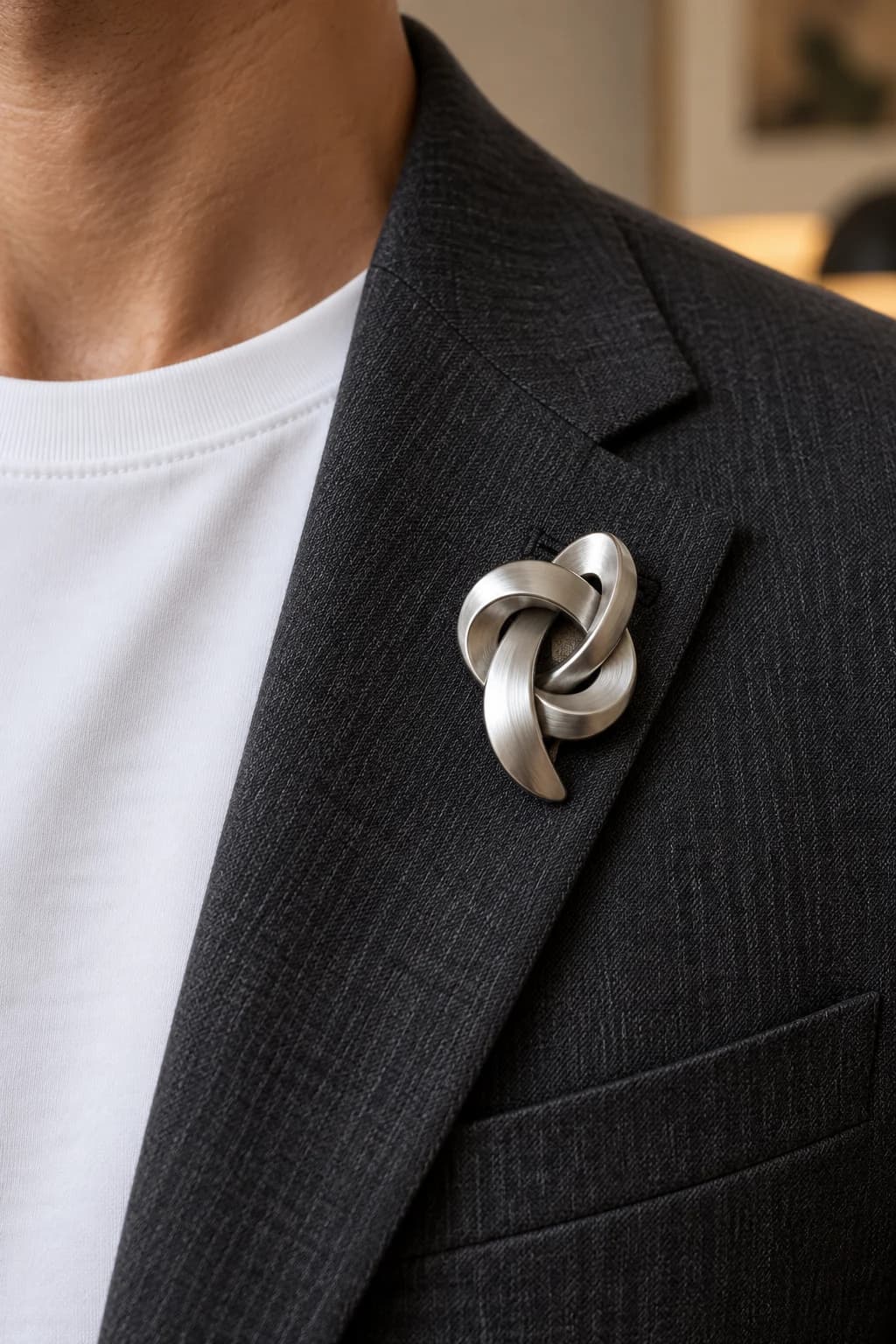
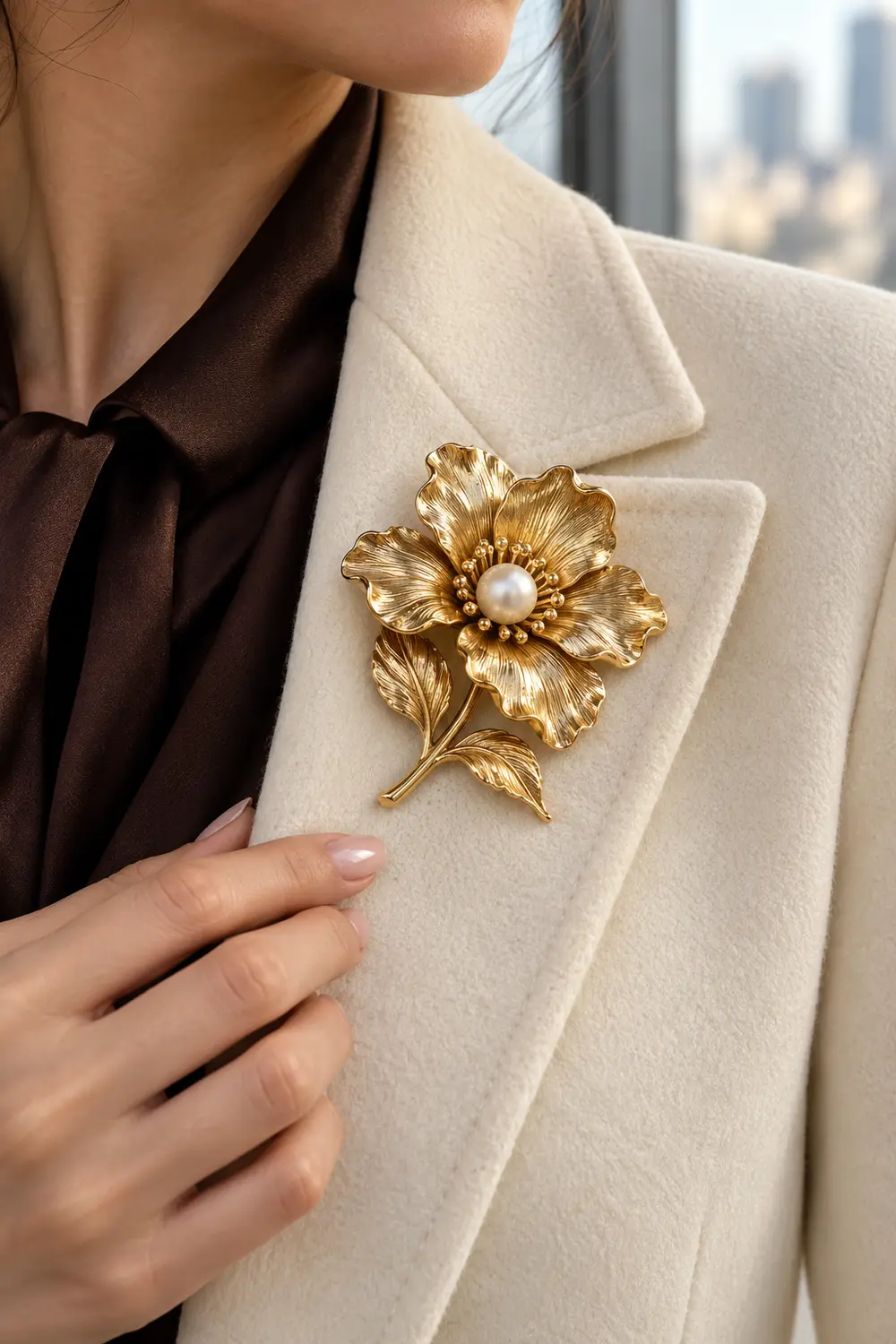
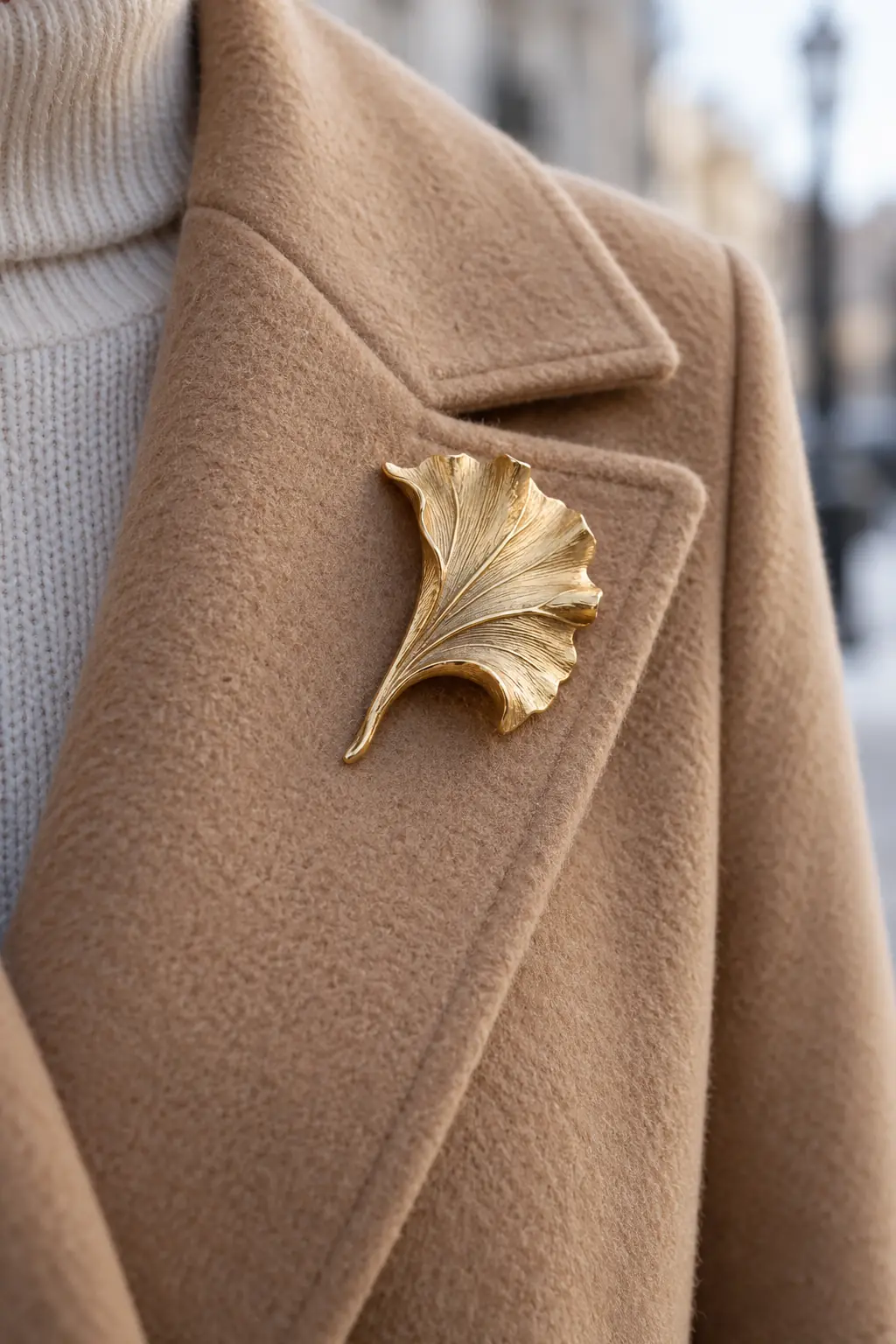
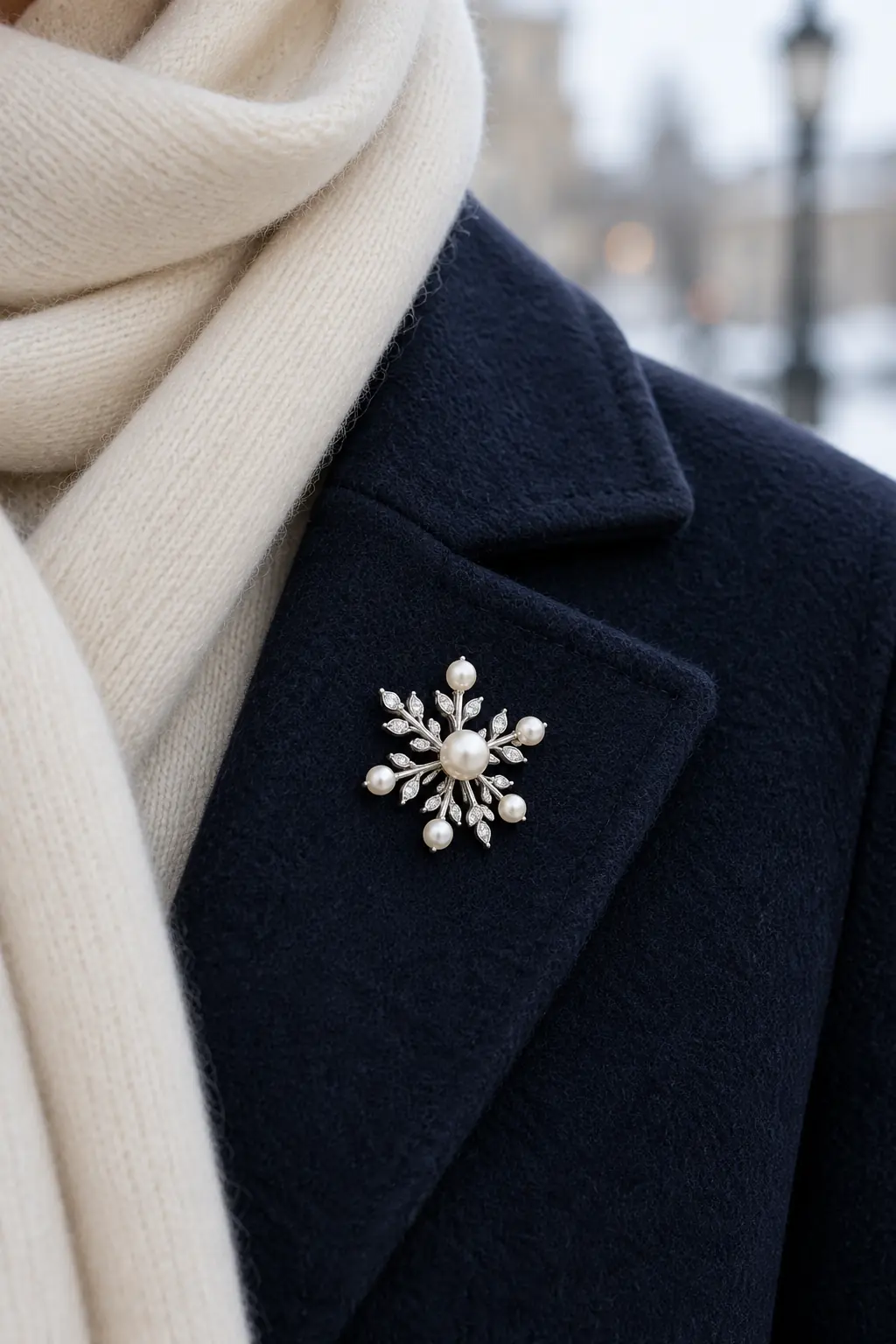
The upper half of a broad coat lapel is usually the easiest place to begin. It sits close enough to the face for the jewellery to be noticed, and the folded fabric gives the pin more support than a single layer over the chest. Leave a little room below the notch so the brooch does not catch when the collar turns up.
Put the coat on before deciding the position. A lapel that looks flat on a hanger may curve once it is on the body. Close the coat, open it again and move your shoulders. The brooch should remain upright without pulling the edge of the lapel out of shape.
2. Match the weight of the brooch to the coat
Dense melton, boiled wool and firmly woven tweed can usually carry more weight than cashmere, brushed wool or a loose bouclé. Size alone is not the test. A hollow metal brooch may be light, while a smaller stone-set piece can be surprisingly heavy.
Fasten the brooch and watch the fabric from the side. If the lapel tips forward, the cloth forms deep radiating folds or the pin slowly rotates, move it to a firmer area or choose a lighter piece. The coat should support the jewellery without looking as though it is doing so.
3. Test an inconspicuous spot before piercing unfamiliar fabric
Before using a pin on a new or valuable coat, look at the weave in strong light and read the care label. Fine, tightly finished fabric can show a hole more readily than a textured wool. Coated fabric, leather, suede and delicate vintage cloth need particular caution because a puncture may not close again.
If you decide to test the coat, use a hidden area of the same fabric rather than an obvious front panel. Stop if the pin needs force, catches fibres or leaves a mark that does not relax when the cloth is gently moved. An irreplaceable coat is not the place to experiment with an unusually thick or blunt pin stem.
4. Pass the pin through a doubled section, not a hard seam
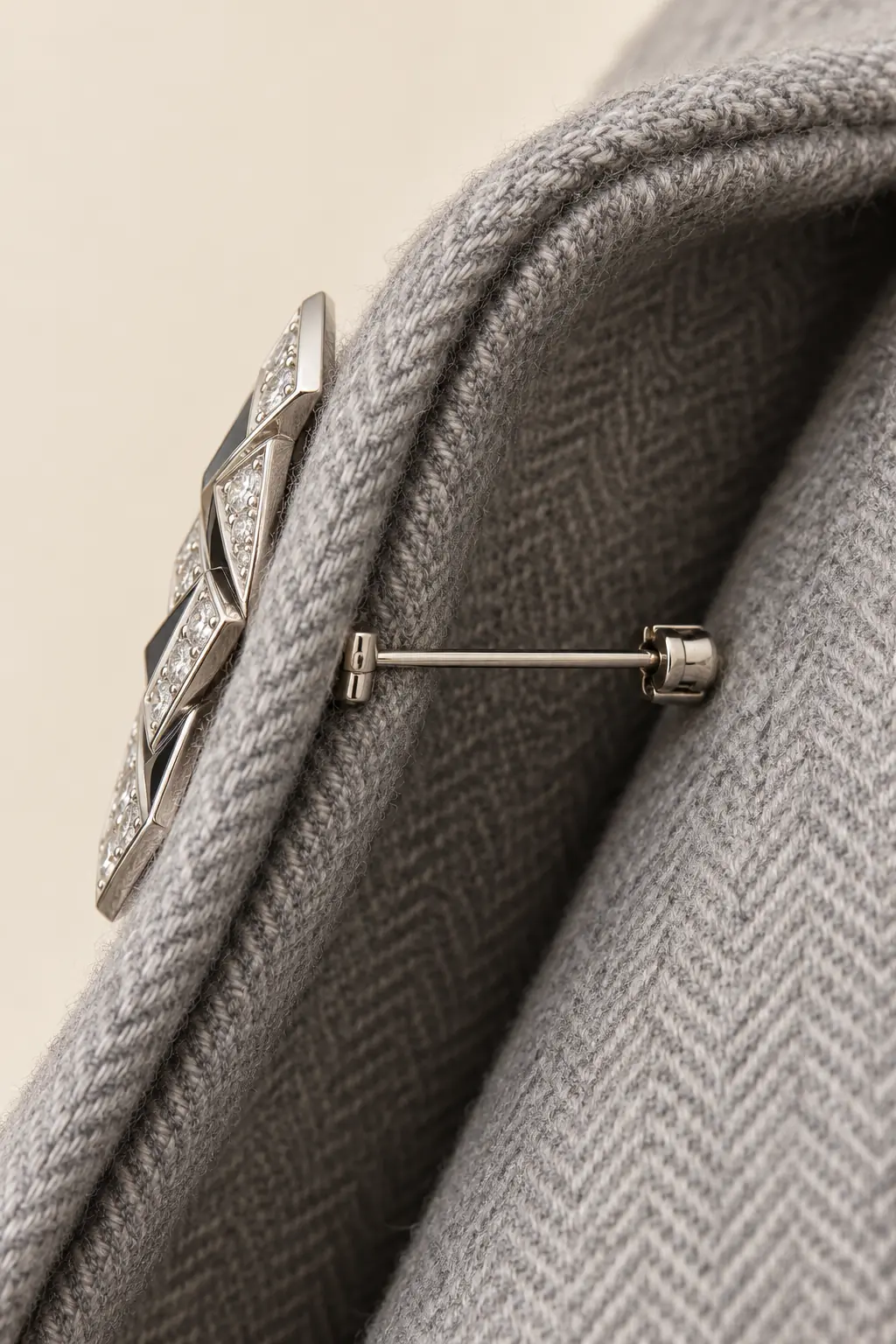
A supported lapel is useful because the pin can pass through more than one layer of cloth. That does not mean it should be pushed through the thick ridge of a seam. Seams, buttonholes and pocket welts contain extra fabric and stitching, and forcing a stem through them can distort both the coat and the brooch mechanism.
Look behind the lapel before fastening. Make sure the stem has not entered a pocket bag, caught the lining at an awkward angle or crossed a hidden button. The catch should close fully, with no sharp point exposed against the body.
5. Keep clear of pockets, buttons and folding edges
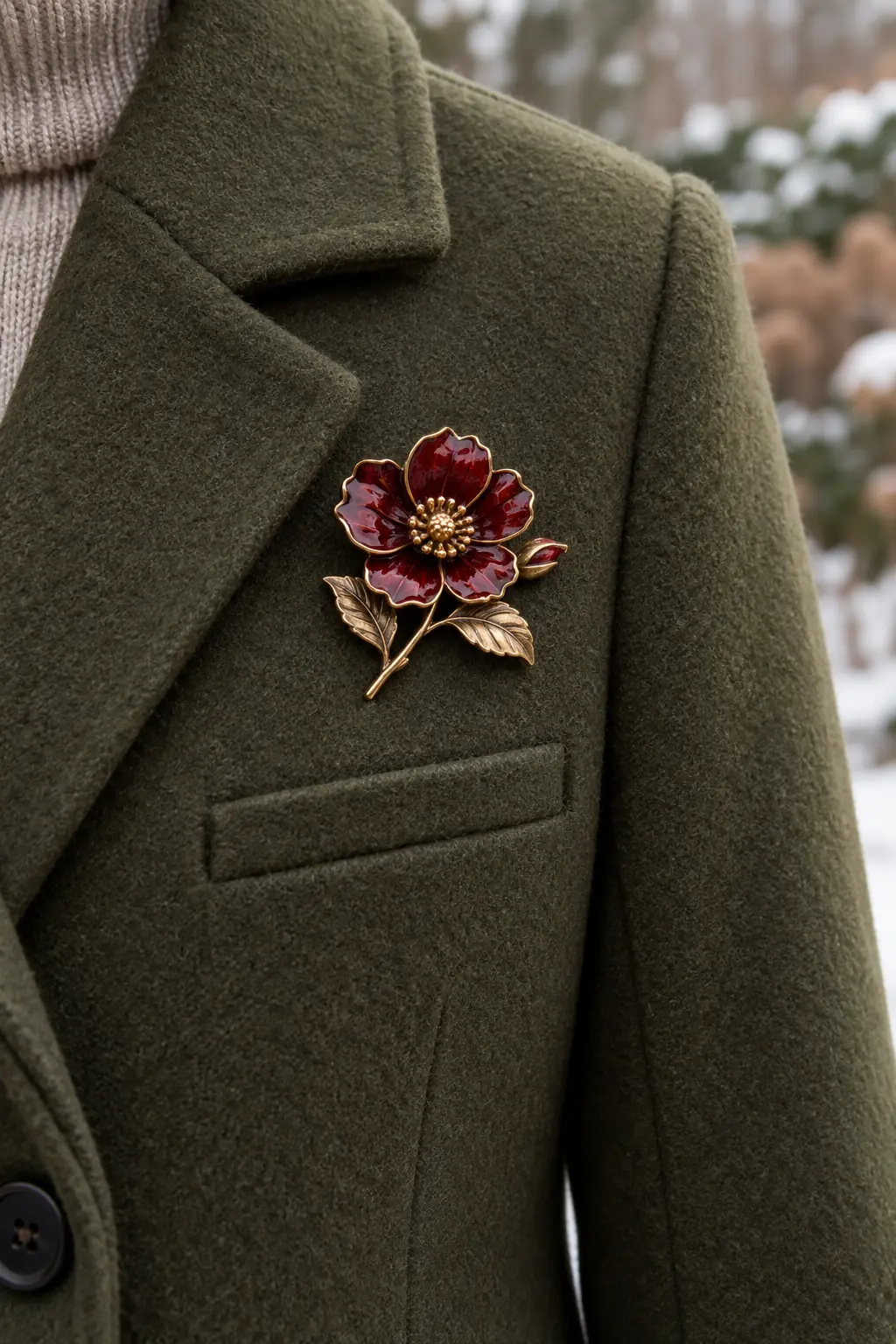
A brooch above a coat pocket can look relaxed and modern, provided it sits on the flat fabric rather than the welt. Leave enough space for your hand to enter the pocket without brushing the jewellery. Raised petals, points and dangling parts need more clearance than a smooth round pin.
Also check what happens when the coat is buttoned. A brooch close to the front edge may be pressed between overlapping panels or disappear into a fold. If the setting knocks against a button every time you walk, the position will be annoying even if it looks good in the mirror.
6. Plan around scarves, bags and seatbelts
Most lost brooches are not sitting still when something goes wrong. A scarf can lift a catch, a cross-body strap can grind against a raised setting and a seatbelt can press the pin into the coat. Put on the accessories you actually use before settling on the placement.
Move the brooch inward or upward until those items pass beside it rather than over it. If you wear a large scarf, pin the coat rather than the scarf whenever possible. The wool underneath is usually better able to support the weight, and the scarf can still be removed without disturbing the jewellery.
7. Be cautious with cashmere, leather and delicate vintage coats
A fine cashmere coat can be dense yet still show pressure and pin marks. Leather, suede and coated rainwear can retain a permanent hole. Old fabric may also be weaker than it appears, especially near faded shoulders, worn folds and previous repairs.
For these coats, use a very light brooch only after testing, choose a purpose-made non-piercing converter that is suitable for the garment, or wear the brooch on a sturdier scarf, removable collar or bag instead. Follow the converter maker's instructions. Strong magnets are not appropriate for everyone or every situation, so treat them as a separate accessory rather than an automatic solution.
8. Inspect an older clasp before trusting it outdoors
A vintage brooch may have a sharp pin and a firm-looking catch but still open under movement. Check the hinge for sideways play, make sure the stem is straight and confirm that the catch closes completely. Do this over a table, not while holding the piece above a hard floor.
GIA recommends careful handling for vintage jewellery and periodic professional checks. If the brooch is valuable, sentimental or difficult to replace, ask a qualified jeweller to assess the fastening. A professionally fitted safety chain can add security, but it should not be improvised in a way that scratches the brooch or tears the coat.
9. Remove the brooch before taking off or hanging the coat
It is tempting to leave a favourite pin attached for the whole season. Taking the coat off can pull the brooch against a chair, car door or crowded coat rack, while the weight can leave the lapel creased during storage. Remove it when you return home and close the catch before placing it in its box.
Give the fabric a moment to recover, then smooth the area lightly with clean fingers. Do not tug at individual fibres. Hang a woven wool coat on a broad shaped or padded hanger so the shoulders and lapels keep their form.
10. Never send the coat for cleaning with the brooch attached
Remove brooches, belts and other detachable accessories before washing, steaming or dry cleaning a coat. Woolmark advises following the garment's care label and removing jewellery and accessories before care or storage. The cleaning method that suits the coat may be completely wrong for pearls, enamel, glue-set stones or an old metal finish.
Store the brooch separately so its pin cannot snag the coat or another garment. If the coat needs professional cleaning, point out any fragile trim or old repairs when you hand it over. Good coat care and good jewellery care meet at one simple rule: separate the two before either is cleaned.