A brooch on a dress works best when it has a clear relationship with the neckline. It can follow a V, mark the corner of a square neck or draw the eye towards one shoulder. The fabric has to be part of the decision too. A lined crepe dress can carry a piece that would drag on silk satin or fine jersey. Start with the shape of the dress, then choose the lightest brooch that gives the placement enough presence.
1. Near one shoulder on a boat-neck dress
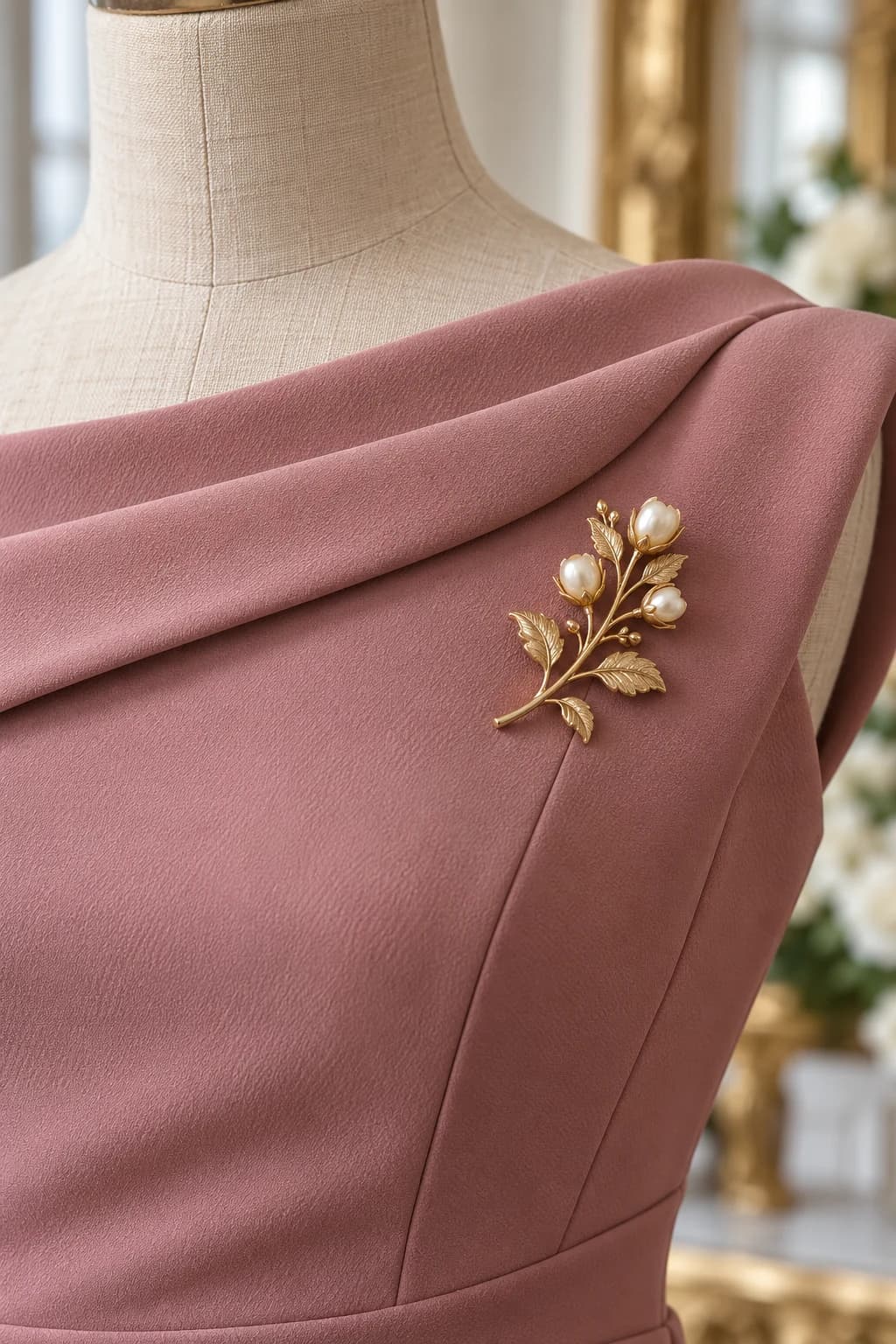
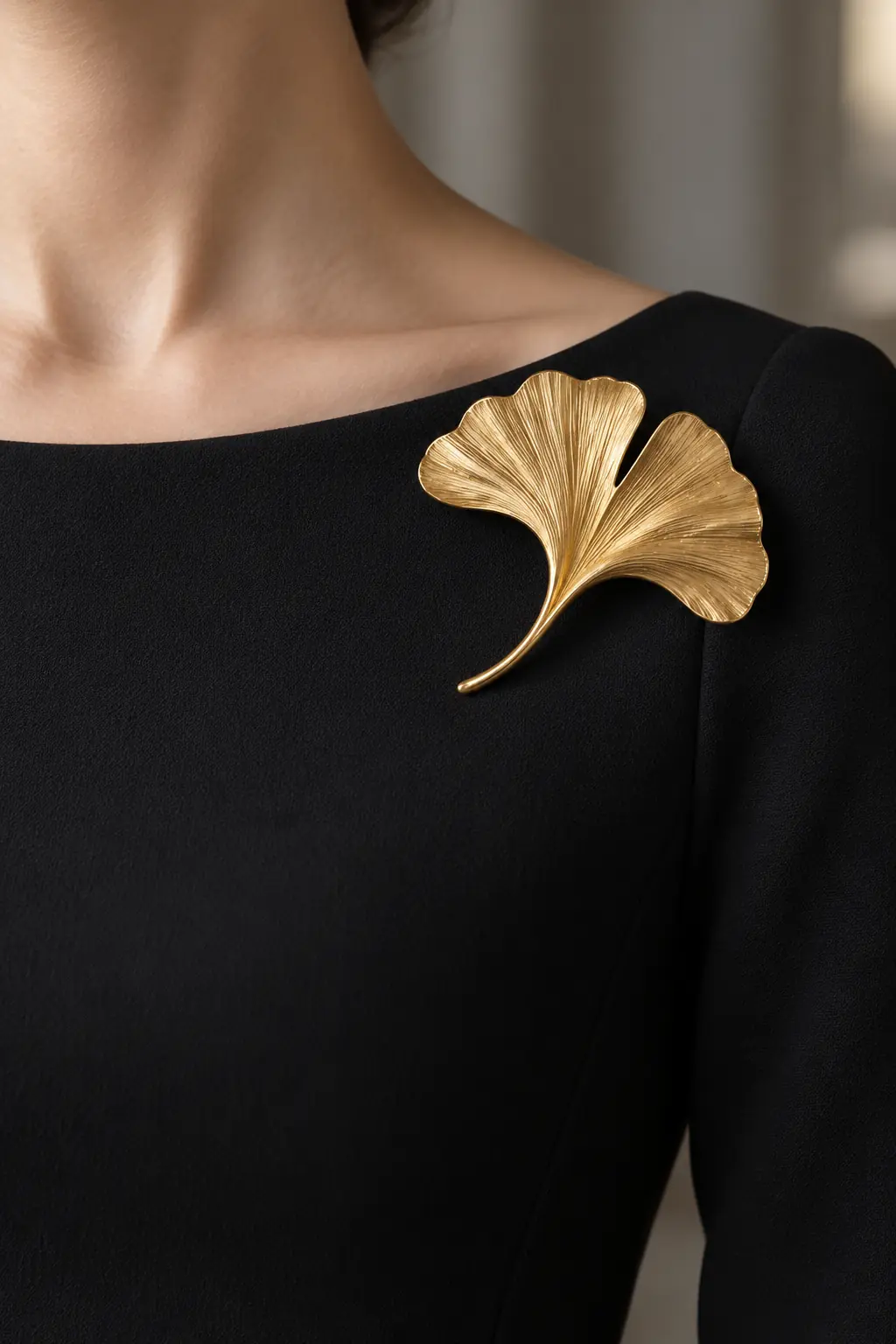
A boat neckline already runs towards the shoulders, so a brooch placed near one end feels connected to the shape of the dress. Set it a little below the neckline rather than balancing it directly on the edge. The small gap keeps the jewellery readable and gives the fastening enough fabric.
This placement is especially effective on a plain black, navy or cream dress because the brooch can replace a necklace. A curved leaf, flower, fan or starburst follows the shoulder naturally. Turn the piece until its strongest line echoes the neckline instead of pointing away from it.
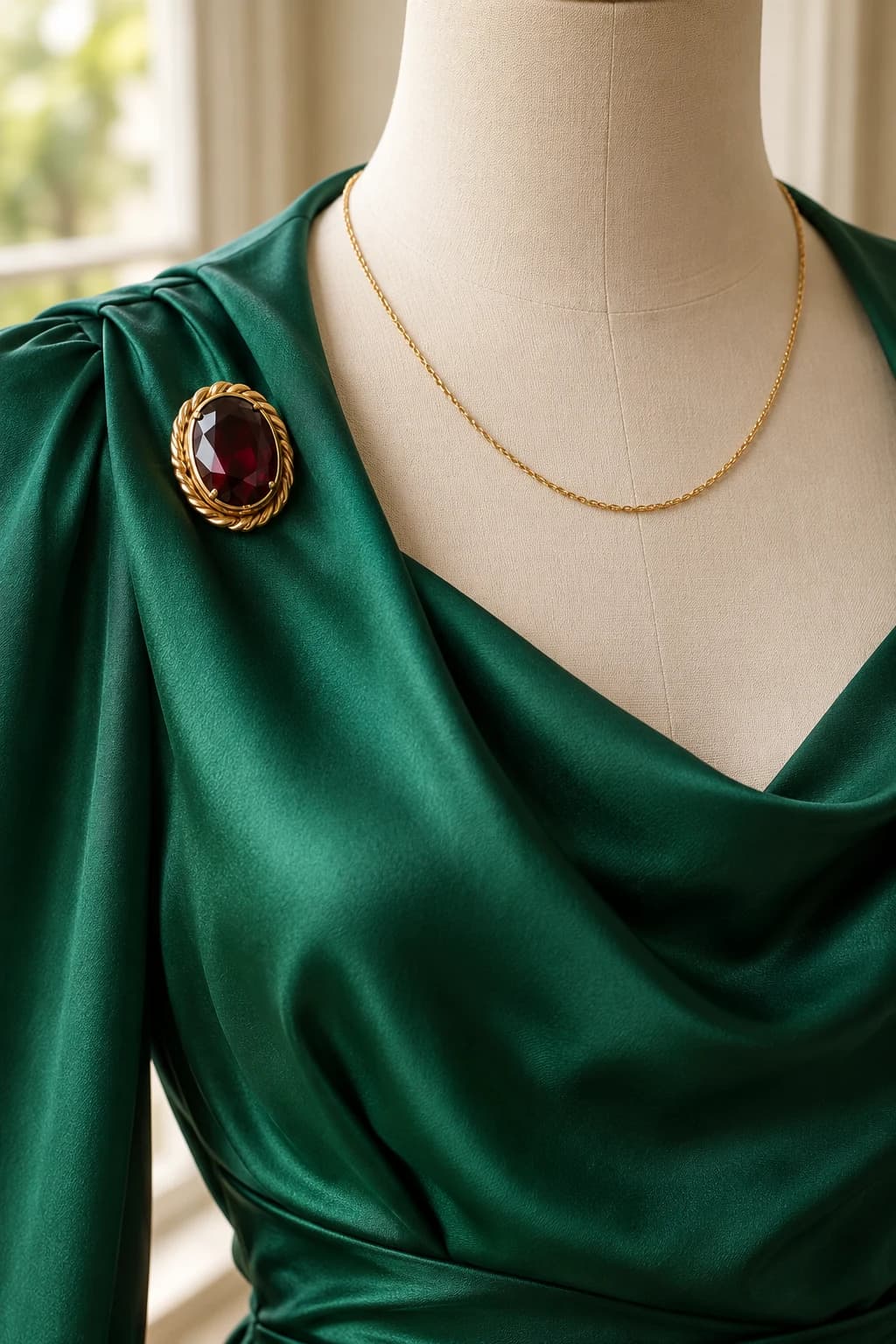
2. Follow one side of a V-neck
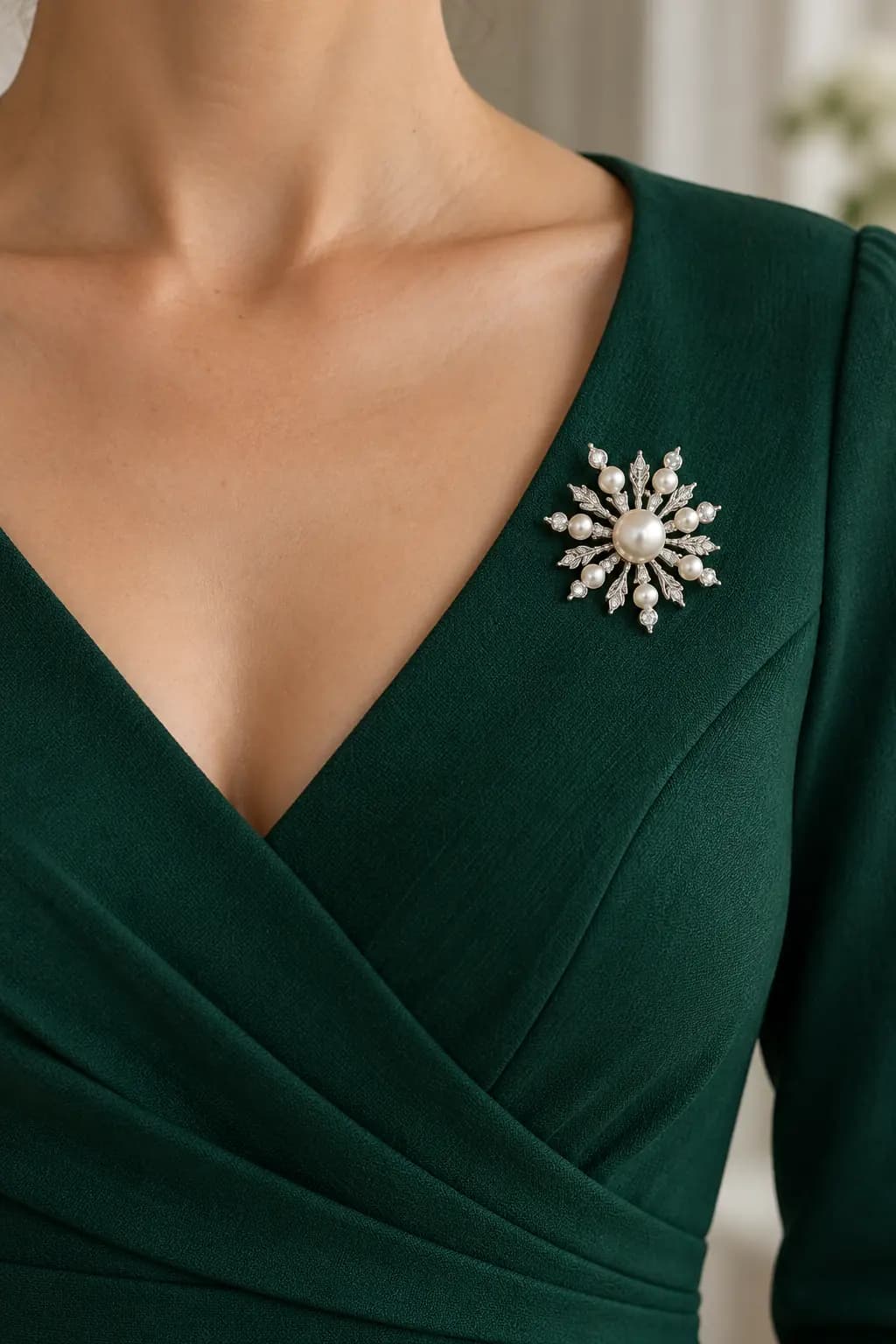
A brooch at the very bottom of a V can pull the point down and make the dress look as though it is being fastened shut. Move the piece up one side of the neckline instead. It should sit on the dress fabric, not bridge the opening.
Choose a compact brooch that fits between the neckline and the shoulder seam. A round starburst or floral shape softens a sharp V, while a narrow leaf or bar can continue its diagonal line. Skip a competing pendant so the eye has one clear route around the neckline.
3. Mark the outer corner of a square neckline
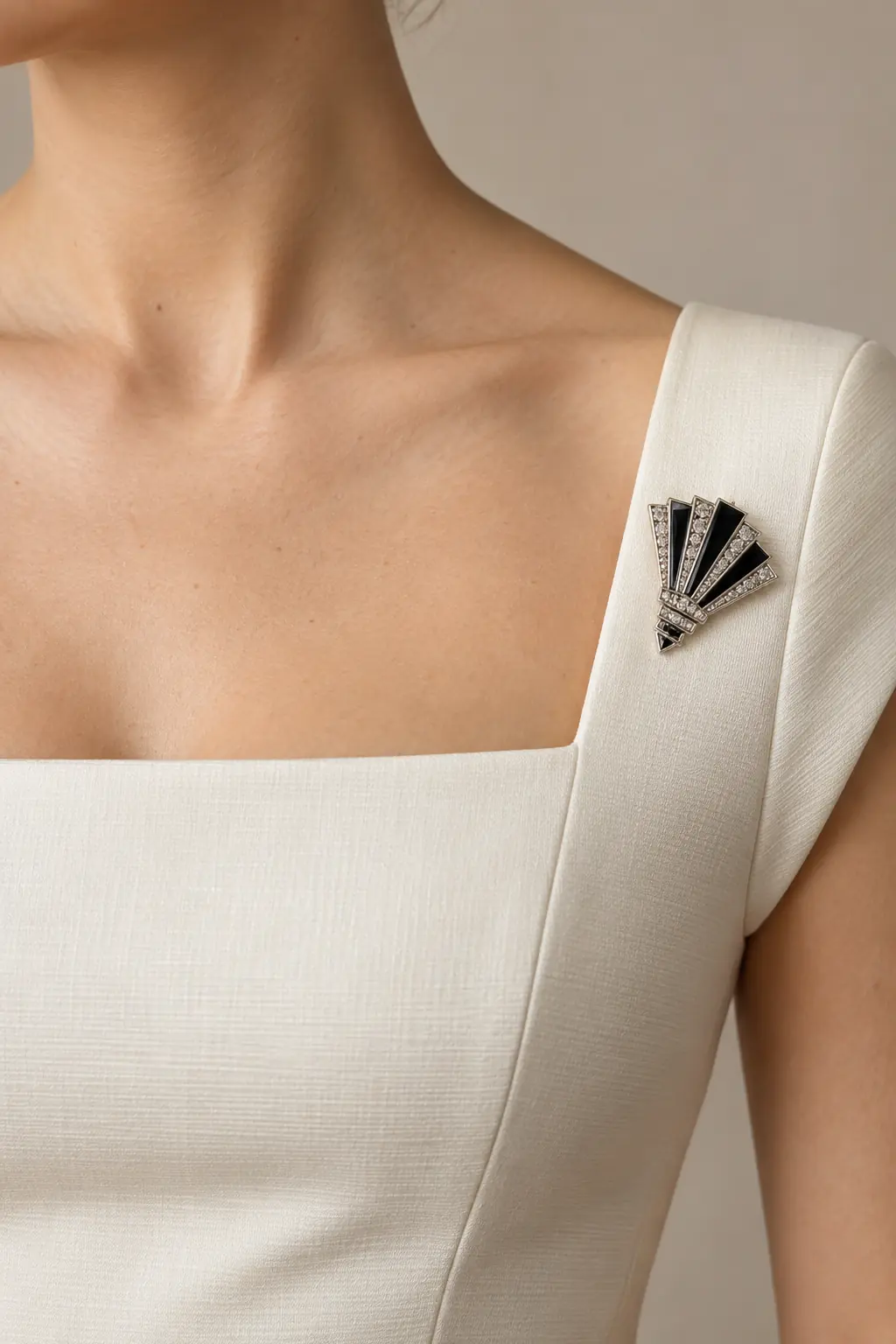
A square neck suits jewellery with clean geometry. Place a small fan, bar or angular brooch near one upper corner, where the horizontal and vertical lines of the dress already meet. Keep it outside the open neckline and leave enough fabric between the brooch and the edge.
Do not mirror the placement on both sides unless the pins are very small and the dress is deliberately symmetrical. One brooch usually looks more modern and is easier on the fabric. The straight neckline already supplies all the balance the outfit needs.
4. Use the covered side of a one-shoulder dress
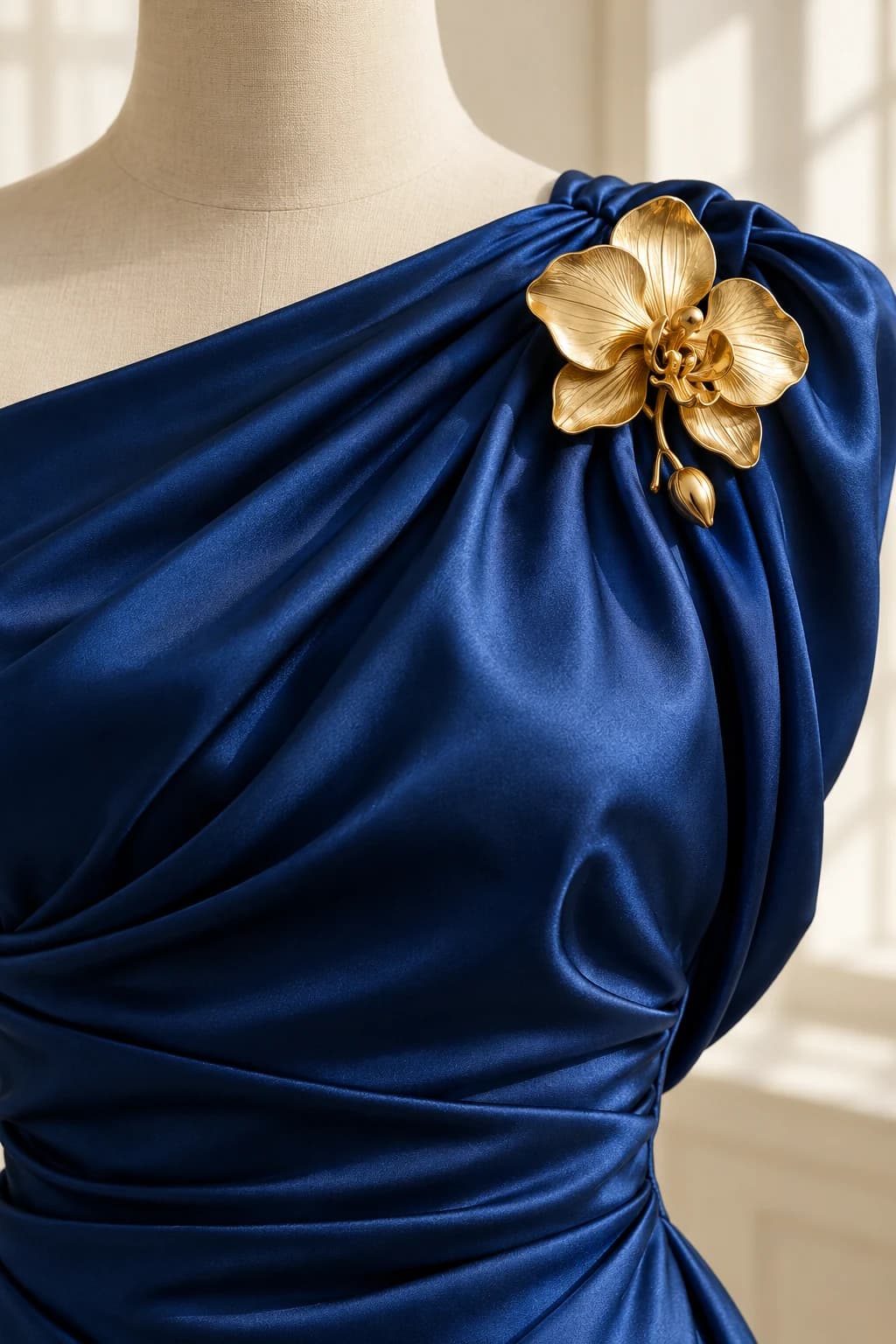
A one-shoulder dress has a built-in direction. Place the brooch on the covered shoulder or just below it, then leave the bare side alone. This reinforces the asymmetry rather than trying to correct it.
Check the construction before pinning. A broad folded or lined shoulder can support a light piece; a narrow strap, ruffle or sheer panel may not. If the shoulder detail is already gathered, sequinned or embellished, move the brooch lower onto the plain upper bodice or skip it.
5. Sit the brooch below the collarbone on a high-neck dress
With a high neck or mock neck, there is no open neckline for the brooch to follow. Place it to one side below the collarbone, where it can be seen without crowding the collar. A little distance between the jewellery and the neck keeps the result from feeling like a fastening.
This works well with a slim bar, crescent or small sculptural piece. Check the position while sitting as well as standing. A brooch that looks high and neat in the mirror can press into the neck when the dress shifts upward.
6. Pin a shirt dress beside the collar or upper placket
A shirt dress offers firmer areas around the collar stand and upper placket. Try one small brooch beside the collar point or on the body of the dress just above the first visible button. It gives the structure of a shirt a more personal finish without needing a necklace.
Avoid pinning through the buttonhole, collar seam or the thick placket itself. Those areas contain several layers and stitching. Use the flat fabric beside them, and make sure the brooch does not overlap a button when the dress moves.
7. Place a brooch beside the wrap line, not across it
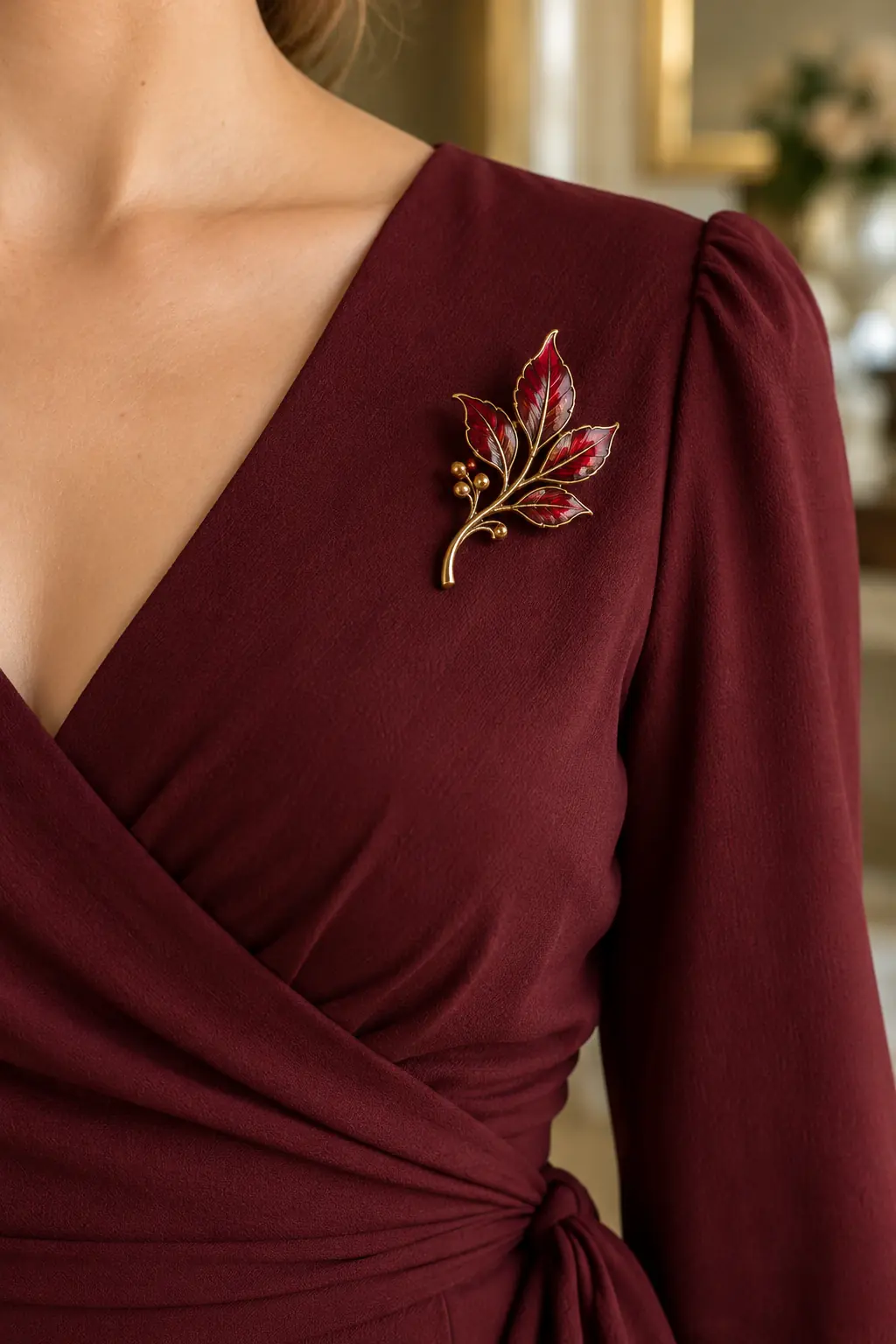
A wrap dress creates a strong diagonal much like a V-neck. Put the brooch on the flat outer bodice, above and to one side of the crossing seam. The jewellery should decorate the line rather than hold the dress closed.
Do not pin the two overlapping fronts together unless the dress was designed for that fastening. Pulling both layers onto one pin can strain the fabric and change the fit. Use the dress's own ties or internal closure, then add the brooch where the cloth lies naturally.
8. Use a broad strap on a structured sleeveless dress
A broad strap can carry a small brooch when it is lined, firmly woven and wide enough for the whole piece. Place the jewellery near the lower part of the strap so it relates to the neckline without sitting on top of the shoulder.
The brooch must fit inside the strap. If an edge extends onto bare skin or the fastening sits directly under a bag strap, choose another position. Thin spaghetti straps, beaded straps and stretch jersey straps are not suitable places for a conventional pin.
Before pinning: check what the dress can support
Look at the fabric in daylight and feel behind it for a lining, facing or seam allowance. Lined crepe, faille, denim and structured cotton are generally more forgiving than silk satin, chiffon, fine jersey, lace or delicate vintage fabric. Smithsonian conservators describe silk as particularly delicate; an old silk dress deserves more caution than an everyday woven one.
Fasten the brooch while the dress is on, then move your arms and sit down. If the cloth puckers, the neckline changes shape or the pin rotates, the piece is too heavy for that position. For valuable jewellery, GIA recommends careful handling and periodic professional checks. Inspect the hinge, stem and catch before trusting an older brooch on an occasion dress.