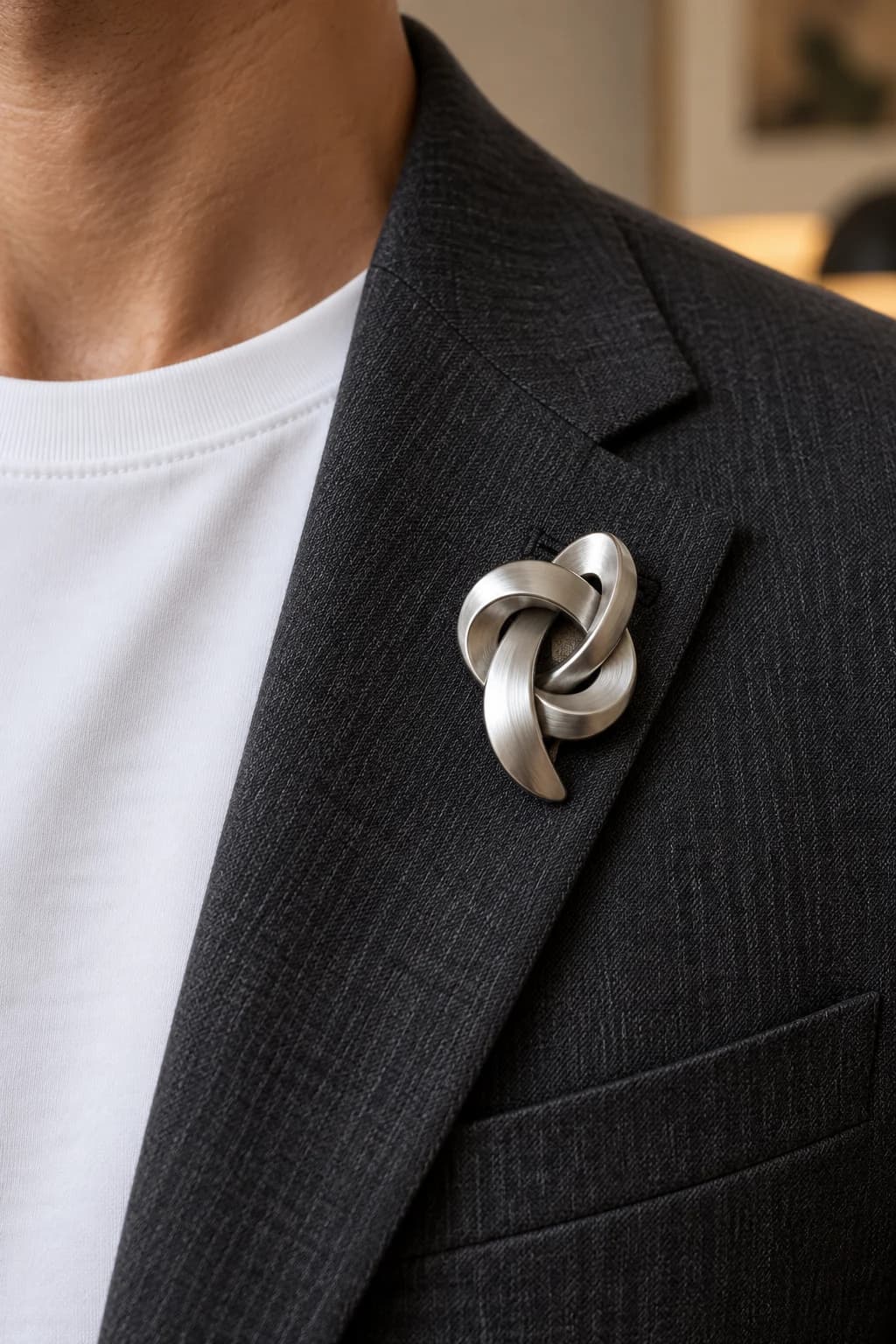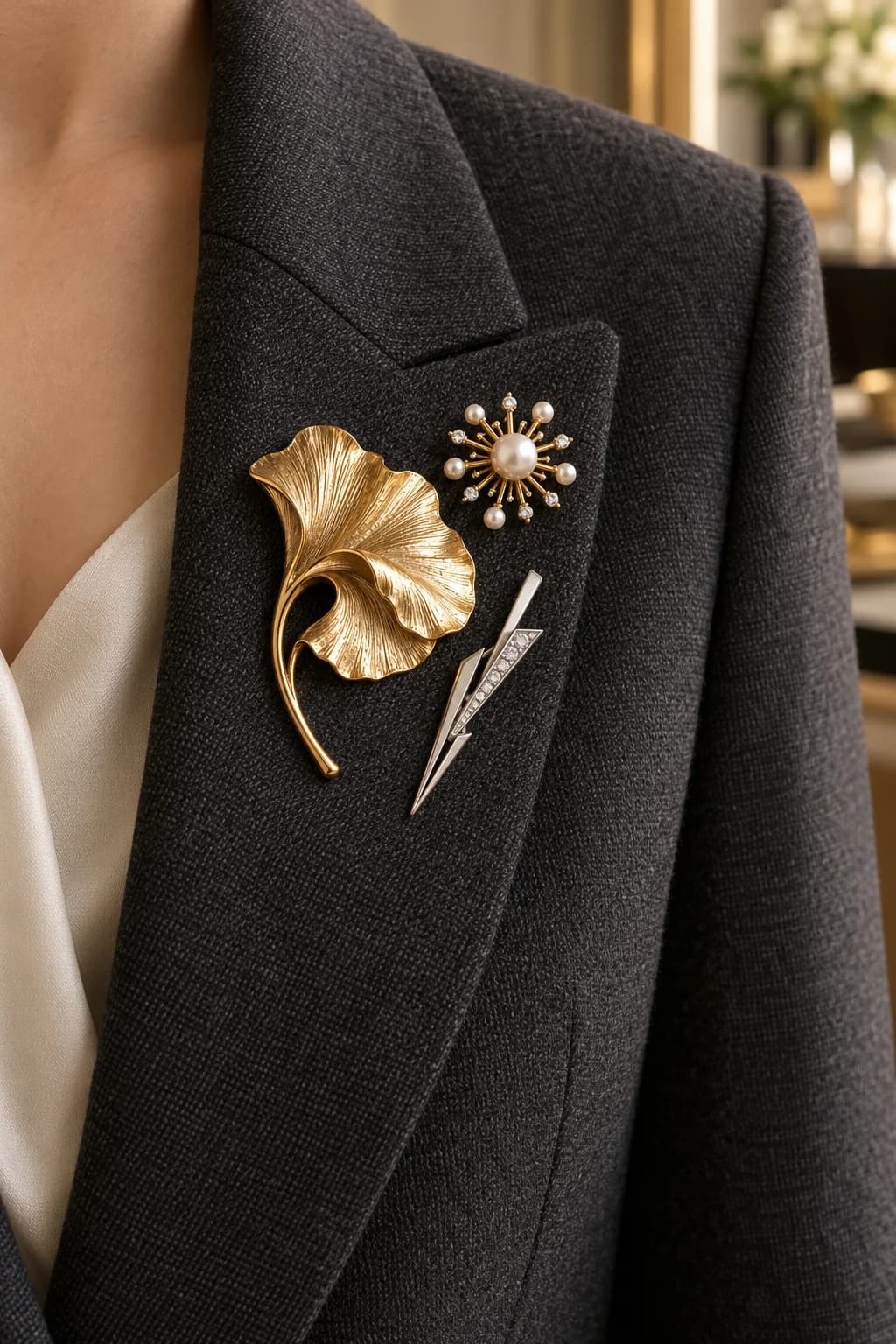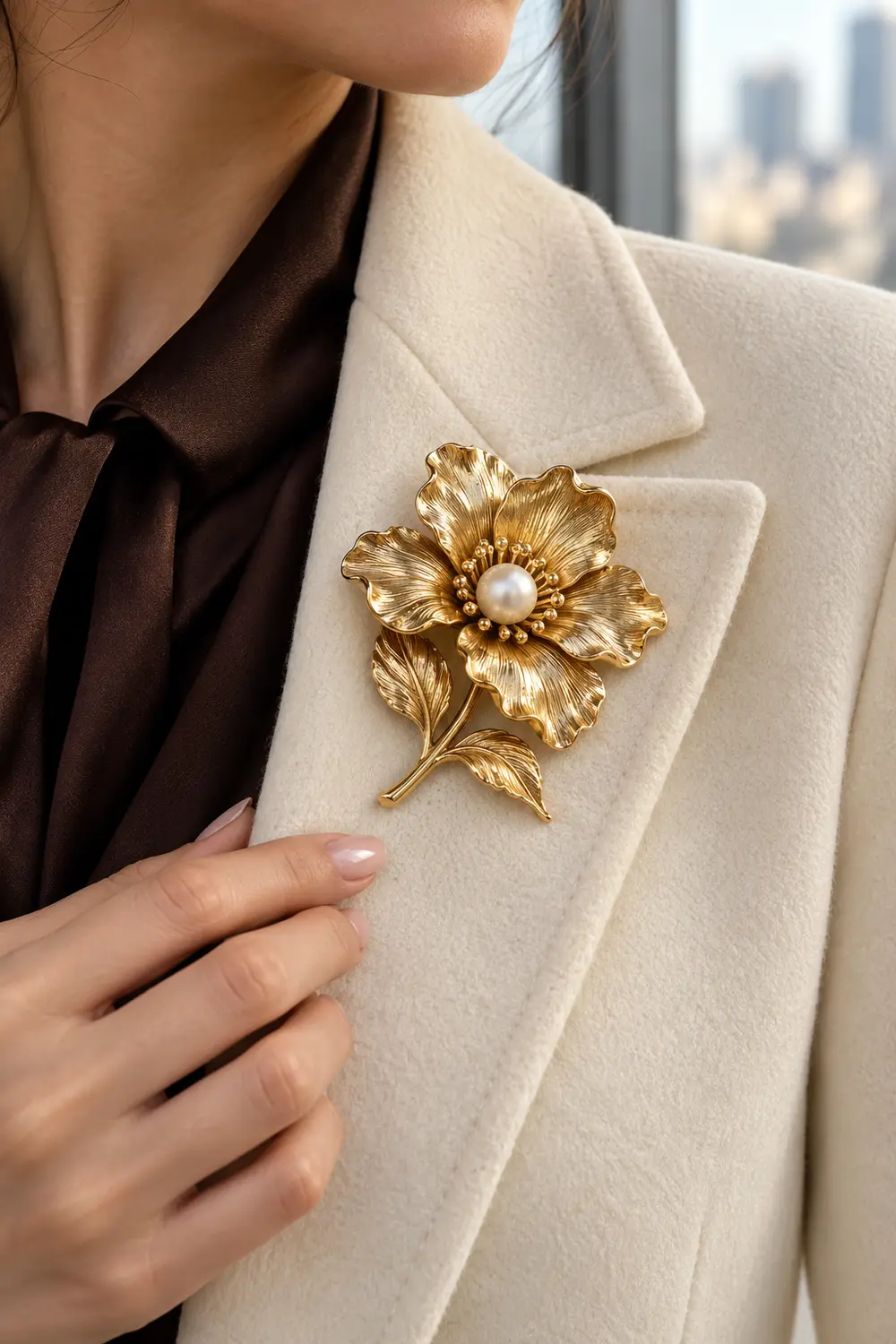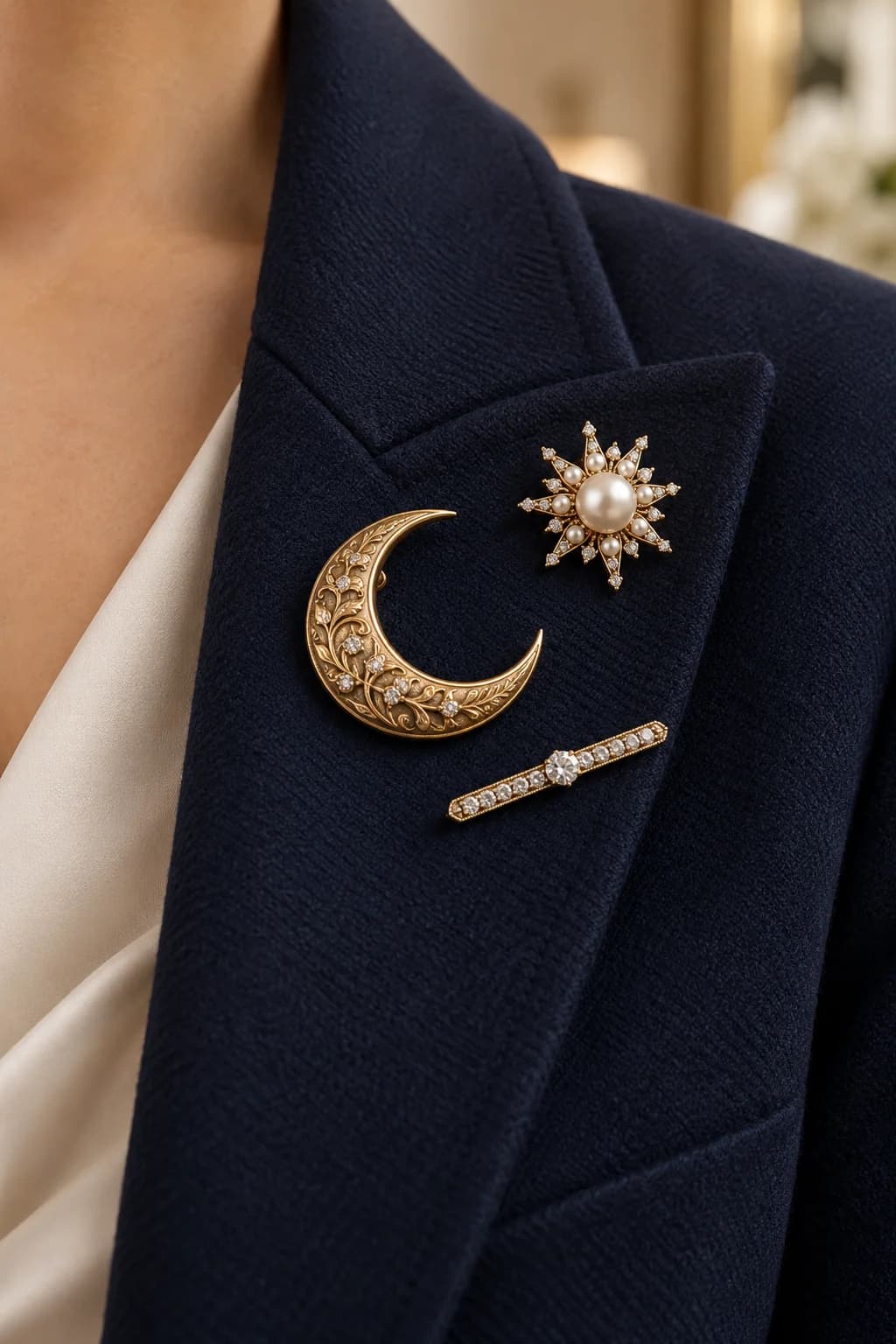
The easiest way to wear several brooches is to stop treating them as a matching set. A convincing group usually has one piece that catches the eye first, one detail that connects the pieces and enough uncovered fabric for every shape to remain clear. Two pins can make a quiet pairing; three create a small composition. More than that can work, but it needs a larger area and sturdier clothing. The nine combinations below begin with two or three pieces because that is where a collection feels intentional without becoming difficult to wear.
1. Begin with one lead brooch and one quieter companion
Choose the piece you most want people to notice, then add a smaller pin that supports it rather than competing with it. A broad flower can sit beside a narrow bar; a coloured enamel brooch can be balanced by a plain metal shape. The difference in scale gives the eye an obvious place to begin.
Put the lead piece on first while wearing the garment. Add the second only after the first sits correctly. This is more reliable than arranging both pieces flat on a table because a lapel changes angle and a coat curves around the body.
2. Repeat one detail instead of matching everything
Two brooches do not need the same maker, age or shape. One shared detail is enough: yellow gold, dark enamel, seed pearls, a leaf motif or a repeated blue accent. That small connection makes the pairing look deliberate while preserving the character of each piece.
Avoid repeating every feature. Two identical floral brooches placed symmetrically can resemble uniform decoration. A ginkgo leaf beside a pearl-centred blossom feels more collected because the theme is shared but the silhouettes are different.
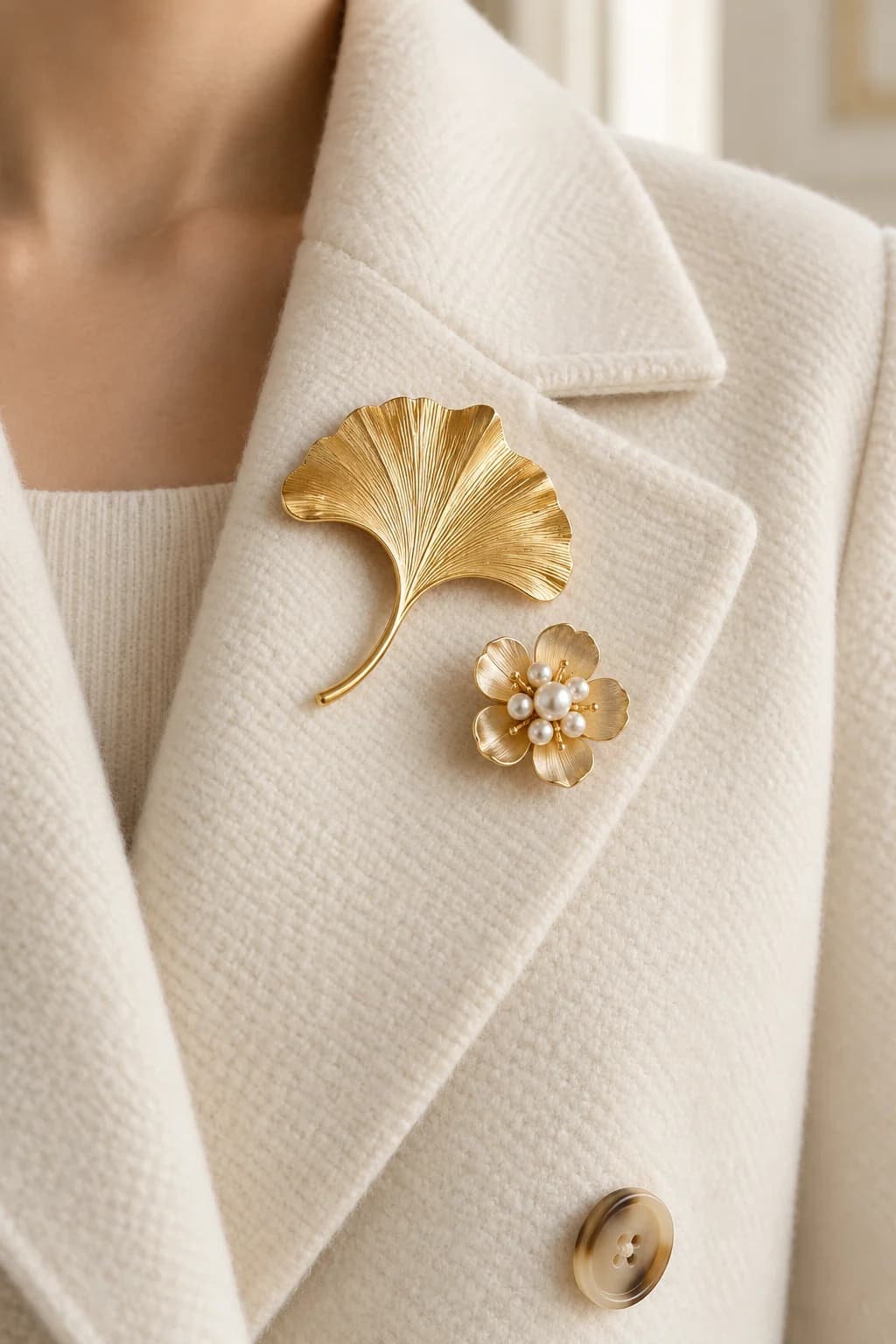
3. Arrange three brooches as a loose triangle
A triangle is the most forgiving shape for three pins. Set the largest or most detailed brooch slightly lower, then place the other two above and to either side. Keep the triangle uneven. If every gap is identical, the group can feel rigid and badge-like.
Use the width of a fingertip as a starting gap, then adjust for the actual outlines. A pointed leaf needs more room than a compact round pin. What matters is that none of the pieces appears to touch or disappear behind another from normal viewing distance.
4. Use a straight pair when the clothing already supplies a line
A straight arrangement can work when the garment gives it a reason. Two small pins on collar points, a pair following the upper edge of a pocket or two narrow bars running with a lapel seam all borrow structure from the clothing.
Keep the pair light and fairly small. A large symmetrical arrangement can dominate the neckline and pull the fabric unevenly. If one side begins to sag, move both pins to a firmer panel rather than forcing the symmetry.
5. Mix old and new pieces through shape, not age
A vintage brooch can sit happily beside a contemporary pin when their shapes speak to each other. Try a curved antique crescent with a modern starburst, or an old oval enamel piece with a clean narrow bar. The contrast is useful; it stops the group from looking like a reproduction set.
Condition still matters. Check an older clasp before putting it beside a heavier modern piece, and do not let sharp edges rub against pearls, enamel or soft stones. The group should remain visually close without the jewellery knocking together as you move.
6. Let colour connect three playful enamel pins
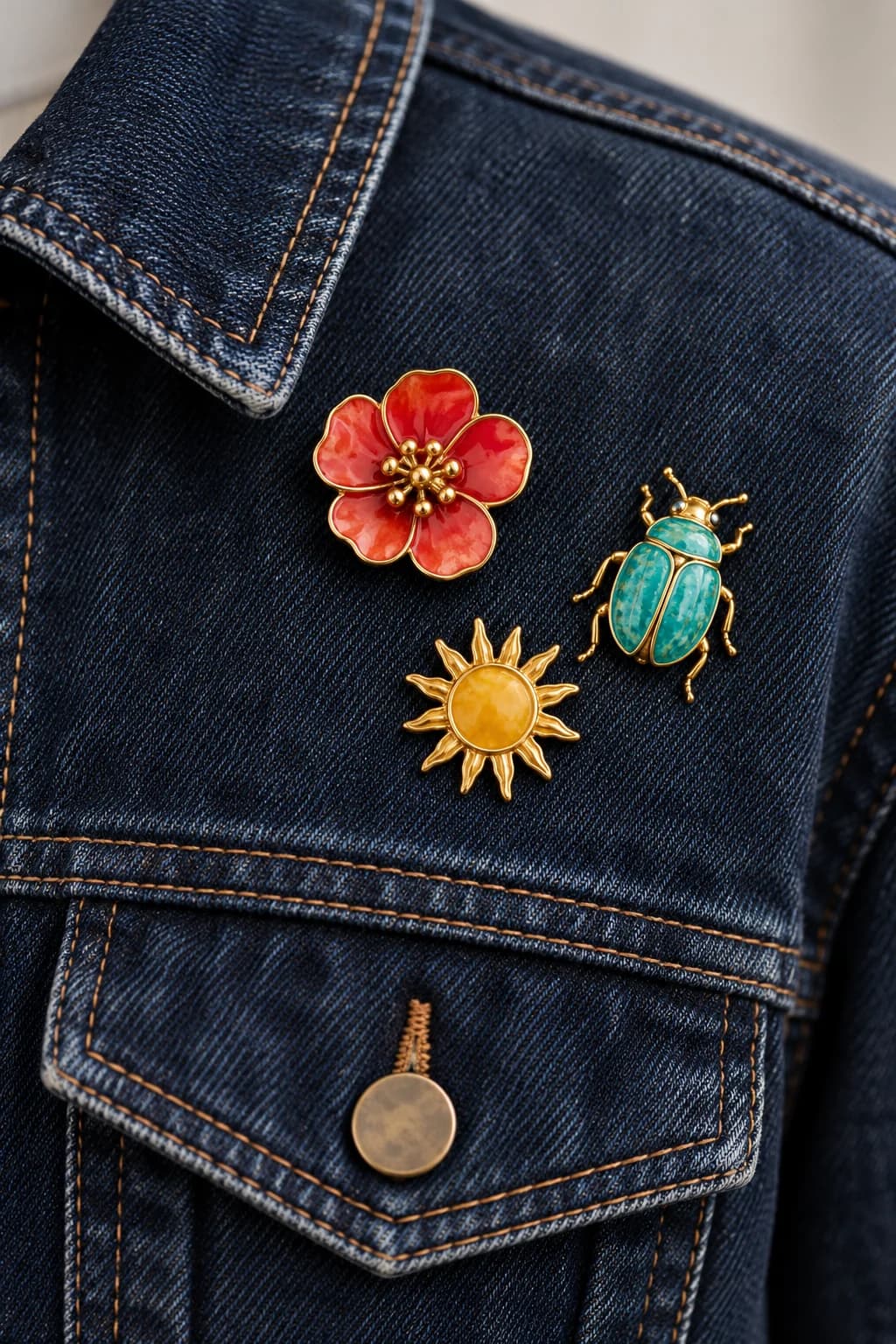
Denim is a good background for small enamel brooches because it can support their weight and gives bright colour a casual setting. Choose three different subjects, then repeat the metal outline or keep the colours within one clear palette. A flower, beetle and sun can work together when their scale and finish feel related.
Place the cluster above the pocket rather than through its thick seam. Leave enough room for the pocket flap and check where a bag strap lands. A pin that sits perfectly in the mirror may become uncomfortable once the strap crosses it.
7. Keep the whole cluster inside one visual zone
Several brooches are easier to understand when they occupy one defined part of the outfit. Keep them on one lapel, around one shoulder or above one pocket. Scattering one pin at the collar, another at the waist and another on a bag makes the eye work harder to find the idea.
The cluster does not have to be tiny. On a wide coat lapel it can span several centimetres, provided the pieces still read as one group and remain clear of the lapel edge, button line and shoulder seam.
8. Vary scale, but do not let the largest piece swallow the group
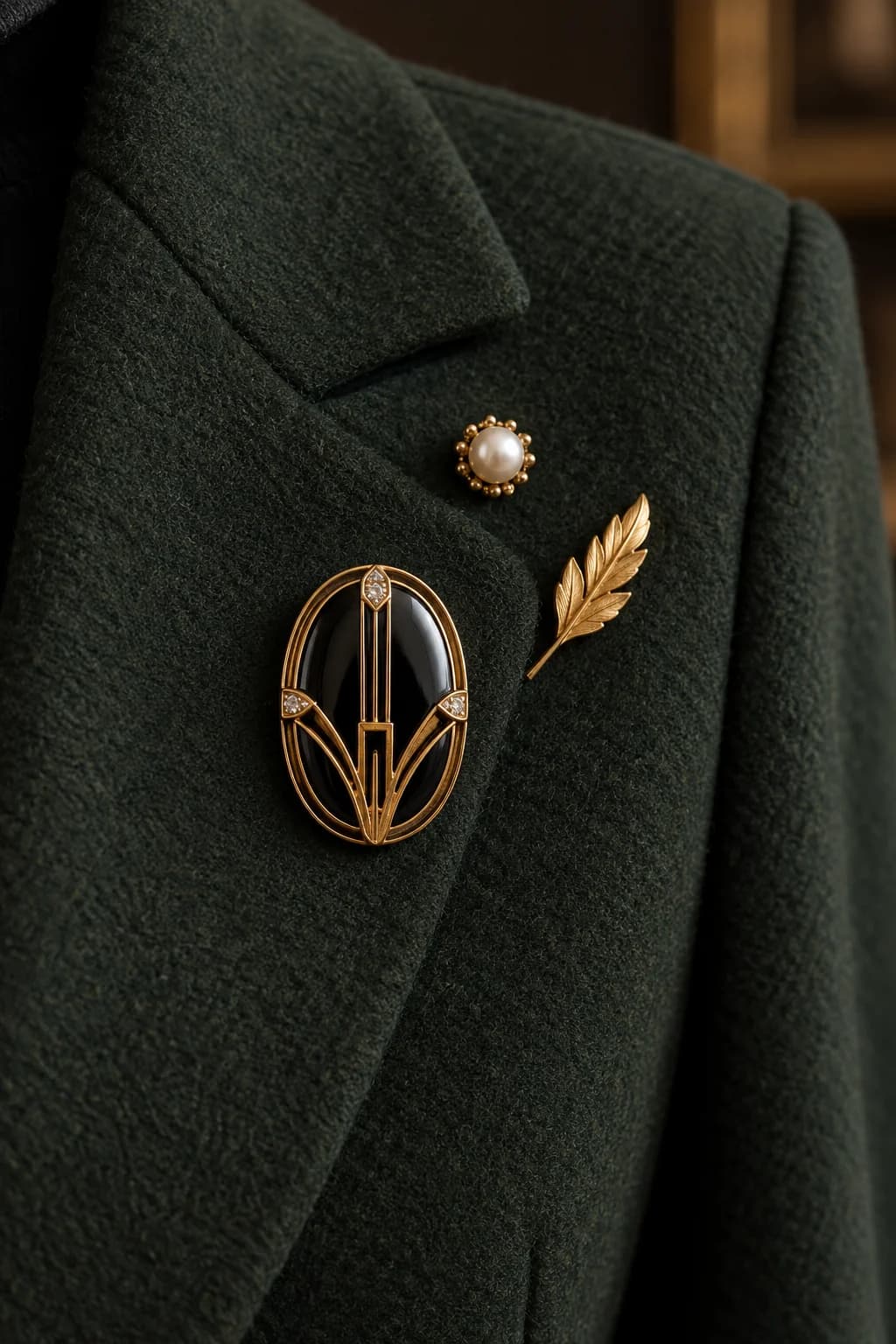
A useful three-piece formula is one medium lead brooch, one small round pin and one narrow directional shape. The different outlines create movement without needing three colours or three ornate designs. If the lead piece is very large, stop at two brooches.
Step back from the mirror or take a phone photograph. At normal distance, the supporting pins should still be recognisable as separate objects. If they look like loose decoration around one oversized brooch, increase the gaps or remove the weakest piece.
9. Check combined weight, movement and every clasp
Three individually light pins can still place surprising weight on one patch of fabric. Blazers, coats and denim are usually more forgiving than silk, fine jersey or loosely knitted fabric. Put the garment on, fasten every clasp and move your shoulders before leaving home.
Look behind the fabric as well as at the front. Pin stems should not cross, catches should close fully and no point should press against the body. If the cloth puckers or the cluster tips forward, reduce the number of pieces or move the arrangement to a supported seam, facing or firmer panel.