A wedding guest outfit is a good reason to bring out a brooch you rarely wear. It might be a little pearl spray from a jewellery box or a sculptural leaf that changes the look of a familiar jacket. Choose the dress or jacket first, then hold the brooch against it. The neckline tells you where it might sit; the fabric tells you whether it can stay there.
Let the invitation guide the outfit
Read any dress guidance from the couple before choosing accessories. A daytime garden wedding, a formal evening reception and a celebration with specific cultural dress requirements can call for quite different clothes. A brooch can work with each, but its size and sparkle need to make sense with the outfit you are wearing.
For a simple daytime dress, start with a modest flower, leaf or pearl piece. For an evening jacket, a polished metal or crystal brooch may feel right. These are styling suggestions, rather than fixed wedding rules. If the couple has requested particular colours or traditions, follow their guidance and ask them about anything unclear.
Pearl buds with a rose crepe dress
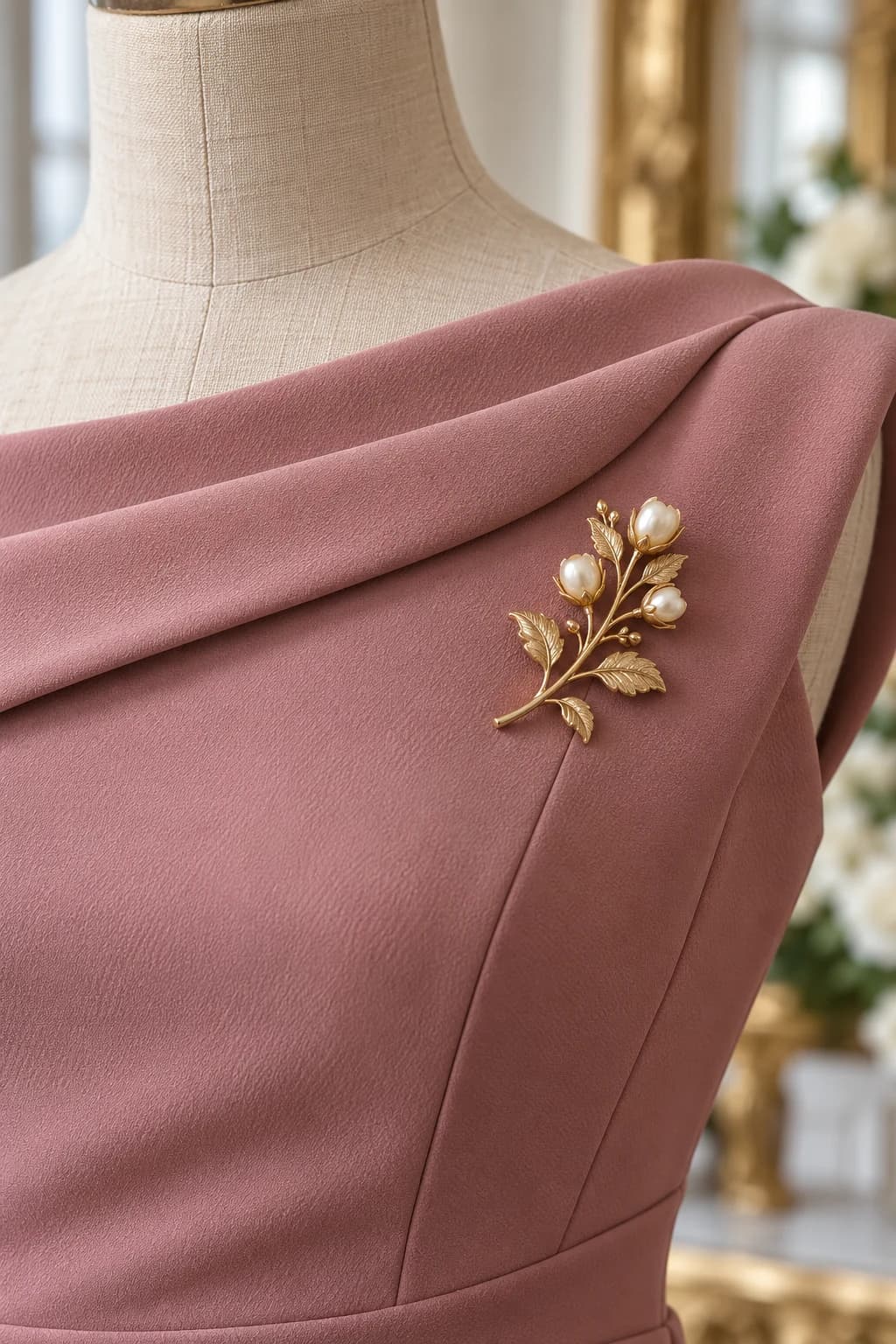
Cream pearls and warm gold look soft against dusty rose. A small botanical brooch near one shoulder follows the folded neckline of the dress in our opening image. The crepe gives the pearls a matte background, so they are visible without needing a large setting.
Place the brooch on flat, supported cloth below the fold. Avoid pushing the stem through a gathered knot or several thick layers simply because that spot looks attractive. If the neckline already has a bow or a large flower, try a quieter part of the bodice or leave the brooch for a jacket. Small studs can be enough beside a detailed pearl spray.
Gold leaf on a teal occasion jacket
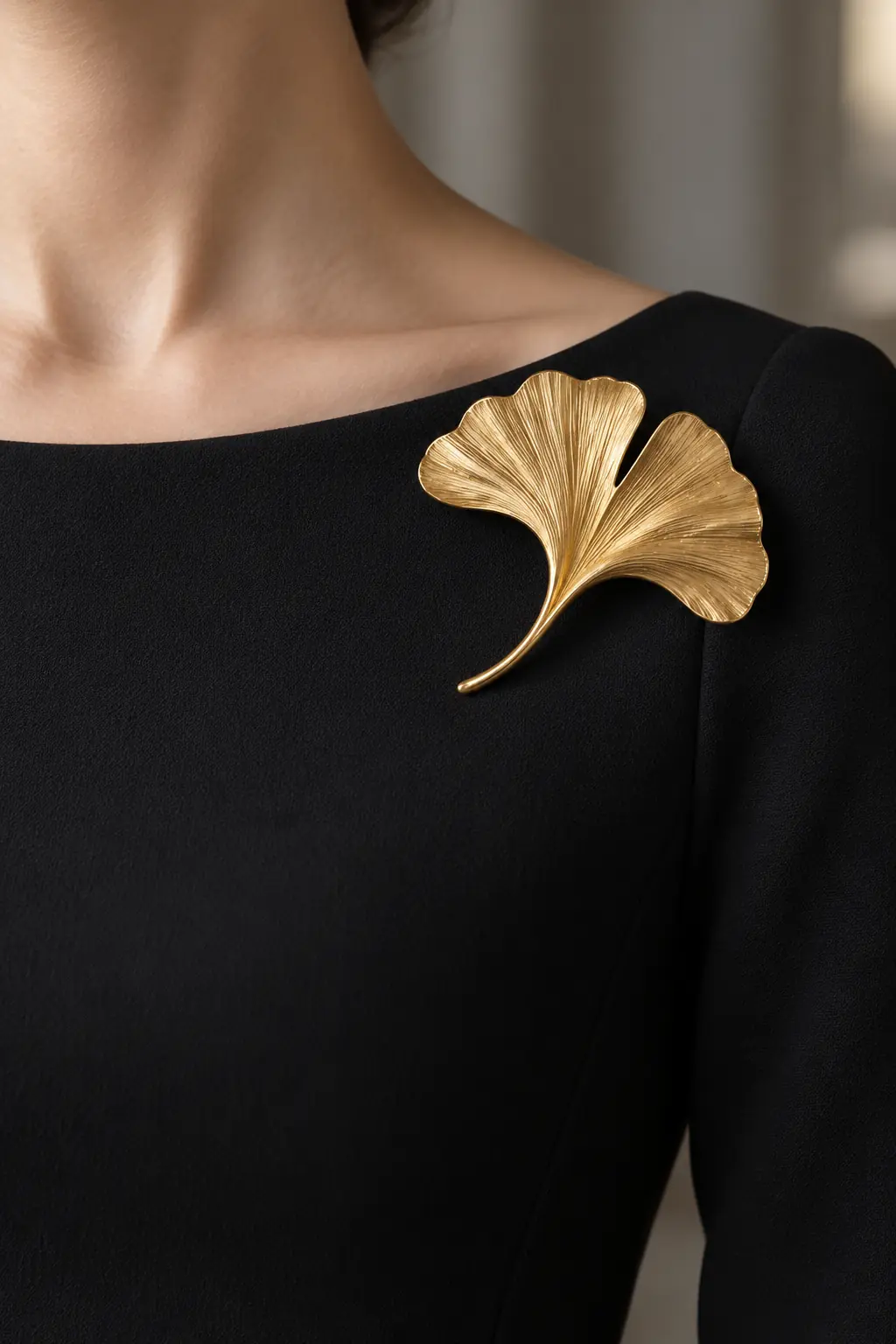
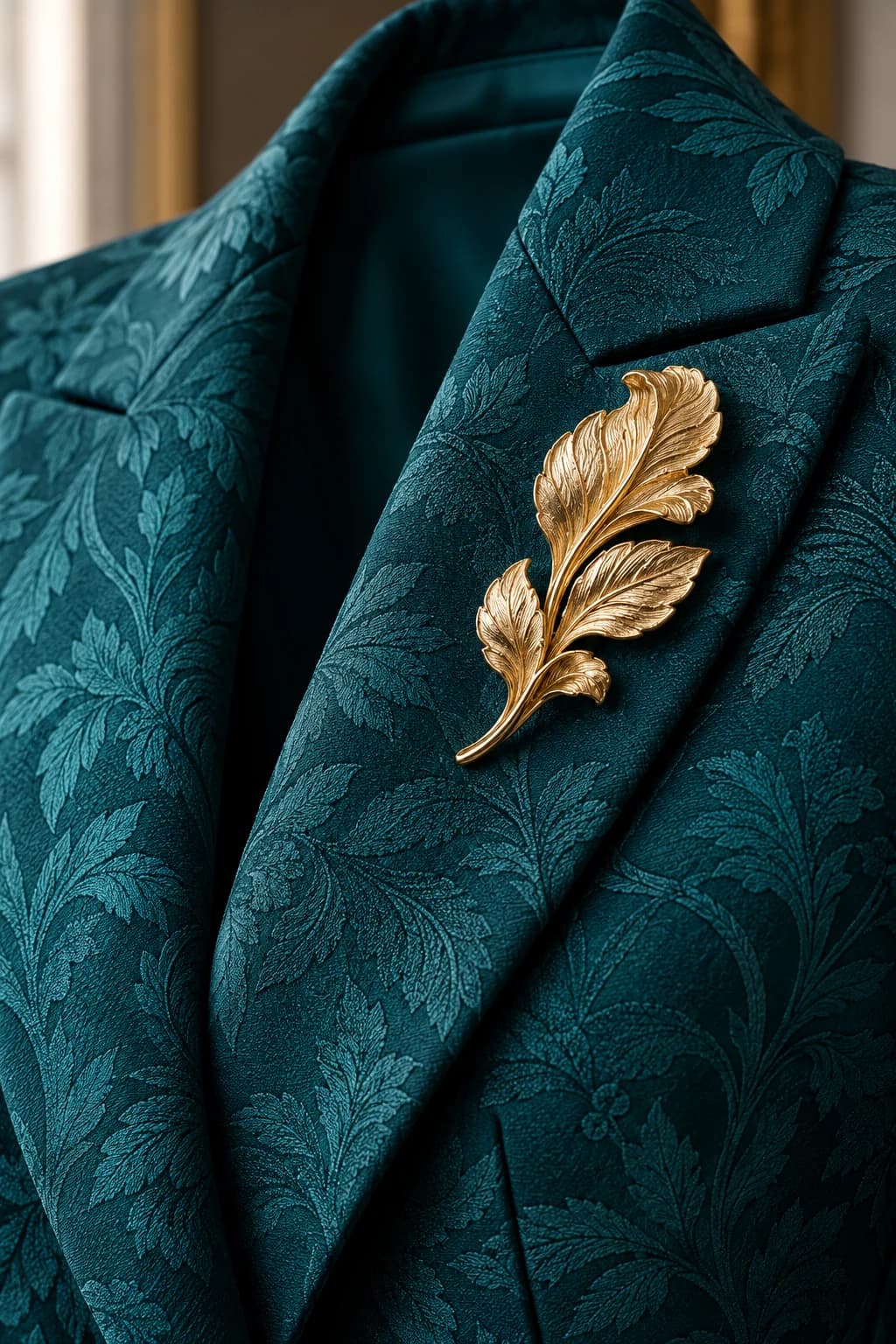
An occasion jacket can give a brooch more support than a light dress. On teal, brushed gold has enough contrast to show clearly against a woven pattern. Try a leaf on the upper lapel, turning its stem to follow the lapel's diagonal. The brooch should fit within the flat area available.
Button the jacket and sit down before settling on the position. The lapel can turn when you move, particularly on a cropped jacket. Check that the brooch is not hidden by a bag strap or pressed against a wrap. If you expect to take the jacket off at the reception, decide whether you are happy for the brooch to remain on it; moving a pin between garments at the table is awkward.
Silver fan on the covered side of a one-shoulder dress
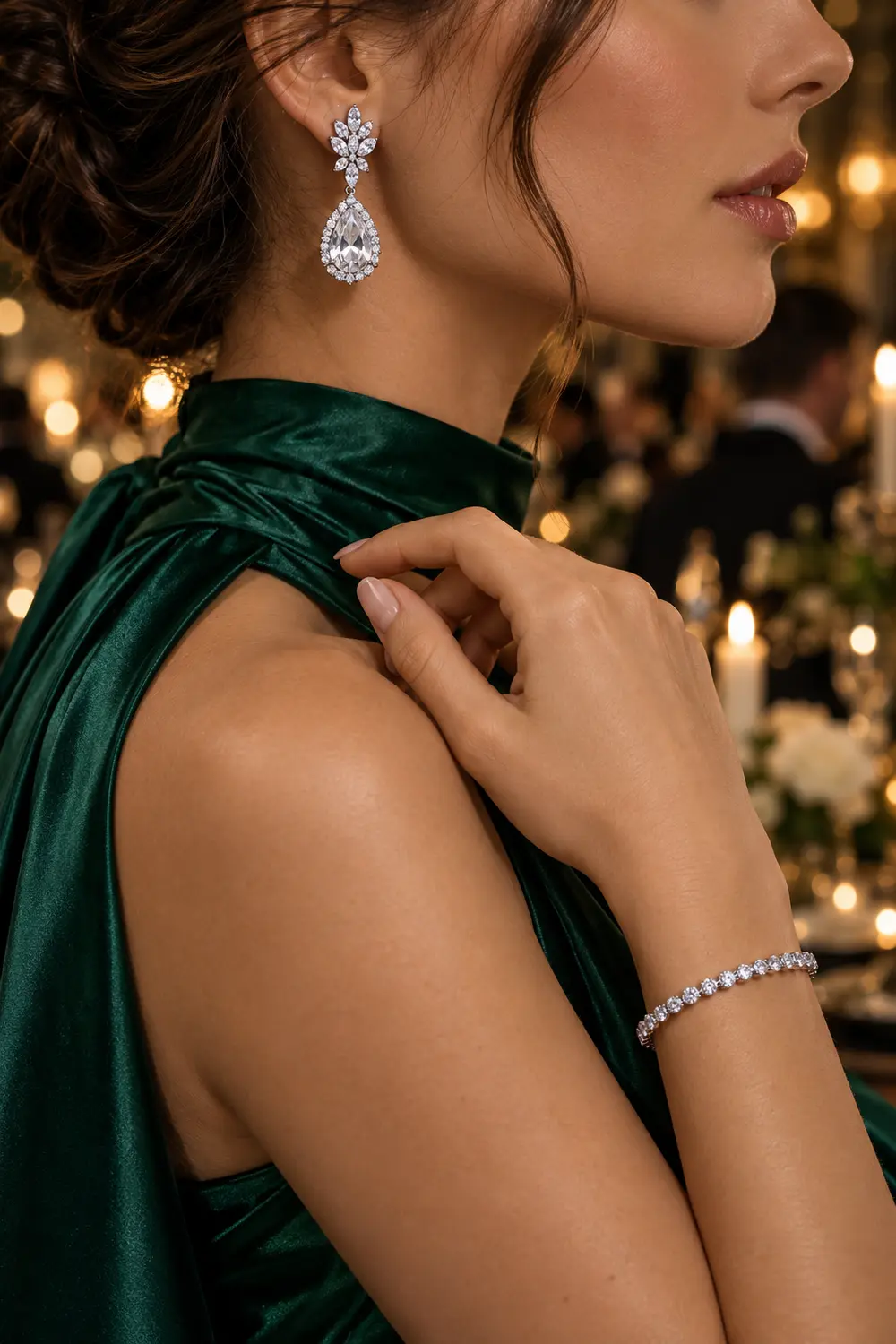
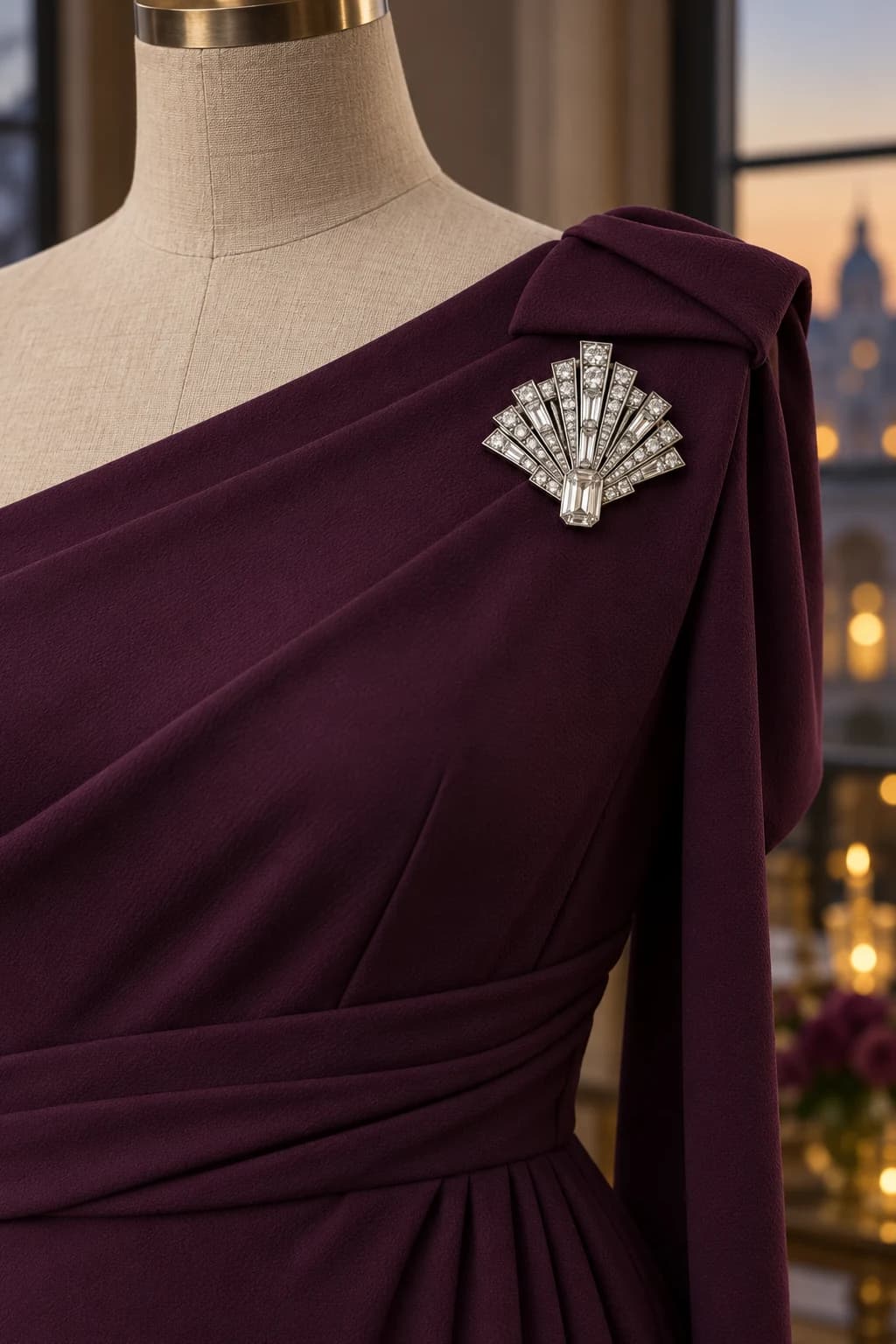
A deep plum dress makes silver and clear stones stand out. With a one-shoulder neckline, try a compact fan on the covered side, below the shoulder detail. That follows the dress's existing direction and keeps the bare side clear.
The fabric must support the piece without dipping or twisting. A broad lined shoulder may work; a sheer sleeve, narrow strap or loose ruffle may not. Choose the lightest brooch that gives you the effect you want, and check it with your arm raised. A small pair of earrings leaves room for both the neckline and the pin.
A blue stone on midnight navy
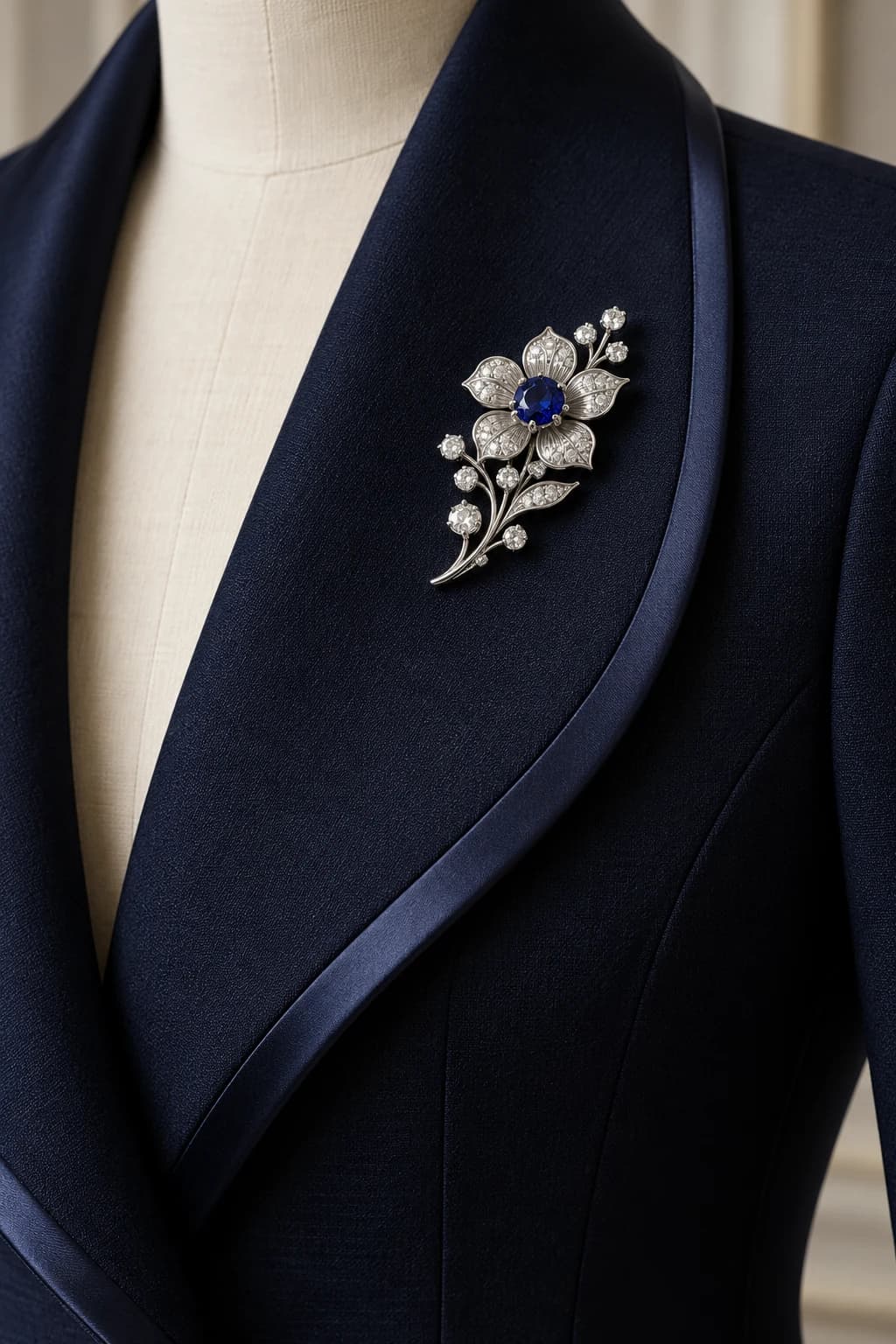
A blue stone on a navy jacket gives a more subtle colour pairing. Look for enough difference in surface to keep the brooch visible: polished silver and clear stones can catch light against dark wool or crepe. A plain stretch of lapel is useful when the jacket has satin binding or another decorative finish.
Hold the brooch against the jacket in daylight and under the sort of warmer light you expect at the reception. If the stone disappears in both, a pearl or brighter metal piece may show better. You can repeat the metal in earrings, but there is no need to match the blue exactly in your shoes, bag and every other accessory.
Keep the neckline comfortable for a long day
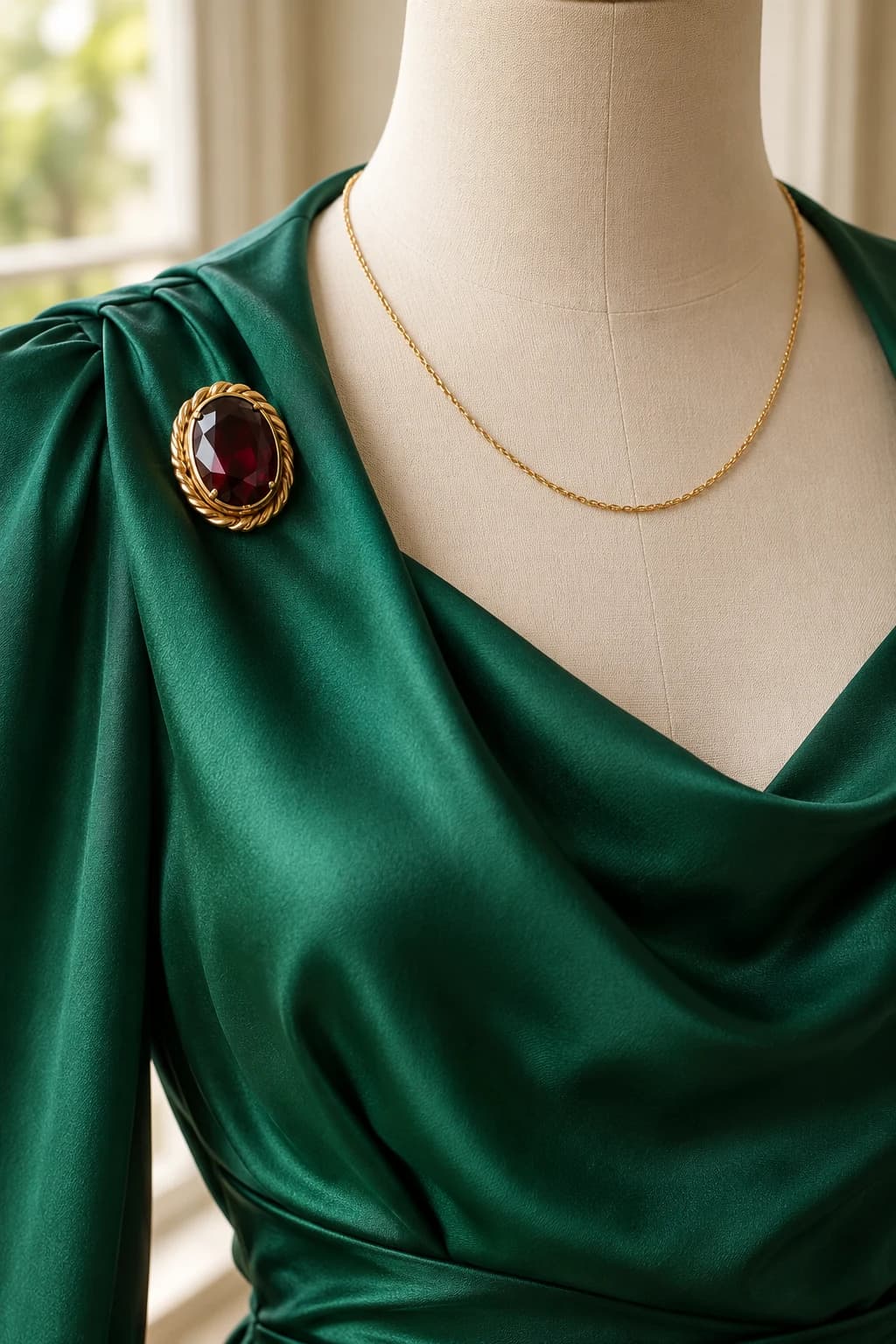
A brooch and necklace can work together when they have separate space. On a jacket over an open-neck dress, a short fine chain may sit well below a modest lapel pin. On a high neckline or near a broad shoulder brooch, try the outfit without a necklace first. You may find it already feels finished.
Check comfort with everything on, including your bag and any wrap. Sit, turn your head and reach forward. A pin that rubs your neck, catches a loose thread or needs constant straightening will become more noticeable over several hours. Keep an alternative pair of earrings in mind if the brooch proves too heavy during the trial.
Check the garment before making a hole
Even a fine pin can leave a mark in silk satin, sheer cloth or a coated fabric. Do not assume that a lining makes every outer fabric safe. Inspect the garment, consider a discreet trial only if you are comfortable doing so, and stop if the surface marks or puckers. For a borrowed, hired or valuable dress, check its care conditions before attaching jewellery.
Choose the position while the outfit is on, then take the garment off and lay it flat to fasten the pin. Support the cloth, close the catch fully and make sure the point is enclosed. A brooch should decorate the dress, not hold a wrap neckline closed or replace a missing fastening. Have a loose hinge or unreliable catch checked before the event.
Put pearl jewellery on after getting ready
GIA advises putting pearls on after perfume or cosmetics and wiping them with a soft cloth after wear. Finish your hair and makeup before attaching a pearl brooch, and avoid spraying products towards it. The same care guide notes that chemicals in everyday products can damage delicate gems and metals.
At the end of the day, remove the brooch before the outfit goes for cleaning or returns to its cover. Support the fabric as you unfasten it, and put the piece in its own suitable pouch or box. If the brooch has sentimental value, take a moment to check it is there before leaving the venue.