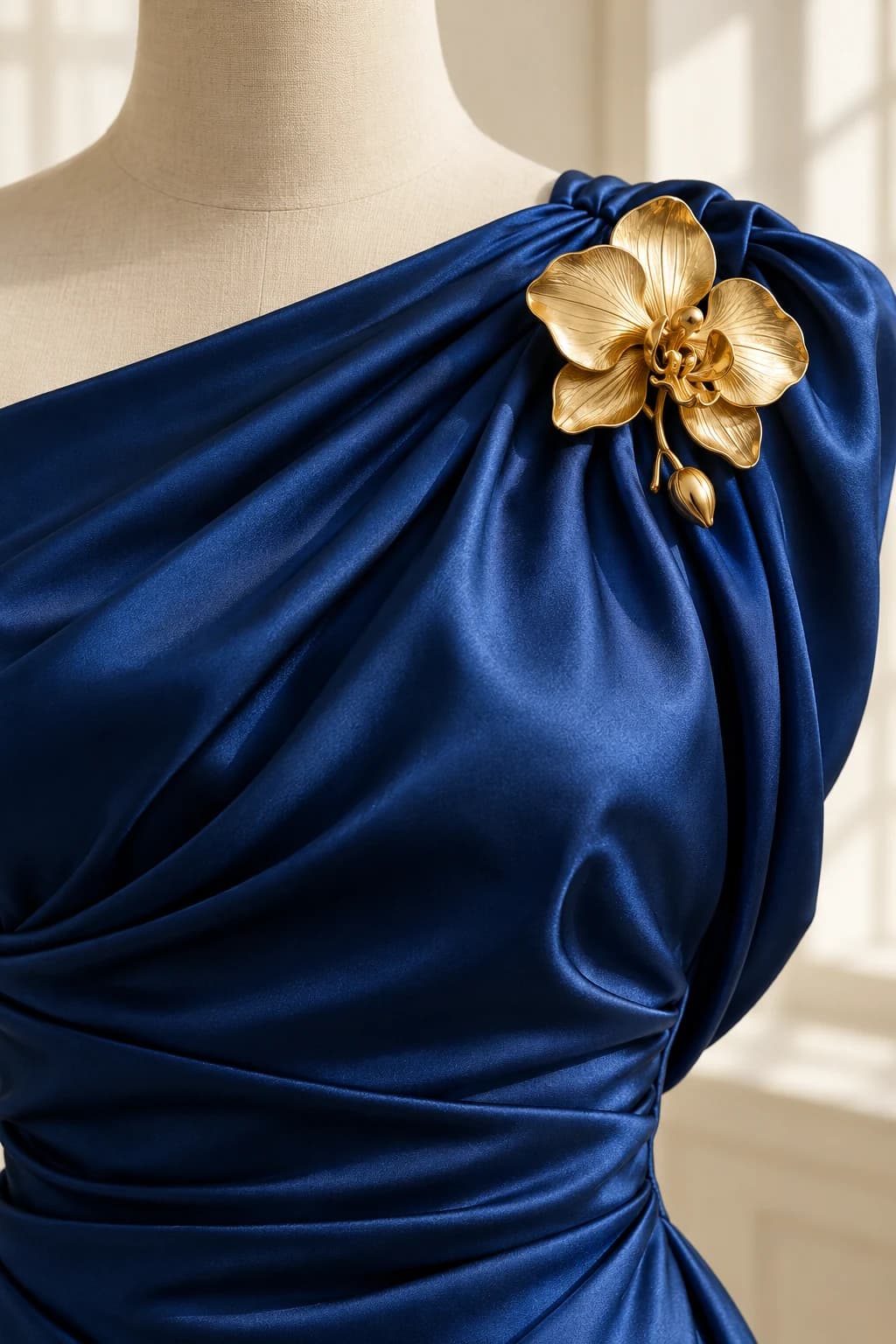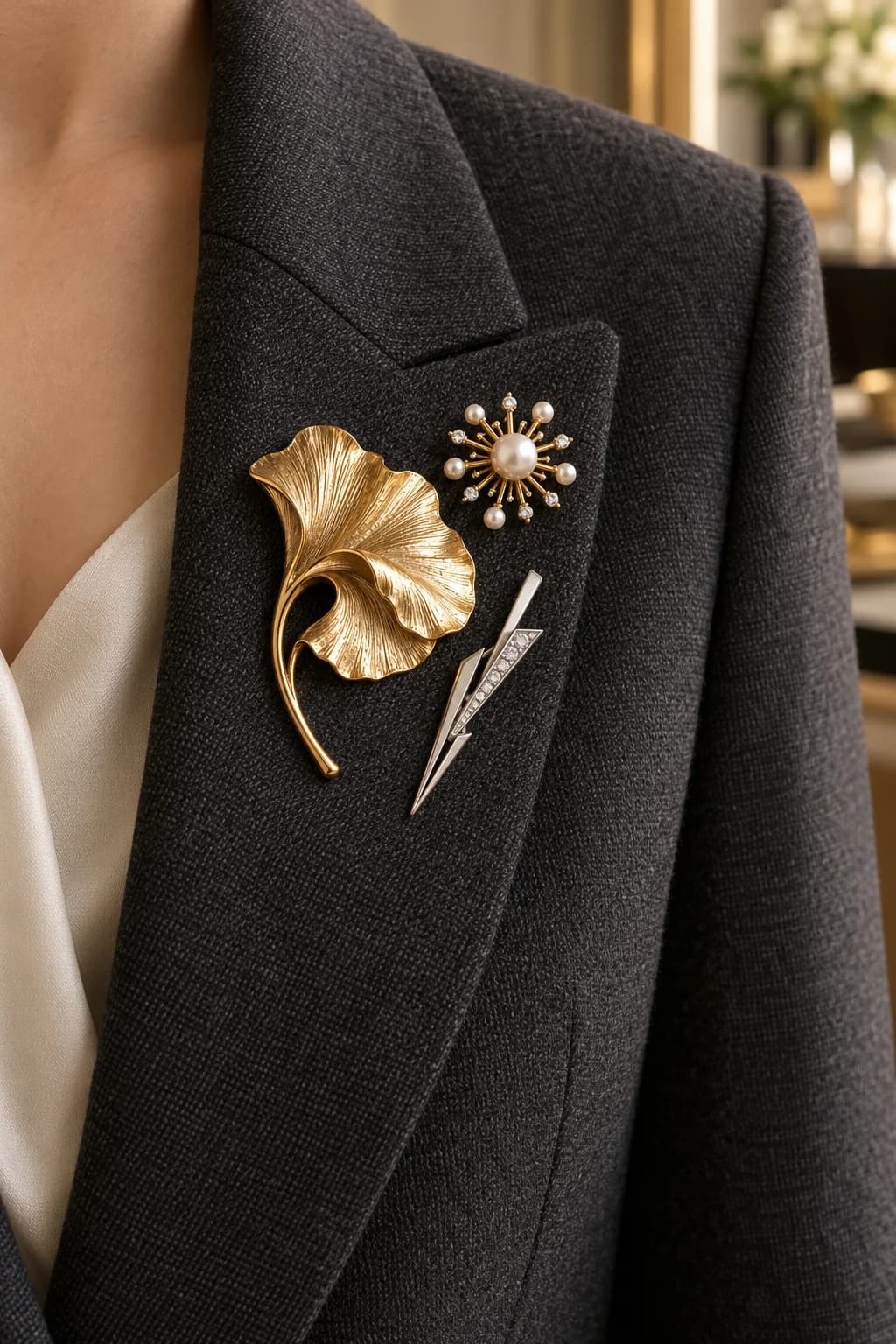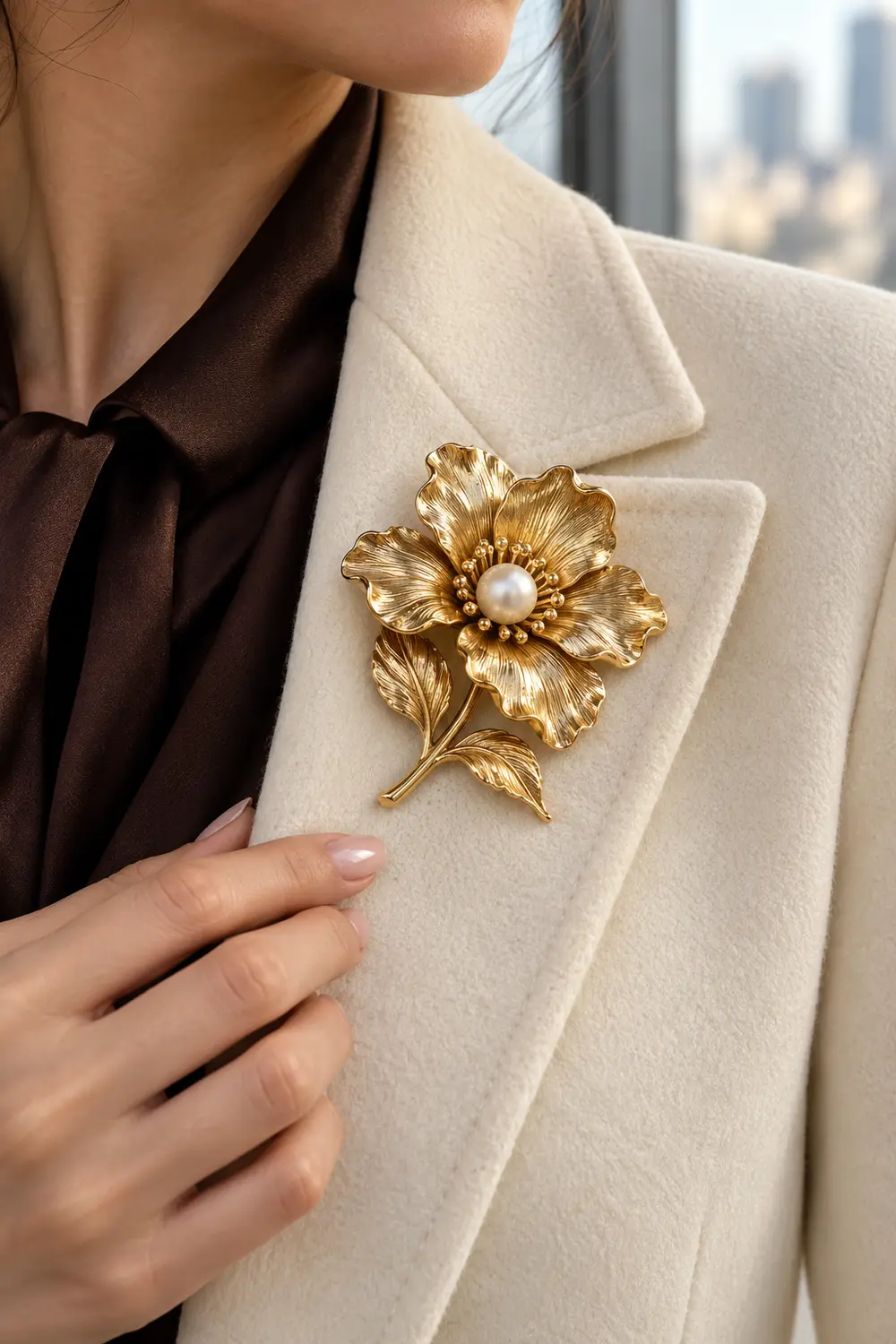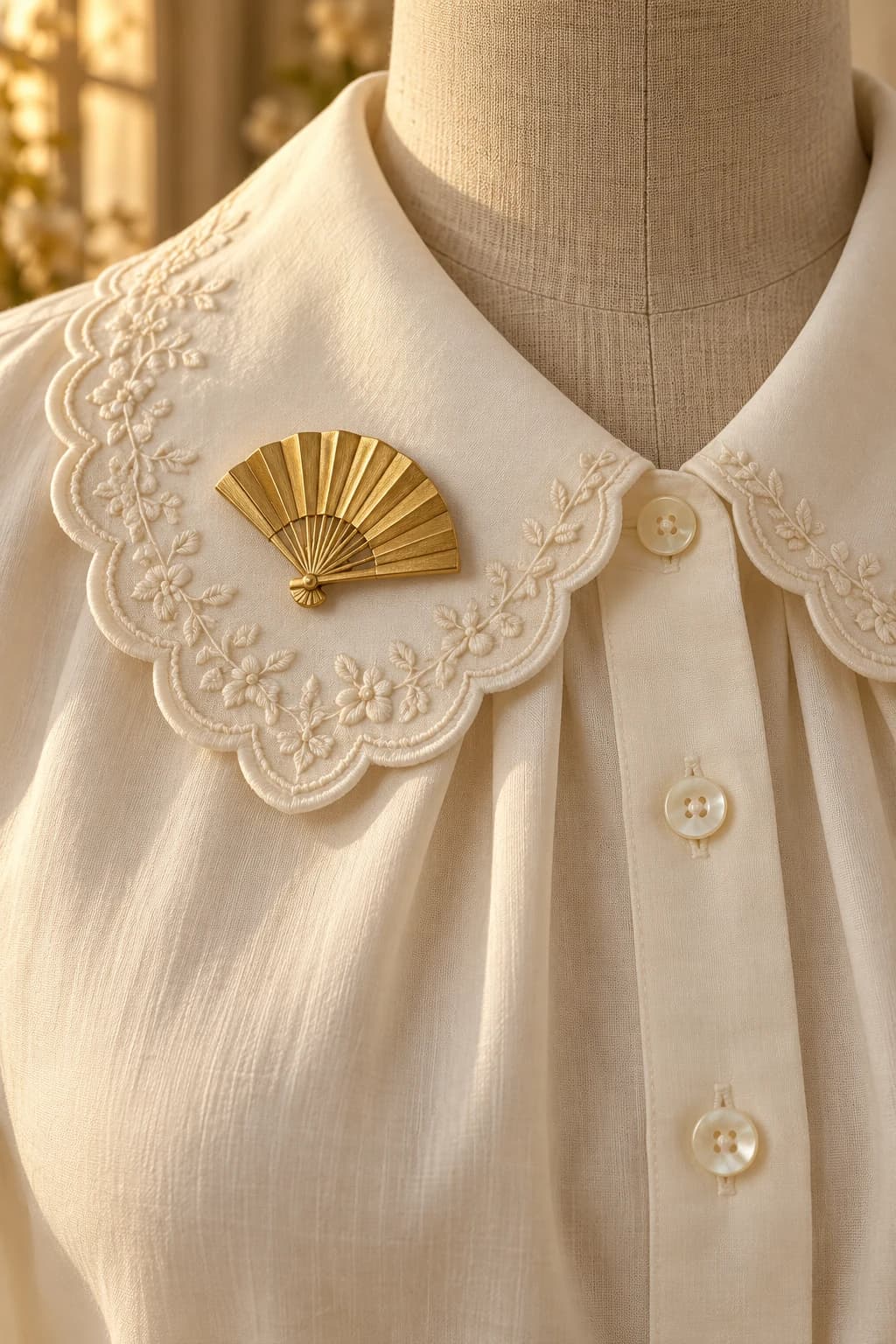
A brooch changes a shirt most when it belongs to one of its details. A small gold fan can follow the shape of a collar; a red enamel flower can pick out the pocket of a denim shirt. Before pinning, hold the two together in daylight. The shirt should make the jewellery easier to see, and the jewellery should give you a reason to look twice at the shirt.
Start with a shirt you would enjoy wearing on its own
An ivory blouse with a shaped collar makes a lovely base for warm gold. The scalloped edge gives the fan in our opening image something to follow, while the plain area inside the embroidery leaves the metal readable. Keep the brooch off the embroidered stitches themselves. There is enough detail here to skip a necklace.
For silver, try pale blue Oxford cotton or a deep olive shirt. A little red enamel is especially clear against indigo denim. Hold the piece against any stripes or floral pattern before fastening it: if its outline disappears, move to a quieter patch or choose another shirt. You do not need a plain white shirt for every brooch.
Put one small brooch on a collar leaf
Choose a collar with enough flat space for the whole brooch. Position it slightly above the point, leaving the edge free so the metal cannot tip onto your neck. A fan, tiny leaf or compact geometric piece works well here because you can turn it to follow the collar's shape.
Fasten the shirt as you intend to wear it, then check both sides in a mirror. One pin adds a little asymmetry to a generous collar. If the leaf curls, droops or turns outward under the weight, the piece is too heavy for it. Avoid pinning through stiff collar stays, dense seams or decorative stitching.
Move onto the upper chest with an open collar
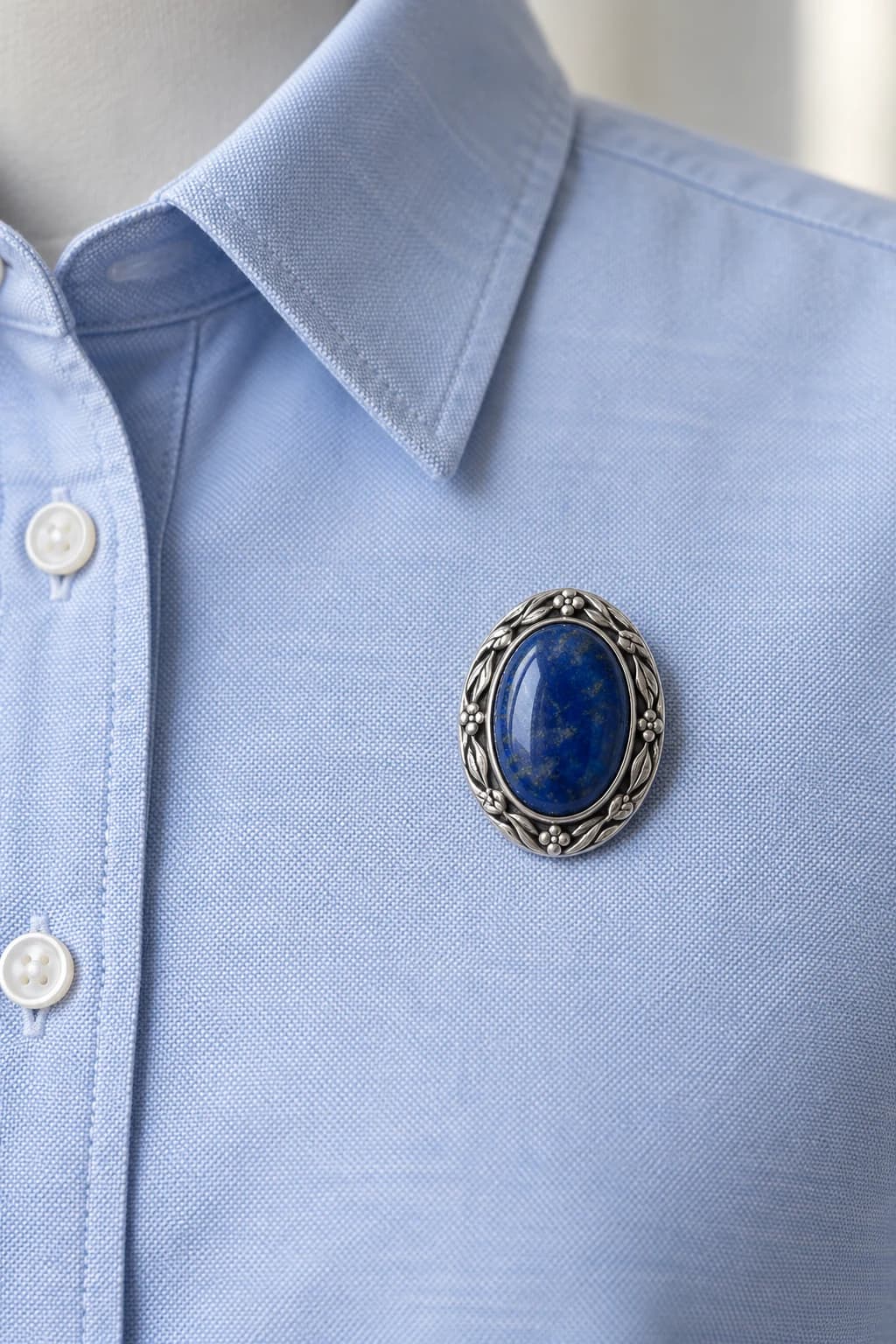
On a softly open shirt, the collar may fold or shift too much to hold jewellery comfortably. Try the flat upper chest instead, leaving a clear gap from the placket and shoulder seam. This gives a coloured stone room to show without dragging the neckline down.
The blue stone and silver brooch shown here stays within the cool colours of a pale blue shirt. That is a quiet pairing; a dark garnet or red enamel pin would stand out more strongly. Decide which effect you want before adding earrings or a necklace, and check the position under any jacket you plan to wear.
Use the pocket as a guide on a denim shirt
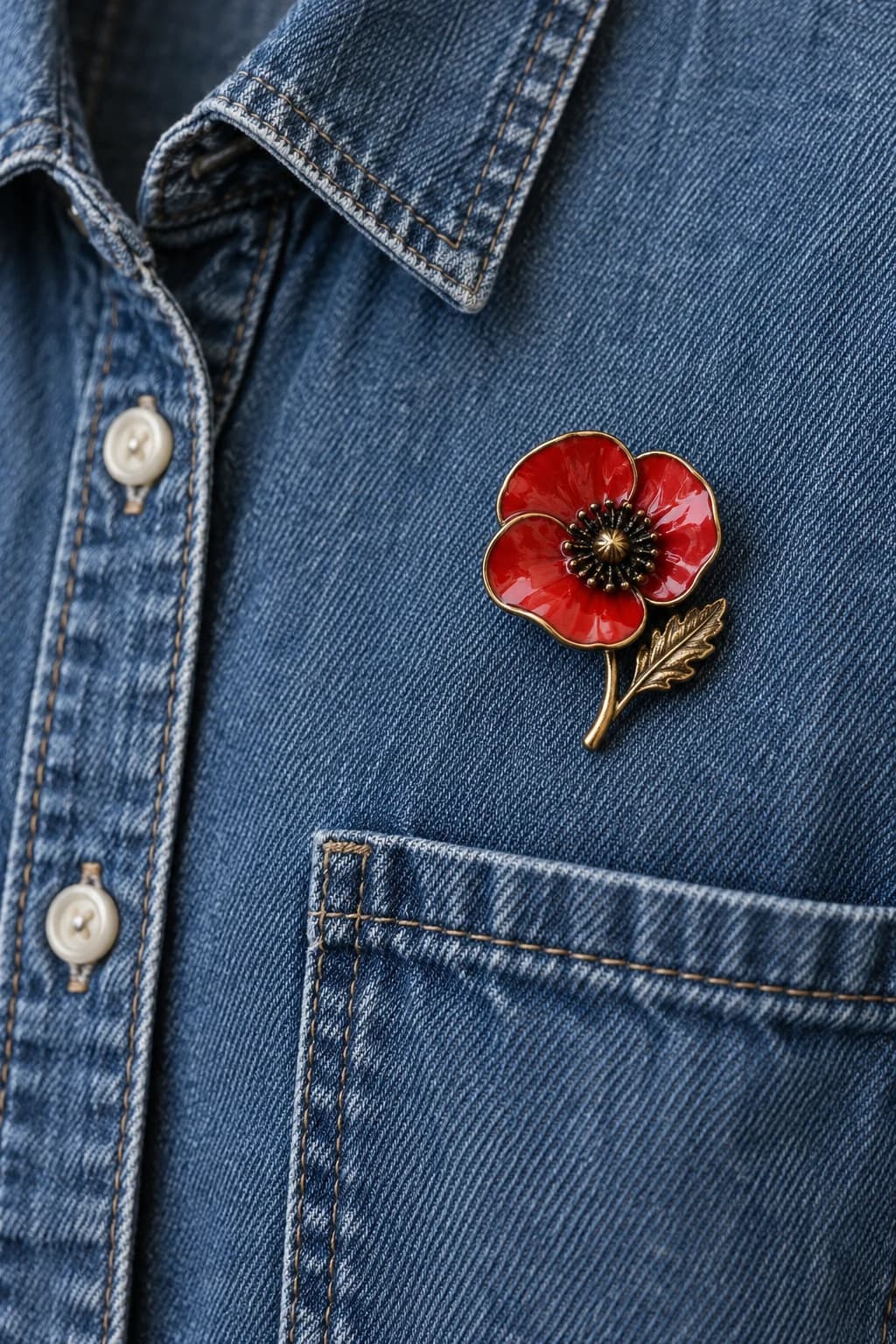
A denim pocket gives a small brooch a natural place to sit. Try the plain cloth just above and slightly beside its top edge. Leave the pocket opening, flap and seams clear. The poppy in our image brings a bright patch of red to the blue without needing another matching accessory.
Check the pin against the thickness of your particular denim. Some shirts are soft and thin; others have layers that a short stem cannot pass through easily. Do not force the clasp closed. Keep the piece away from a seat belt or cross-body strap, and empty the pocket if anything inside pushes against its back.
Follow the placket with a narrow brooch
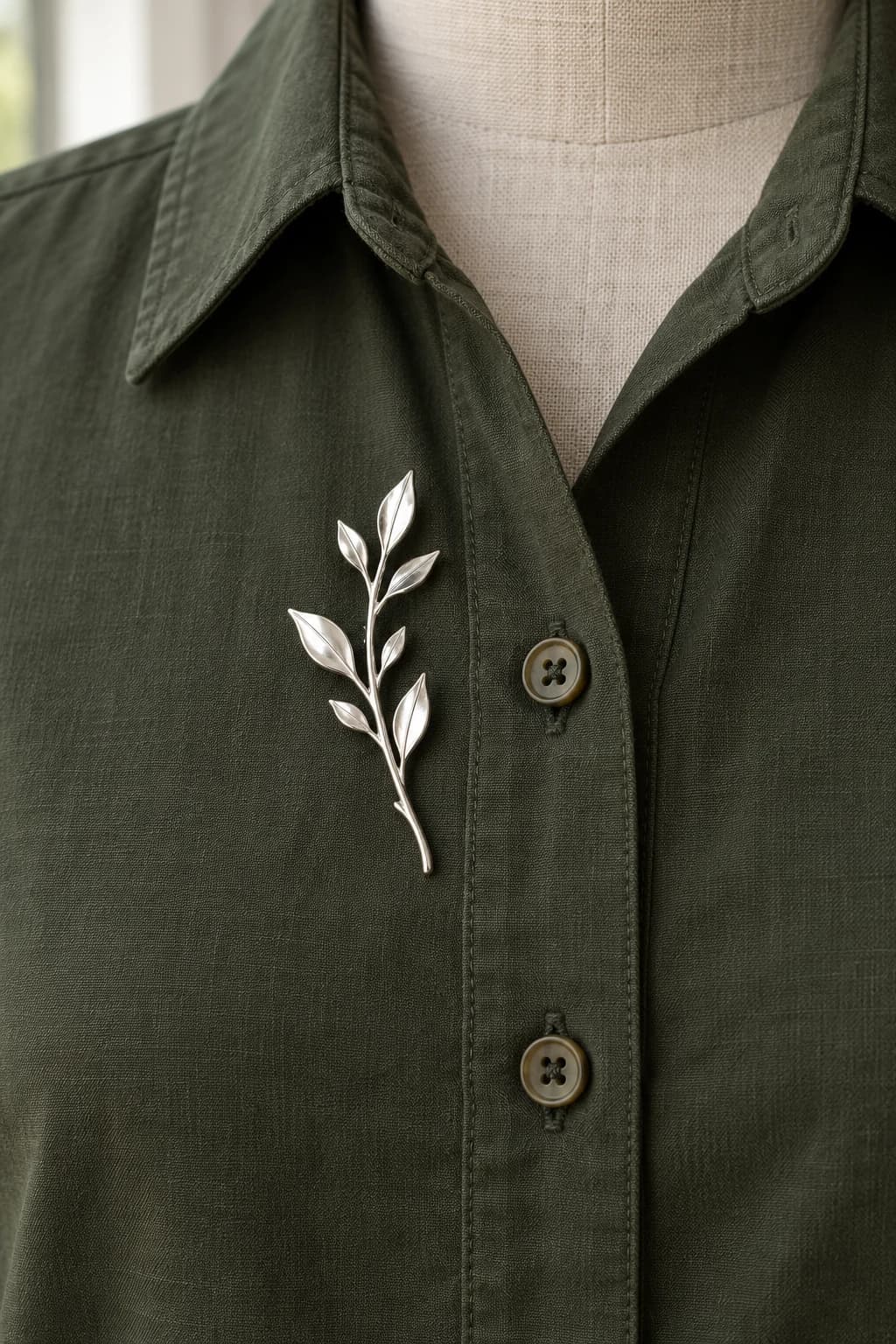
A slim branch or bar can sit vertically beside the upper button placket. Keep it wholly on one side, with enough space that the buttons remain easy to use. A silver branch is particularly clear against rich olive cotton; its irregular leaves soften the straight line of the shirt front.
The pin should decorate the shirt without becoming its closure. Avoid using an ordinary brooch to pull gaping fronts together: the tension can distort the cloth and puts pressure on the pin. Adjust the shirt's fit or use its intended fastening before choosing where the jewellery goes.
A buttoned collar needs a little breathing room
For a shirt buttoned to the top, hold a compact brooch against the front just below the collar. This can give the effect of a small neck ornament, but it only works if the jewellery rests comfortably on the cloth. Do not pin the two collar points together or push a stem through the top buttonhole.
Sit down and turn your head before settling on the position. If the upper edge touches your throat, move it lower or return to a collar-leaf placement. Broad statement collars usually need less jewellery than a plain pointed collar, especially when they already have embroidery or contrast trim.
Check the cloth and fastening before leaving
Begin with a shirt you are comfortable testing. Cotton poplin, Oxford cloth and denim can offer useful structure, but none is guaranteed to hide a pinhole. Silk, sheer cloth, coated finishes and fragile vintage blouses deserve particular care. If a discreet trial leaves a visible mark, choose a different garment. Do not assume washing or steaming will remove it.
Decide on the position while wearing the shirt, then take it off and lay it flat to fasten the brooch. Support the cloth as you guide the stem through, close the catch fully and check that the sharp point is enclosed. Put the shirt back on gently and look for pulling, twisting or a collar that no longer lies flat.
GIA advises handling vintage jewellery delicately and having jewellery checked regularly by a professional. If a hinge wobbles or the catch will not stay closed, have it checked before wearing it. Remove the brooch before washing, ironing or storing the shirt so that the metal and any stones are kept clear of heat and laundry products.