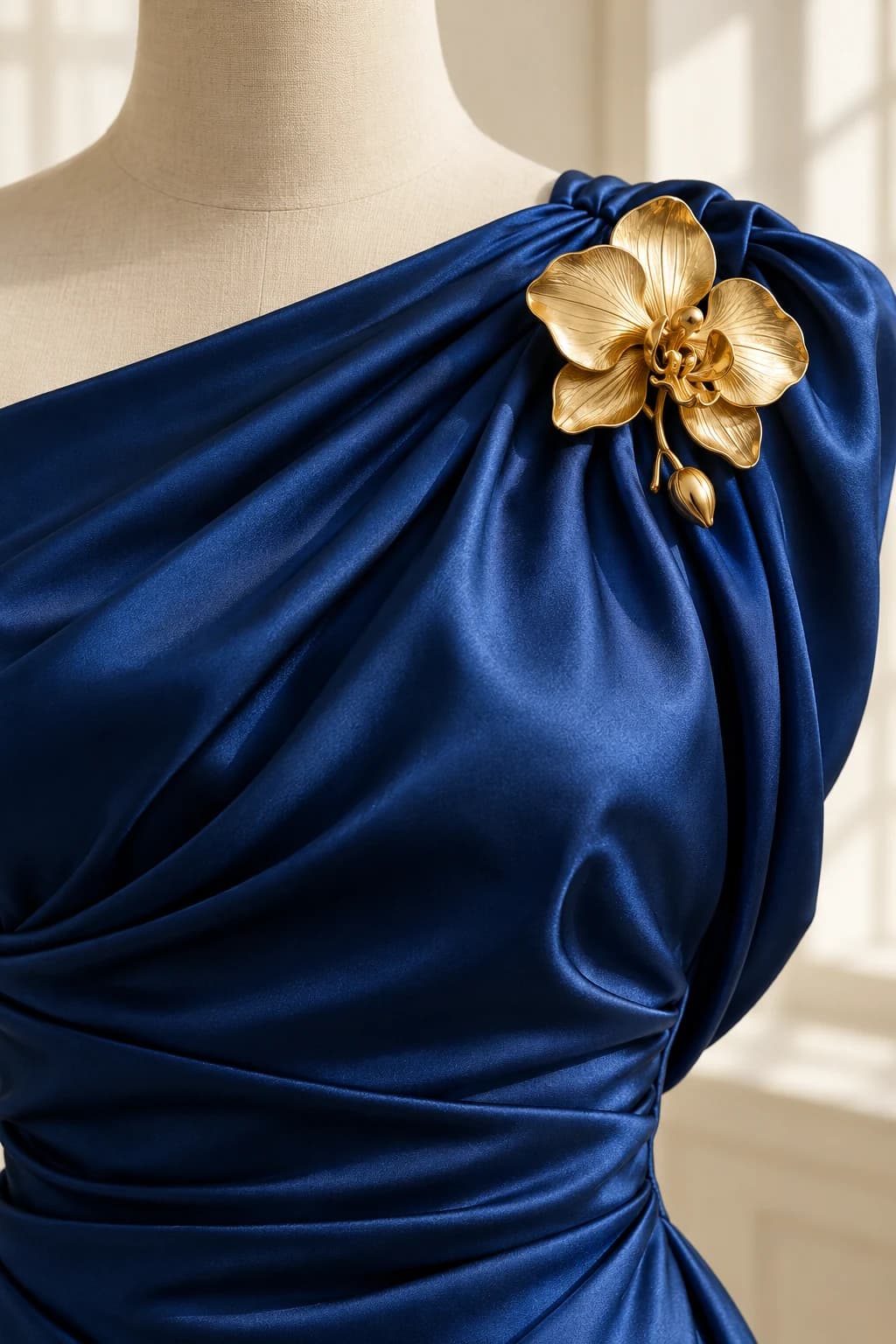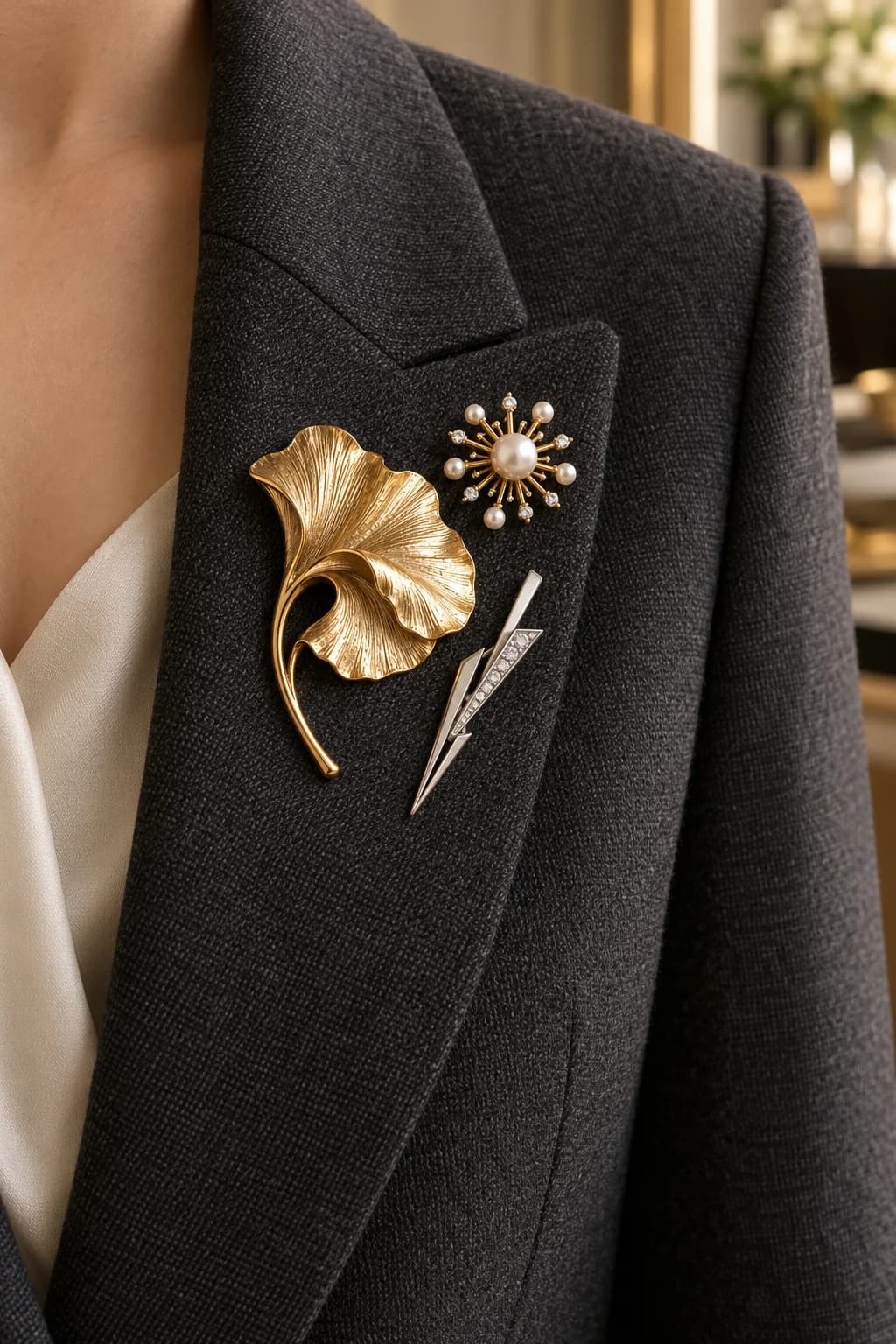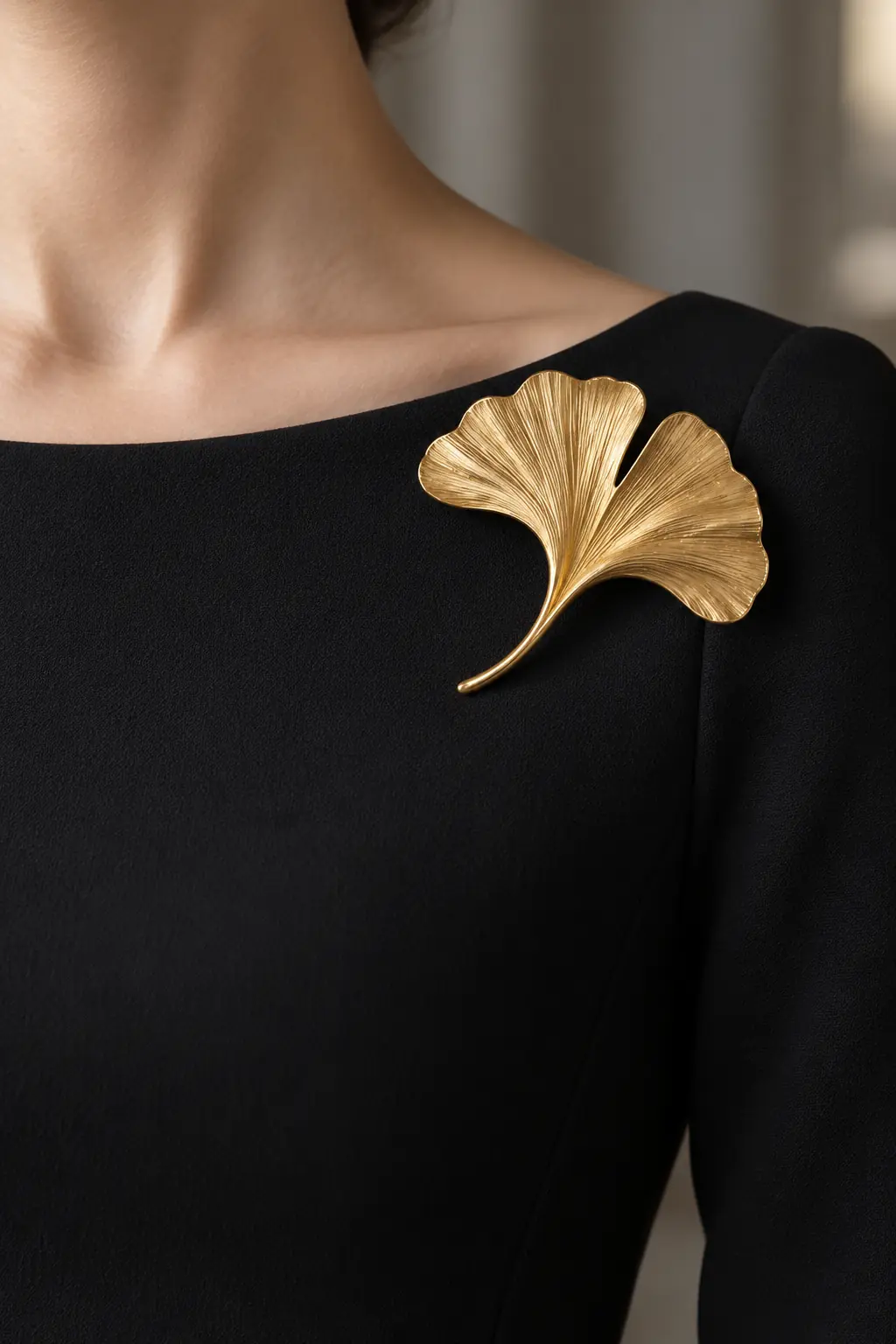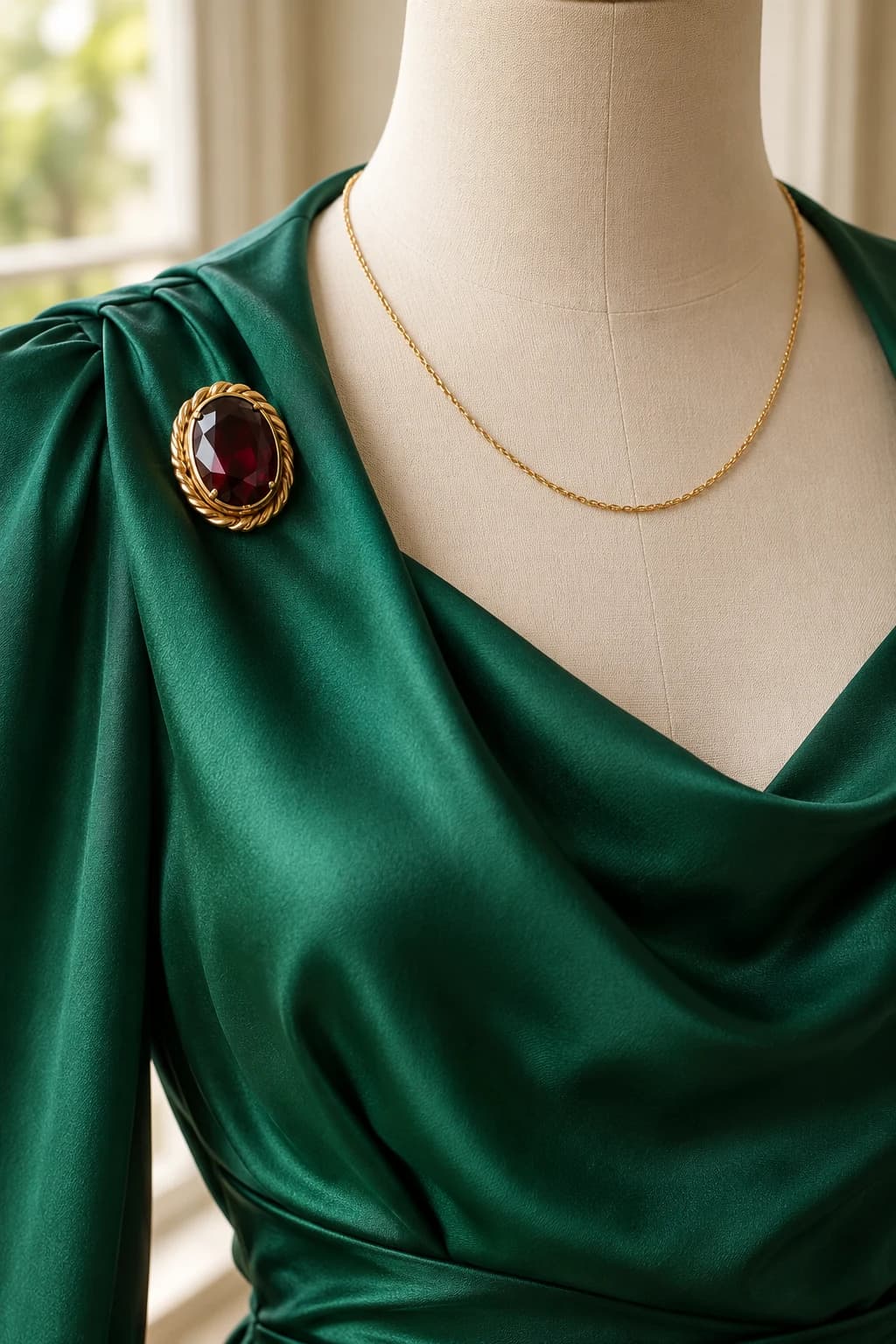
A brooch and necklace can share an outfit beautifully, but they should not fight for the same small patch of cloth. Give one piece the leading role, move the other into a quieter zone and check the space between them. The answer is not always a smaller necklace or a perfectly matched set. Sometimes a clean difference in shape, metal or position makes the two pieces easier to understand.
Start by choosing which piece should lead
Put on the outfit and hold up the brooch and necklace before fastening either one. If the brooch has a large coloured stone, an unusual silhouette or strong sparkle, let it lead and choose a fine necklace. If the necklace has several strands or a substantial pendant, use a smaller, quieter brooch or leave it out.
Matching metal can make a combination feel settled, but it is not compulsory. Warm gold with garnet on an emerald blouse looks connected through colour; a small silver pin can also sit comfortably beside a gold chain when the shapes are simple. What matters first is that the eye can see two deliberate pieces rather than one crowded patch of jewellery.
1. Pair a shoulder brooch with a fine short chain
This is the easiest arrangement because the pieces occupy different zones. Let a fine chain follow the open neckline, then place a compact brooch towards one shoulder. The garnet brooch in our opening image is offset on an emerald silk blouse, while the plain gold chain stays centred and lower. The rich green gives both pieces contrast without asking them to match exactly.
Keep the chain short enough that its clasp or pendant cannot swing against the brooch. On a soft blouse, pin through a facing, yoke or another supported area rather than a single loose layer. If the silk puckers or the brooch tips forward, move the piece to a jacket worn over it.
2. Use a pearl brooch with a single pearl strand
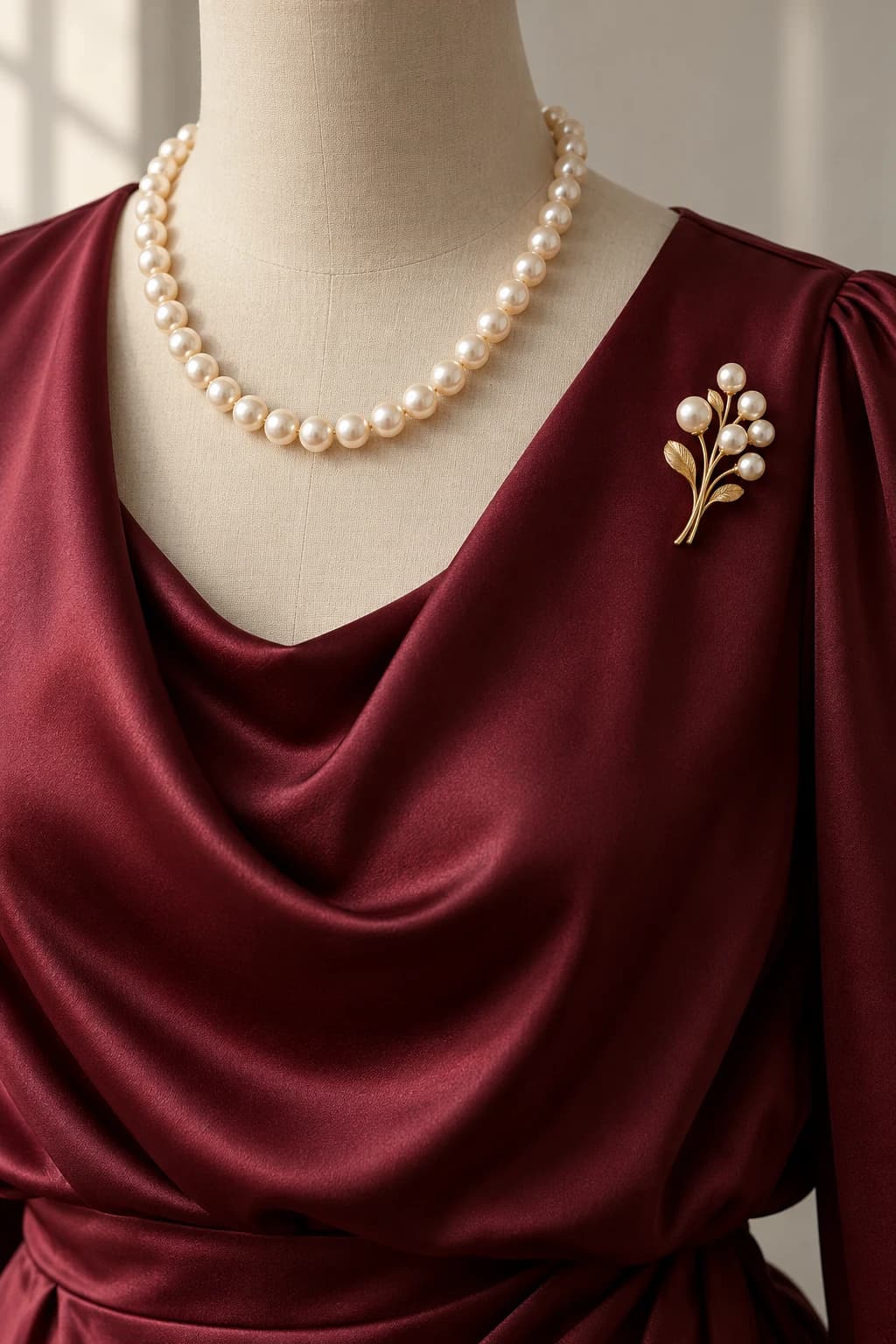
Pearls can repeat without becoming a formal matching set when the shapes and spacing are different. Try one clean strand at the neck and a small spray brooch off to the side. On burgundy satin, cream pearls have enough contrast to remain distinct, while the deep fabric colour keeps the pairing from looking bridal.
Avoid placing the brooch directly beneath the lowest pearl, where the pieces can read as one large ornament. Leave visible cloth between them. If the necklace already has a decorative clasp or graduated centre, choose a very simple brooch rather than another elaborate cluster.
3. Let a pendant sit inside a square neckline
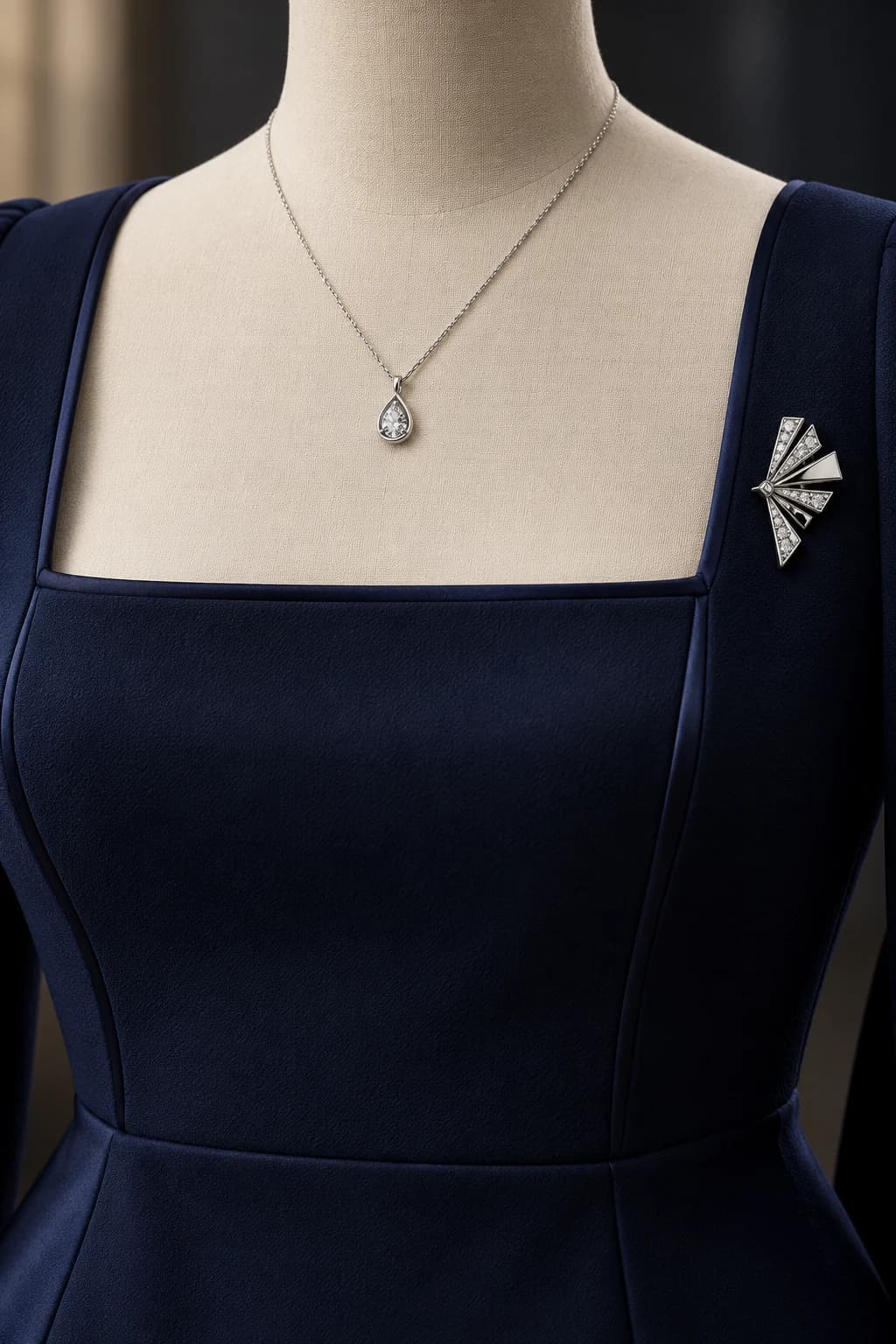
A square-neck blouse creates a clear frame for a small pendant. Keep the necklace inside that opening and move a geometric brooch to the upper outer edge of the bodice. The silver pieces shown here share a cool finish, but their shapes do different work: the pendant draws a vertical line while the brooch marks the shoulder.
Check the pendant length while sitting as well as standing. It should remain inside the neckline instead of slipping under the cloth. The brooch should sit on fabric with enough structure to hold it flat; do not use the pin to pull the neckline into a new shape.
4. Put the brooch on a jacket and the necklace underneath
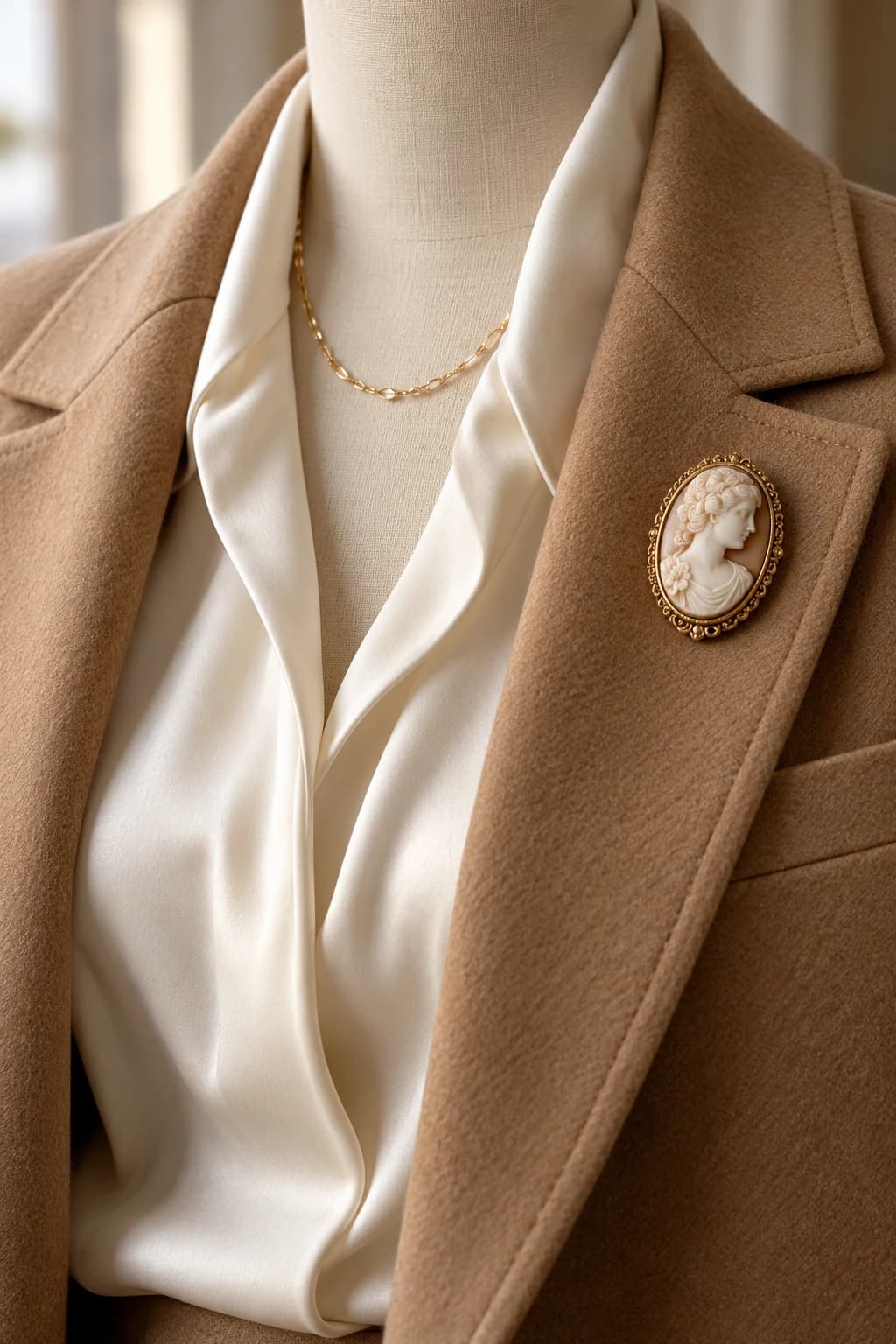
A jacket gives each piece its own material. Pin a cameo or sculptural brooch high on the lapel, then wear a short chain over the blouse beneath it. The camel tailoring and ivory silk shown here form two calm colour fields, so the cameo remains legible and the chain adds light without competing.
Try the full arrangement with the jacket open and buttoned. The lapel can shift closer to the necklace when it closes, and a chain may disappear under the collar. Move the brooch slightly higher if necessary, but keep it clear of the notch, edge and any bag strap.
5. Mix metals by repeating one quiet detail
A silver brooch and gold necklace can look intentional when there is a small bridge between them. That might be a two-tone watch, a brooch with a gold rim, warm stones in a silver setting or simply garment buttons that echo one metal. Keep both pieces modest while you judge the mix; two oversized pieces make every difference louder.
Do not force a connection by adding matching earrings, bangles and rings all at once. One repeated detail is enough. Stand several steps from the mirror: if the first thing you see is a confusing shine around the neckline, remove one piece or create more space between them.
6. Know when the necklace should disappear
A broad collar brooch, a cluster of pins or a piece placed at the centre of a high neckline already occupies the necklace zone. In that case, removing the necklace is usually the clearest choice. Small earrings or a ring can balance the outfit without adding another line around the neck.
The same applies when a blouse has a bow, ruffle, embellished collar or several visible buttons. Jewellery does not need to fill every available place. Let the garment detail and brooch make one composition, and save the necklace for a plainer outfit.
7. Finish hair and perfume before delicate jewellery
Fasten the necklace before attaching the brooch so you are not pulling a chain across a raised setting. Then move your shoulders, turn your head and lean forward. The two pieces should not strike each other, catch in the same hair or sit beneath the same coat edge. Close every clasp and pin catch fully before leaving.
GIA advises keeping jewellery away from perfume, hairspray, lotions and household chemicals; it gives particular care warnings for pearls and other delicate or porous gems. Finish cosmetics and fragrance first, let them dry, then put on the necklace and brooch. After wearing pearls, wipe them gently and store them where harder jewellery cannot scratch them.