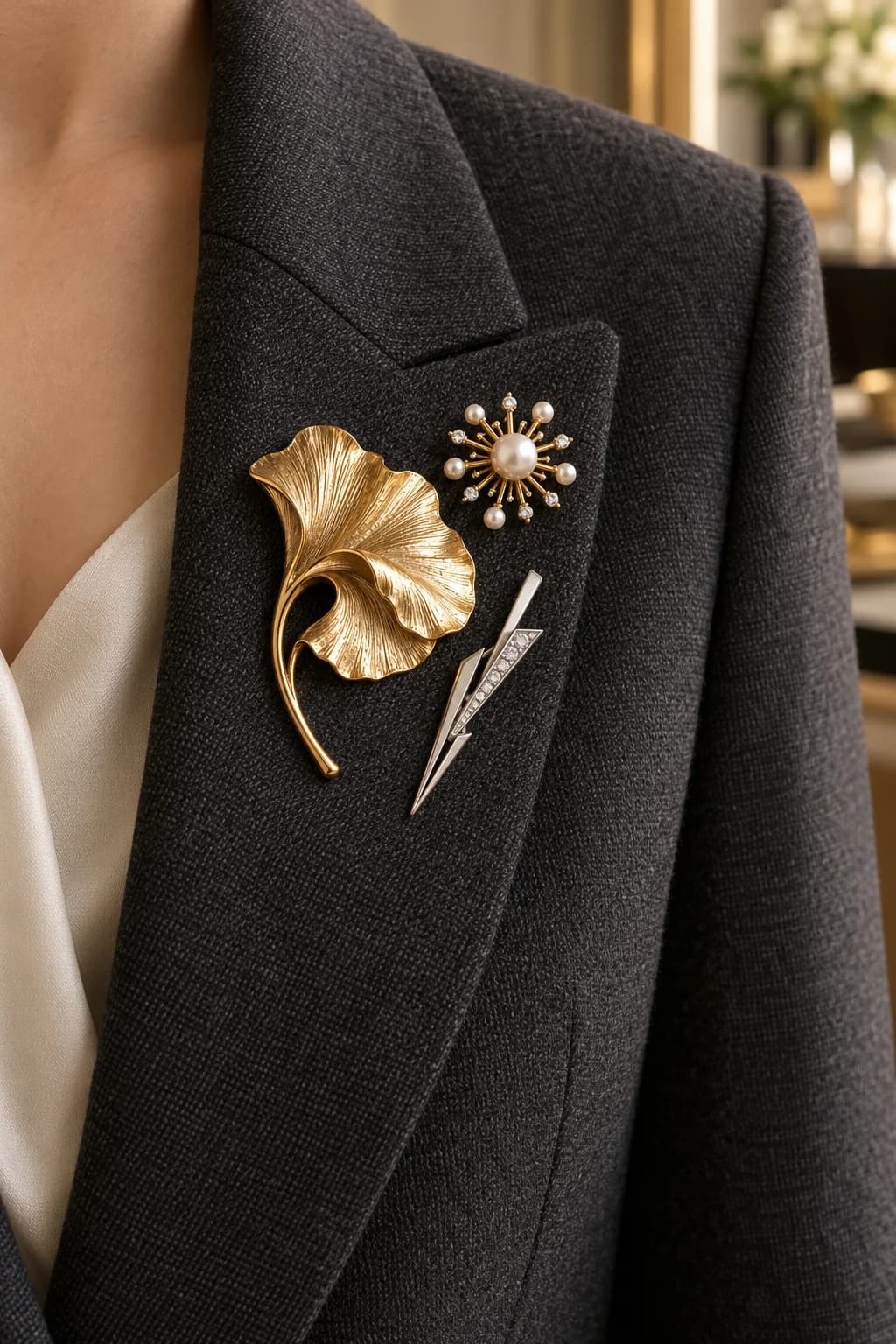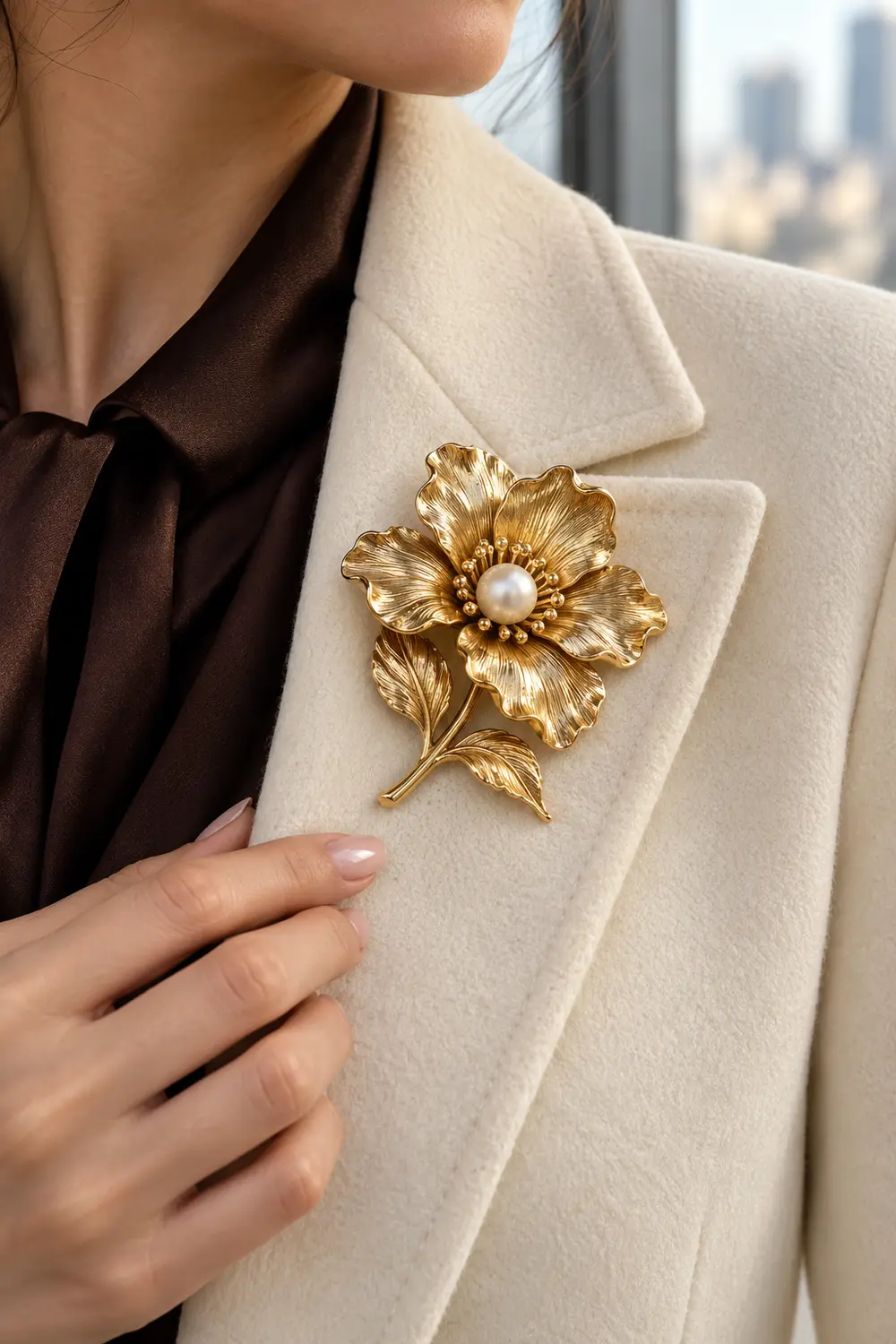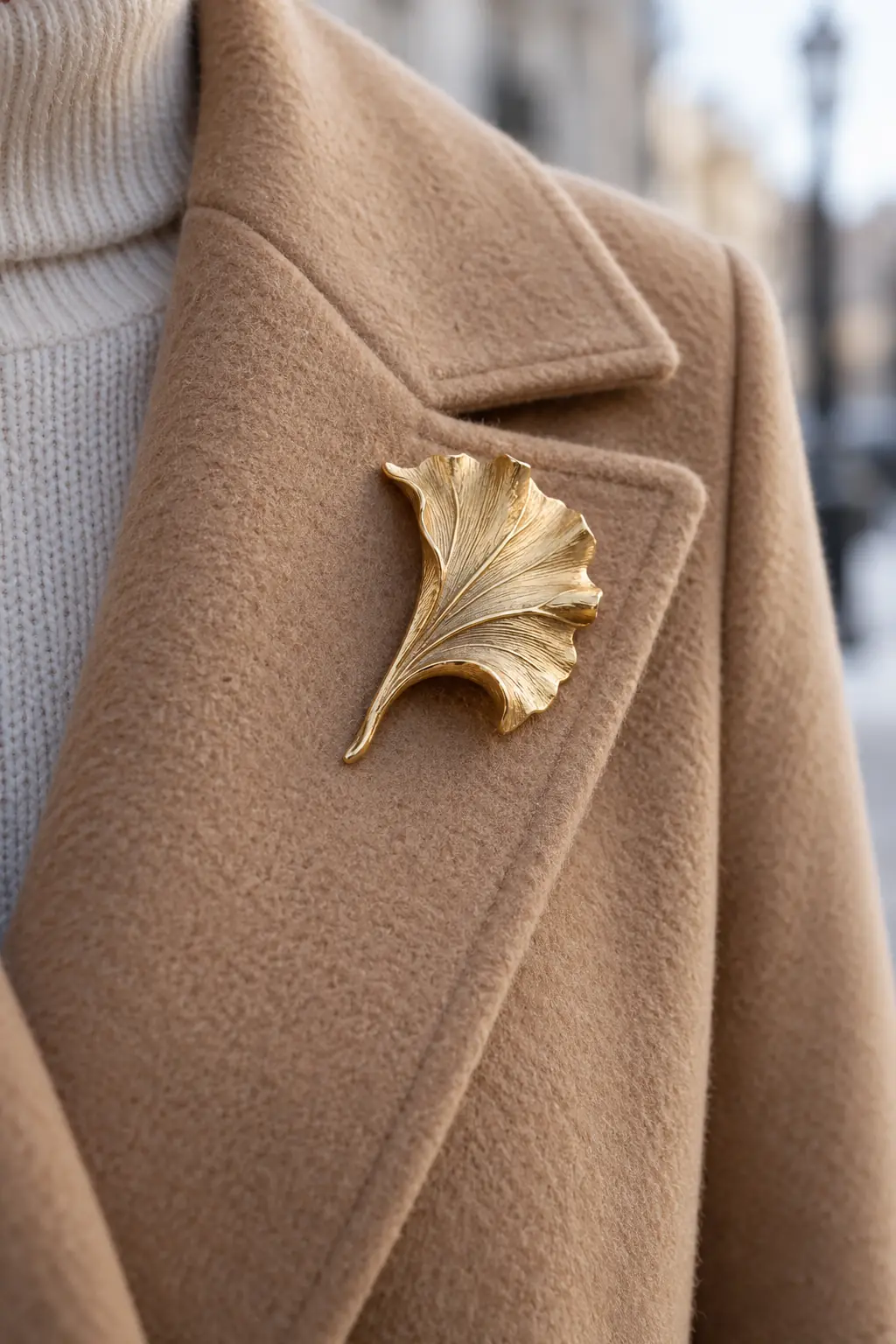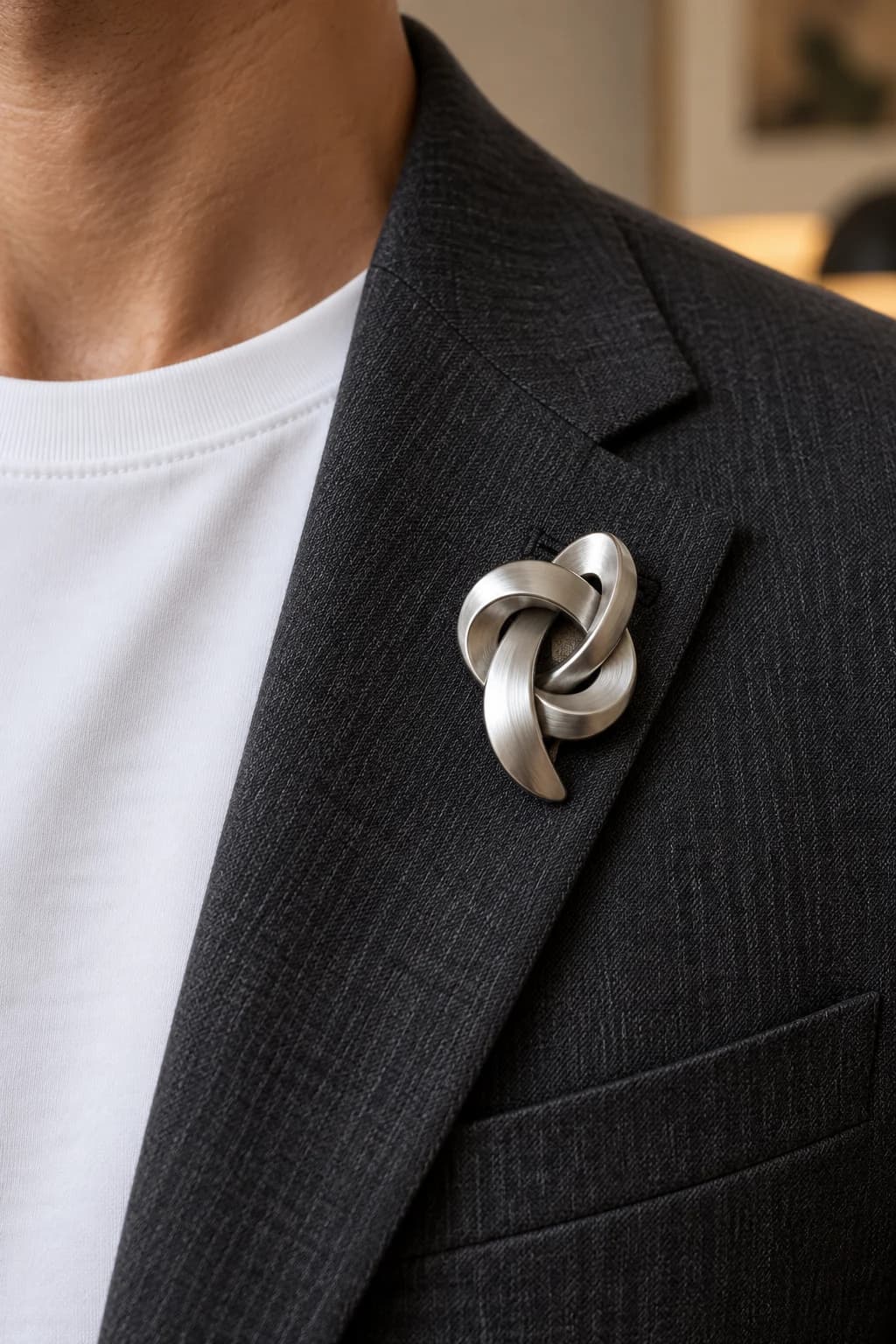
A brooch on a man does not need to resemble a medal, wedding flower or novelty badge. The easiest versions are simply well-placed pieces of jewellery: a small geometric pin on a navy suit, an old silver brooch on a relaxed blazer or a larger enamel piece on a winter coat. Start with clothing you already wear and let the pin replace one other accessory. Once the scale and position feel right, the brooch stops looking like an experiment and starts looking like part of the outfit.
1. Start with a relaxed blazer and a plain T-shirt
An unstructured charcoal, navy or brown blazer is the most forgiving place to begin. Wear it over a plain crew-neck T-shirt or fine knit, then place one brooch on the upper half of the lapel. The casual layer underneath keeps the outfit away from wedding or ceremonial territory.
Choose a compact piece with a clear outline: a knot, oval, leaf, bar or abstract shape. It should sit comfortably inside the lapel rather than crossing a seam. Put the blazer on before pinning because the lapel angle changes once it rests on the shoulders.
2. Place the brooch high enough to belong to the neckline
A pin worn halfway down the chest can look isolated. Move it higher, usually just below the lapel notch or near the collarbone, so it reads with the shirt collar and face rather than floating beside the buttons.
There is no useful rule that every man must wear a brooch on one particular side. A traditional lapel buttonhole may make the left side convenient, but the better choice is the side with clean fabric, a secure fastening and no cross-body strap, backpack strap or seatbelt rubbing over it.
3. Keep a suit brooch small, clean and deliberate
Tailored suits already contain sharp lines, so a small geometric or sculptural brooch usually looks more natural than a large ornate piece. Matte gold warms navy and deep green; silver, steel and black enamel sit easily with charcoal and cool grey.
Position the pin below the notch without covering the buttonhole or pushing through a thick seam. If the jacket fabric puckers, the brooch is too heavy or the pin stem is pulling at the wrong angle.
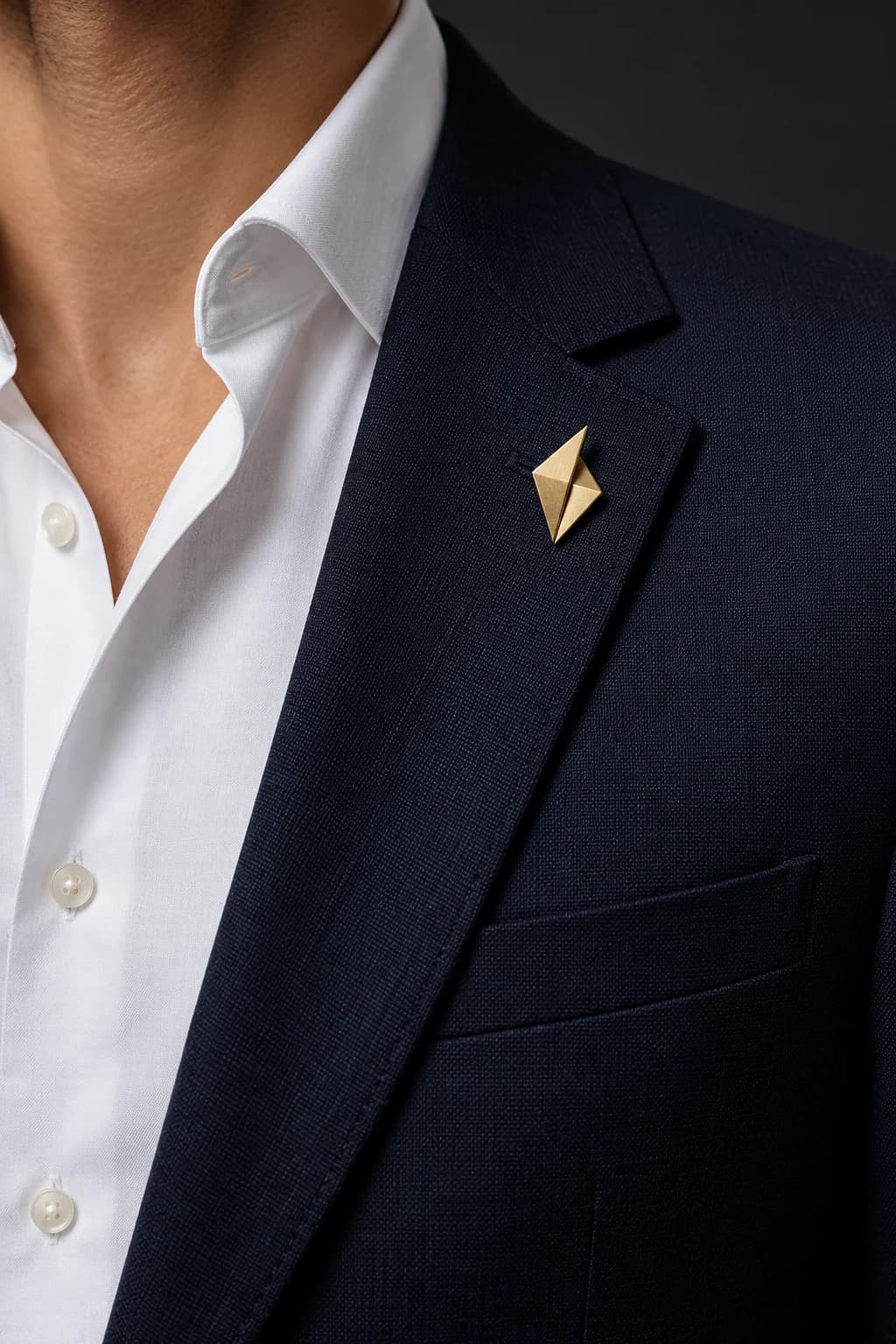
4. Let the brooch replace the pocket square
A brooch, patterned tie, pocket square and lapel chain can all be good individually. Wearing them together often leaves no clear focal point. For an easy modern suit, use the brooch as the lapel detail and leave the breast pocket empty.
If you keep a tie, choose a quiet fabric and avoid a second decorative pin. With an open-collar shirt, the outfit has more space and can carry a slightly stronger brooch. The goal is not minimalism for its own sake; it is making the jewellery readable.
5. For formalwear, choose one lapel idea
A dinner jacket or dark evening suit can take a polished brooch, particularly a slim bar, small starburst or dark enamel shape. Put it where a boutonnière might normally sit, then allow it to do that job alone.
Avoid adding a flower, chain and decorative pin to the same lapel unless the outfit is deliberately theatrical. One precise piece tends to photograph better and is less likely to catch on a coat, embrace or shoulder strap during the evening.
6. Give a wool coat enough scale
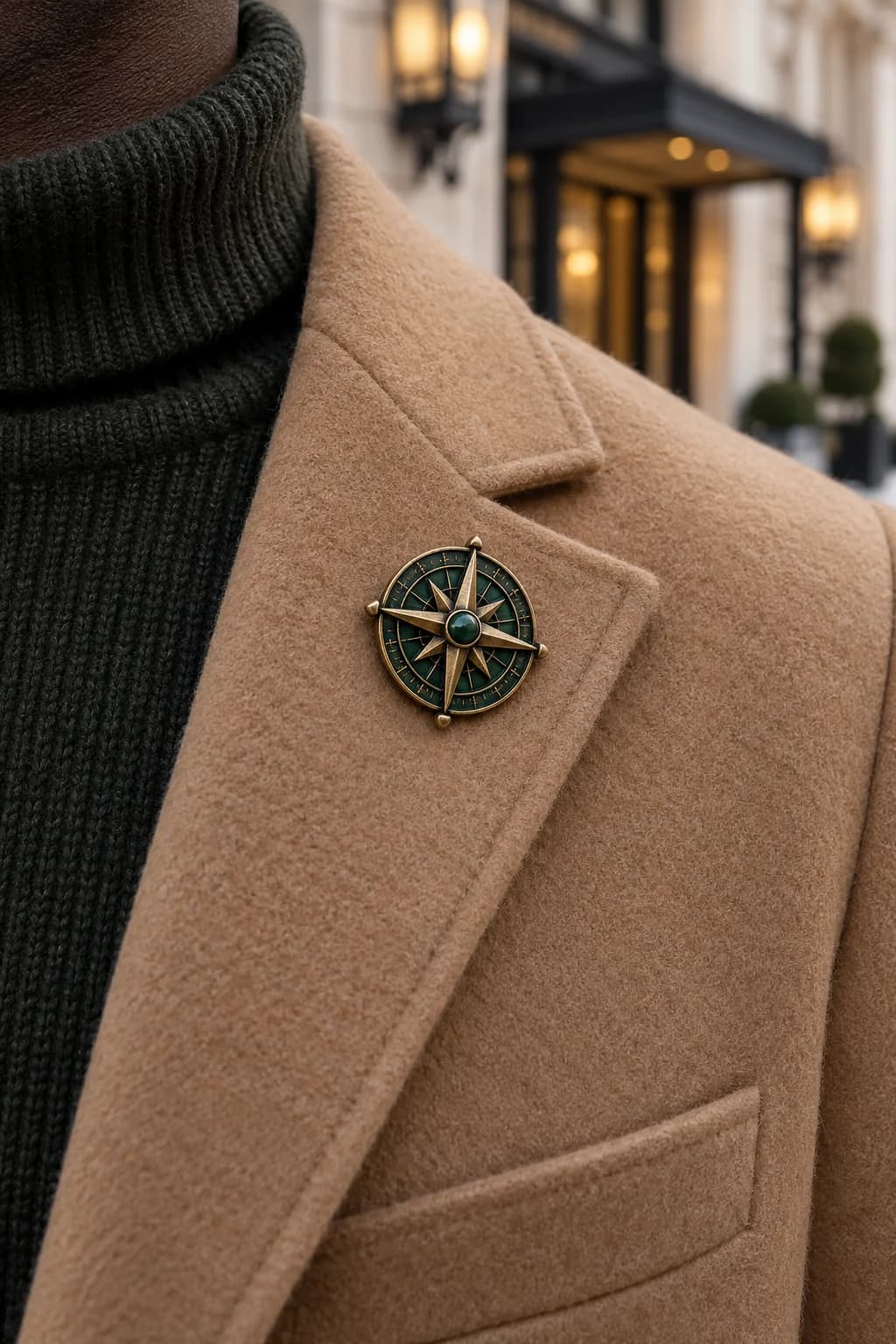
Heavy outerwear can absorb a very small pin. A medium brooch with enamel, textured metal or a strong silhouette is easier to see on camel, navy, charcoal or olive wool. Place it high on the lapel, clear of the scarf line and away from the edge that folds when the coat closes.
A coat is also a sensible home for a slightly heavier vintage piece because the fabric offers more support than a shirt or fine blazer. Test the clasp from the inside and make sure the pin does not enter a pocket bag or hidden fastening.
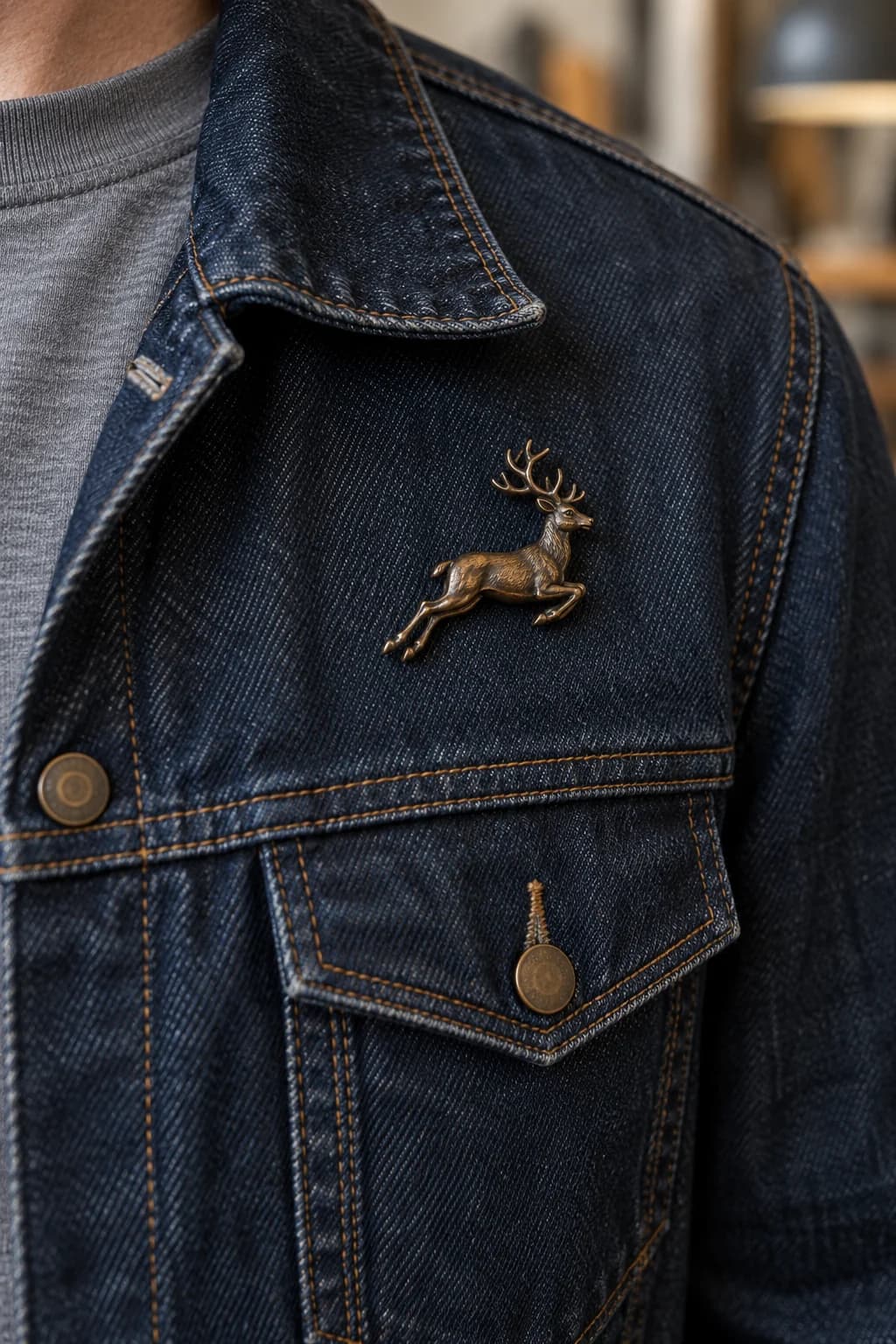
7. Use denim or workwear for an animal or enamel brooch
Denim removes much of the formality from a brooch. A small bronze animal, coloured enamel pin or old souvenir piece can sit above the chest pocket of an indigo jacket and feel as easy as a watch or ring.
Pin through the flat body of the jacket rather than the thick pocket seam. Check the position with the jacket open and closed, and leave room for a bag strap. One well-made piece looks more considered than a crowd of tiny badges when the aim is jewellery rather than memorabilia.
8. Pin knitwear only where the fabric is supported
A cardigan, overshirt or knitted jacket can work with a light brooch near the shoulder or collar, but loose stitches are easy to stretch. Use a reinforced edge, doubled band or firmly knitted collar rather than the soft centre of the fabric.
If the piece tilts forward, opens the stitches or leaves a visible pull, move it to the coat or blazer worn over the knit. A magnetic converter may suit some garments, but follow its maker's instructions and keep strong magnets away from anything they could affect.
9. Try two pins only after one feels natural
Two small brooches can make a good cluster on a broad blazer or coat lapel. Choose one lead shape and one quieter companion, then leave visible fabric between them. A silver knot with a small black enamel dot, or a vintage animal with a plain bar, is enough.
Keep the pair in one zone rather than placing one on each side of the jacket. Uneven placement feels less like uniform insignia and makes it easier to vary the scale without forcing symmetry.
10. Wear an heirloom as jewellery, not costume
An inherited brooch does not have to match the period of the clothing. Put an old piece on a simple contemporary base and let the contrast show. A Victorian motif on a plain wool coat or an Art Deco geometric pin on a modern suit can feel personal without requiring a vintage outfit.
Before wearing it, inspect the hinge, pin stem and catch. Older clasps can loosen without warning. For a valuable or irreplaceable brooch, ask a jeweller whether the fastening needs attention and consider a safety chain or other professionally fitted security measure.