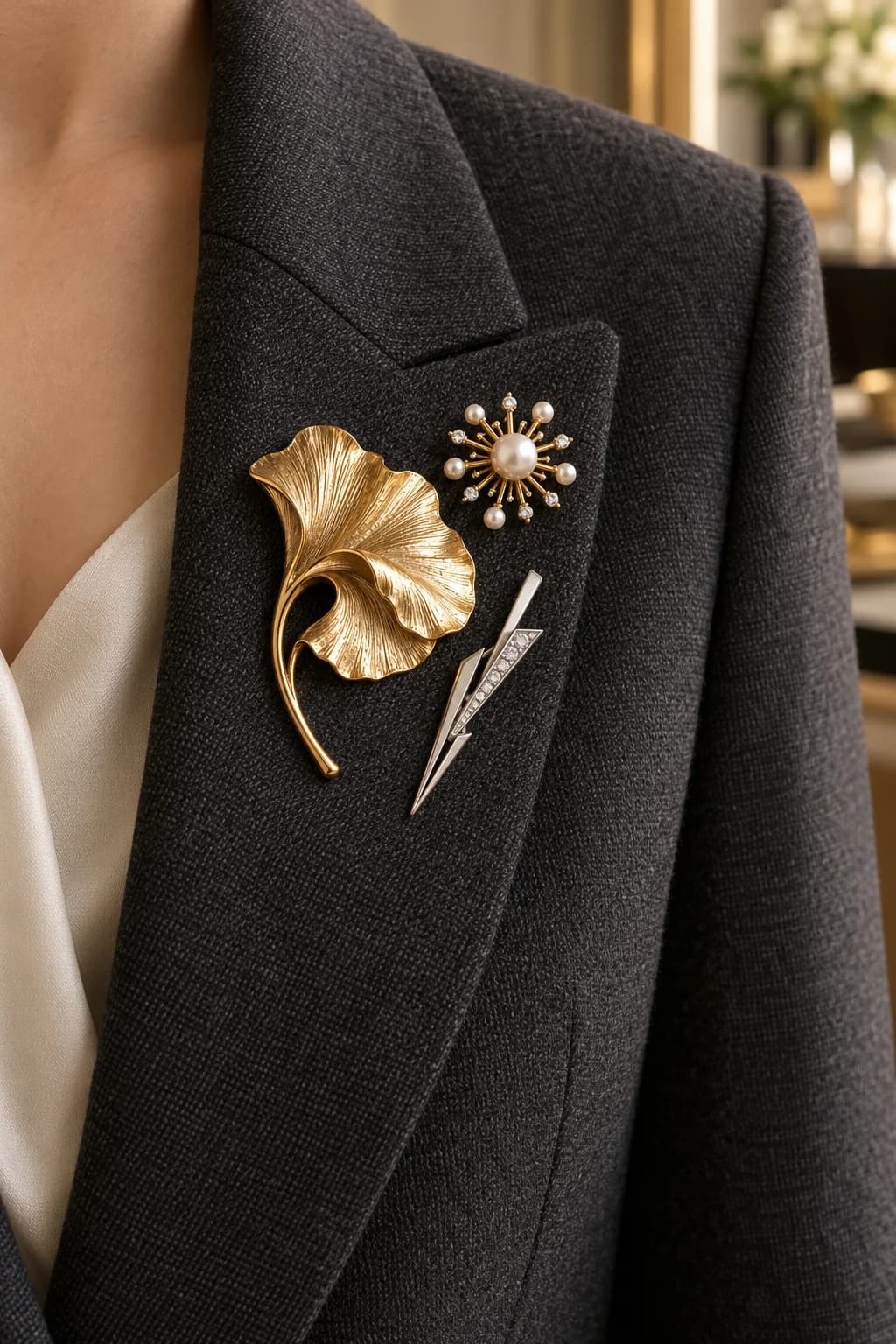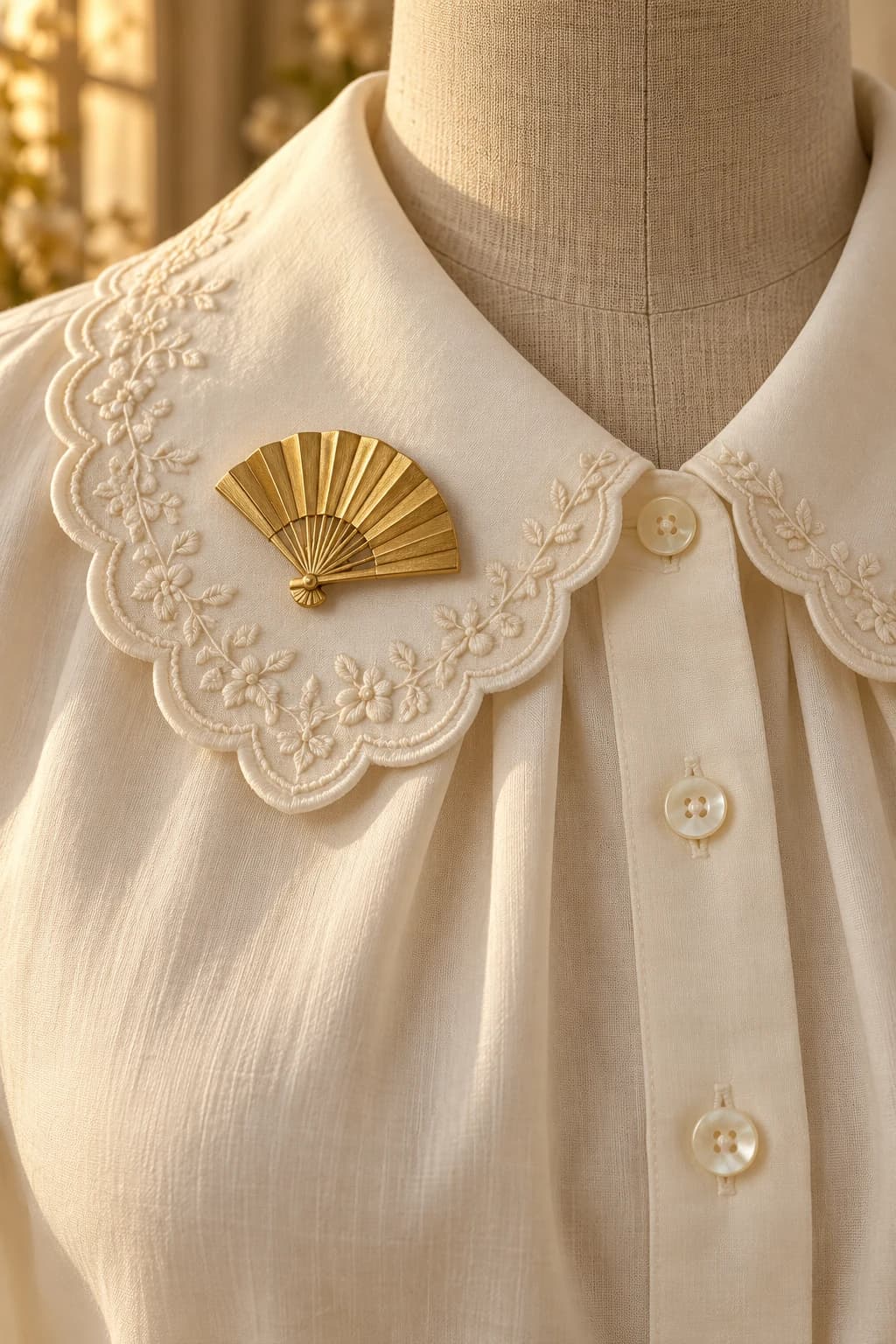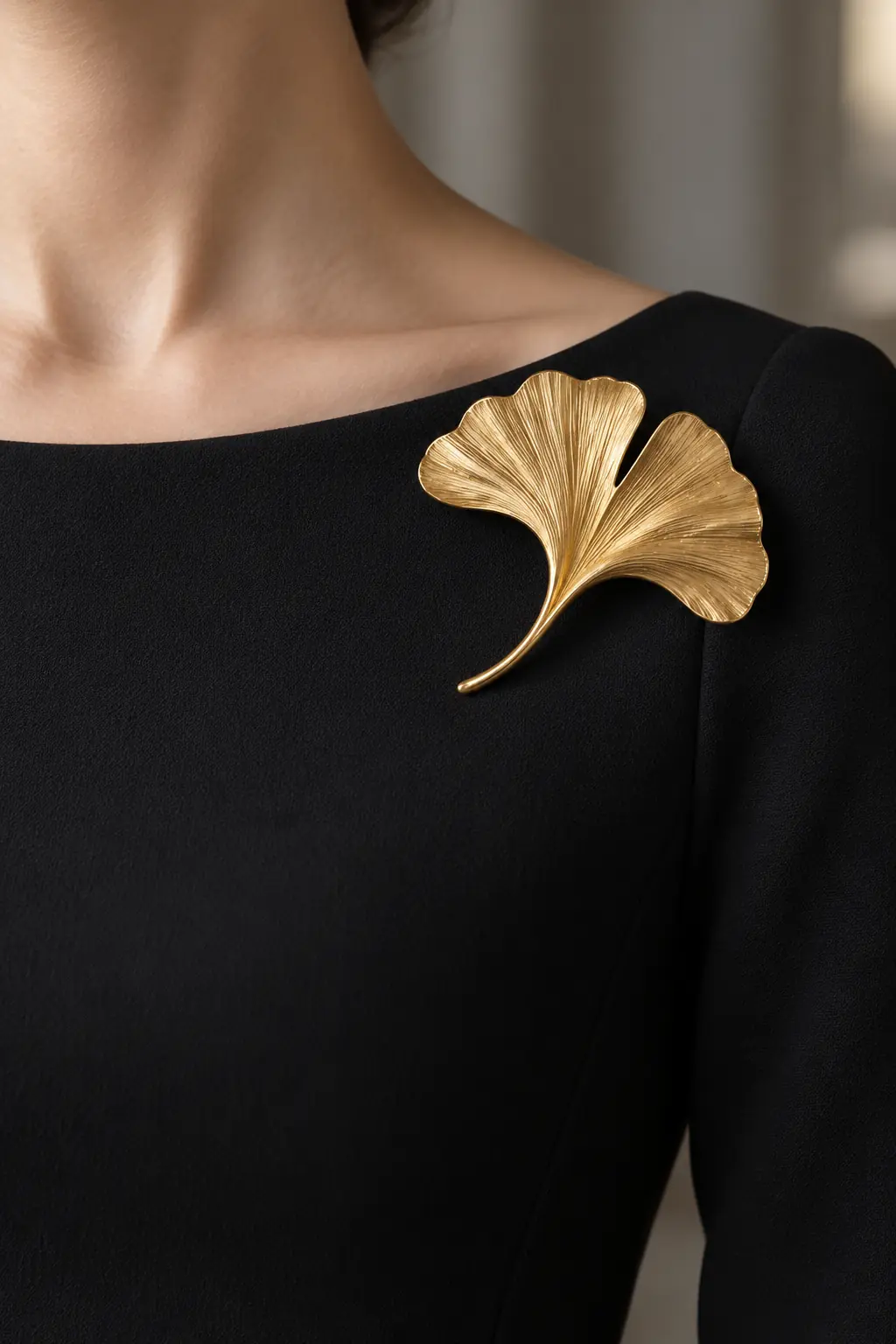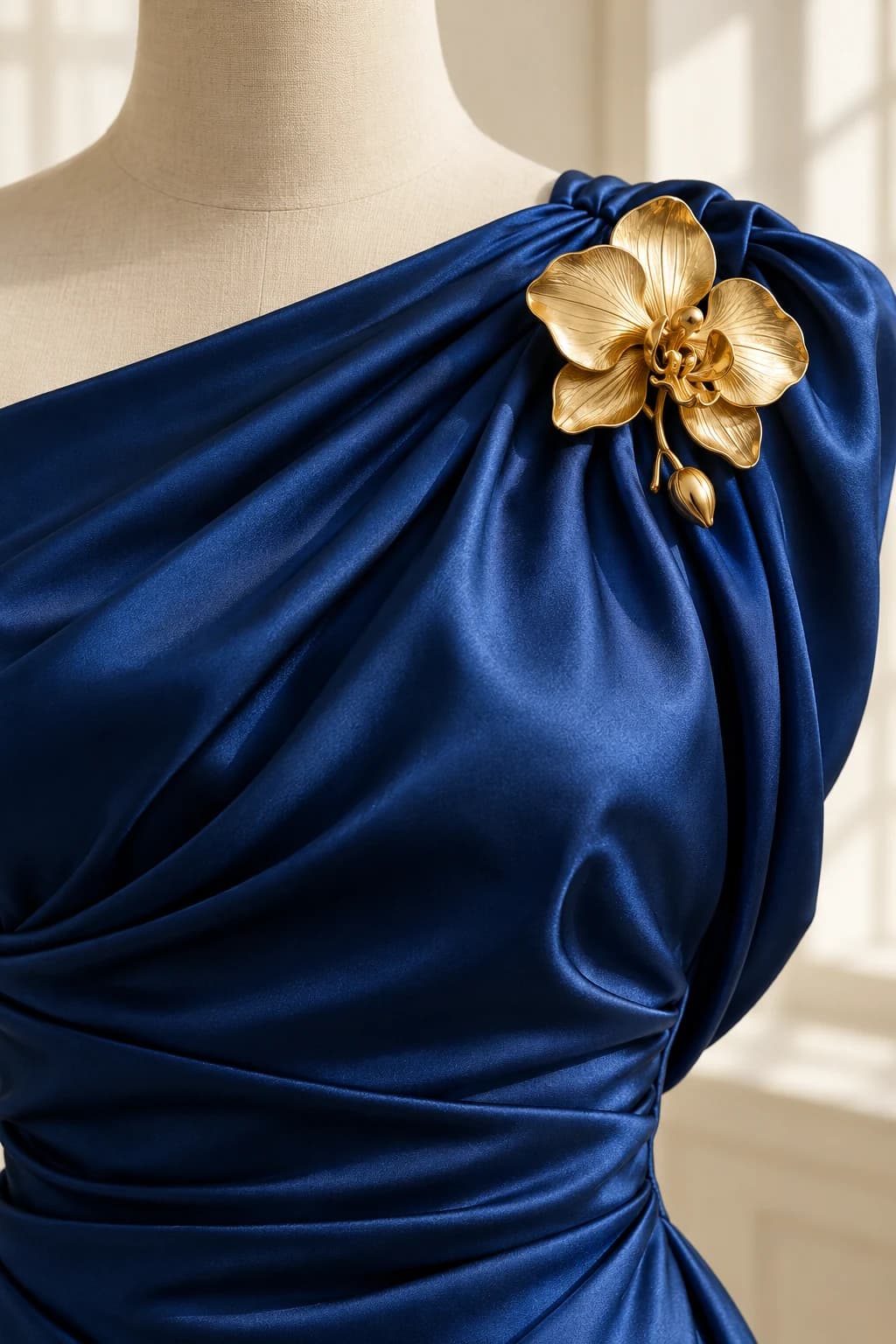
For an ordinary fashion brooch, there is no rule that says it must go on the left or the right. Start with the side that has the clearest fabric and the least interference from straps, hair and other jewellery. Then adjust the height and angle until the piece feels connected to the neckline. Formal medals, honours and some uniform insignia follow their own protocols; a brooch worn for style does not need to copy them.
The direct answer: left and right are both correct
The left side is familiar because lapel buttonholes, corsages and many formal decorations often appear there. Familiar does not make it compulsory. A fashion brooch can sit on the right shoulder, at the centre of a collar, beside a pocket or anywhere else the garment can support it.
Look at the whole outfit before choosing. If a wrap blouse crosses from right to left, a brooch may look most settled where that diagonal ends. If an asymmetrical neckline already rises on one side, the quieter side may give the jewellery more room. The gold orchid in our opening image follows the gathered left shoulder of a sapphire silk blouse; the position works because it belongs to the blouse's construction, not because left is universally correct.
1. Let the neckline choose the side
A V-neck creates two strong diagonals. Place the brooch on one of them, a little below the shoulder, and turn the piece so it follows the line. With a boat neck, move outward towards one shoulder. On a collared shirt, use a collar leaf, the upper chest or the cloth just beside the placket rather than pinning through a buttonhole.
Asymmetrical necklines need a little judgement. Adding the brooch to the detailed side creates a stronger focal point; placing it on the open side balances the shape. Try both with the garment on and photograph each version. The better position is usually obvious when you compare the full silhouette instead of staring at the pin from a few centimetres away.
2. The right side can be the practical choice
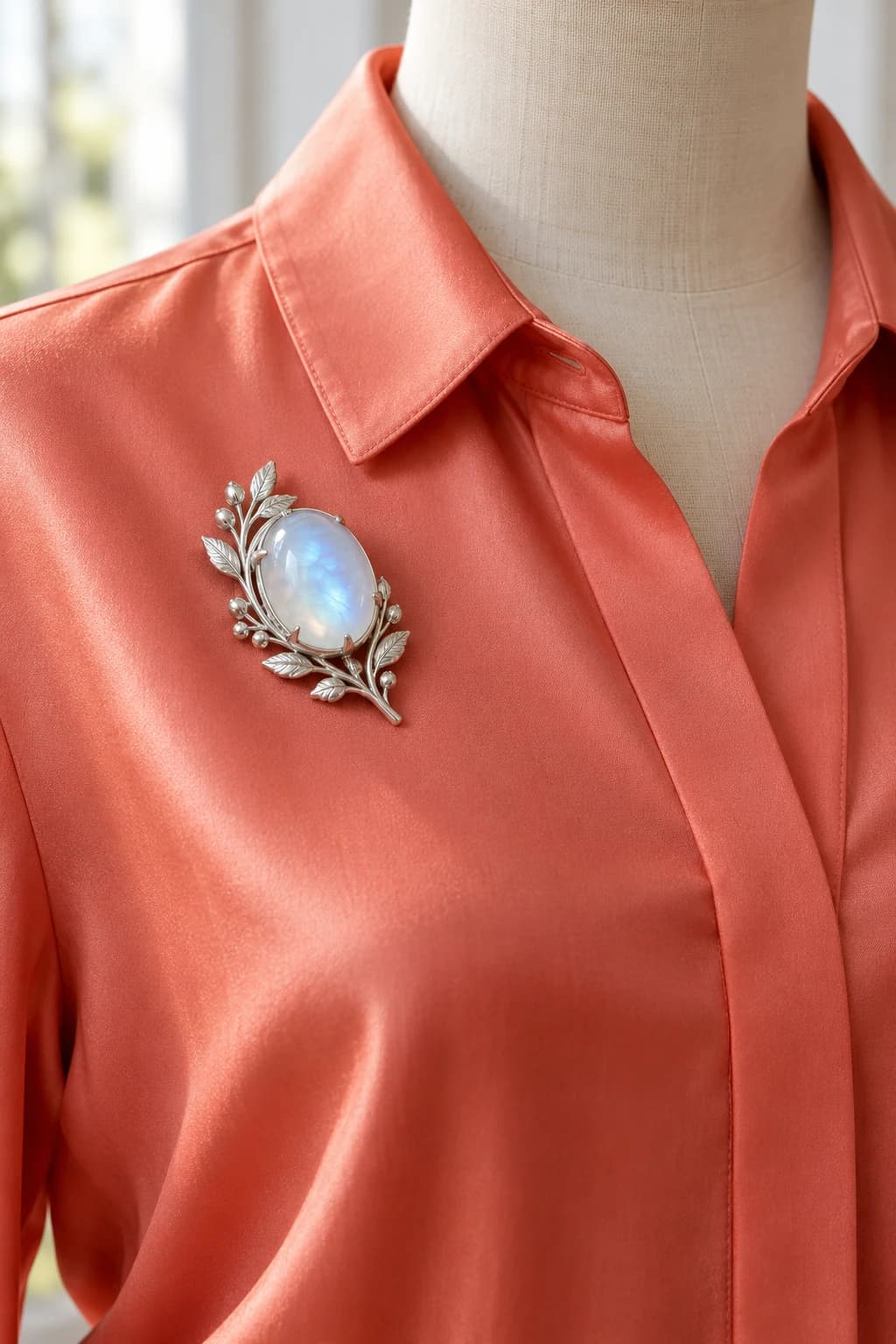
Use the right side when the left is crossed by a handbag strap, covered by hair or already occupied by a pocket, ruffle or embroidered panel. The moonstone-style brooch shown here sits on the clear upper chest of a coral silk shirt. Its cool silver setting stands out against the warm fabric, and the uncluttered position keeps the oval shape readable.
Check which shoulder carries your everyday bag. A brooch beneath the strap can be knocked, twisted or pressed into the cloth. The same applies to a car seatbelt. If the piece will be rubbed repeatedly during the day, moving it to the other side is more sensible than following a styling habit.
3. Begin high, then move down only when the garment asks for it
A useful starting point is the upper third of the bodice, close enough to the collar or lapel that the brooch reads as part of the neckline. A pin placed halfway between the shoulder and waist can look stranded unless it belongs to a pocket, belt or deliberate row of jewellery.
Height also changes with scale. A small brooch can sit near the collarbone or high on a lapel. A wide piece needs a broader, flatter area and may have to move slightly lower. Put on the jacket or blouse before testing: shoulders lift the fabric and can change the apparent position by several centimetres.
4. Follow the lapel or the motif when choosing an angle
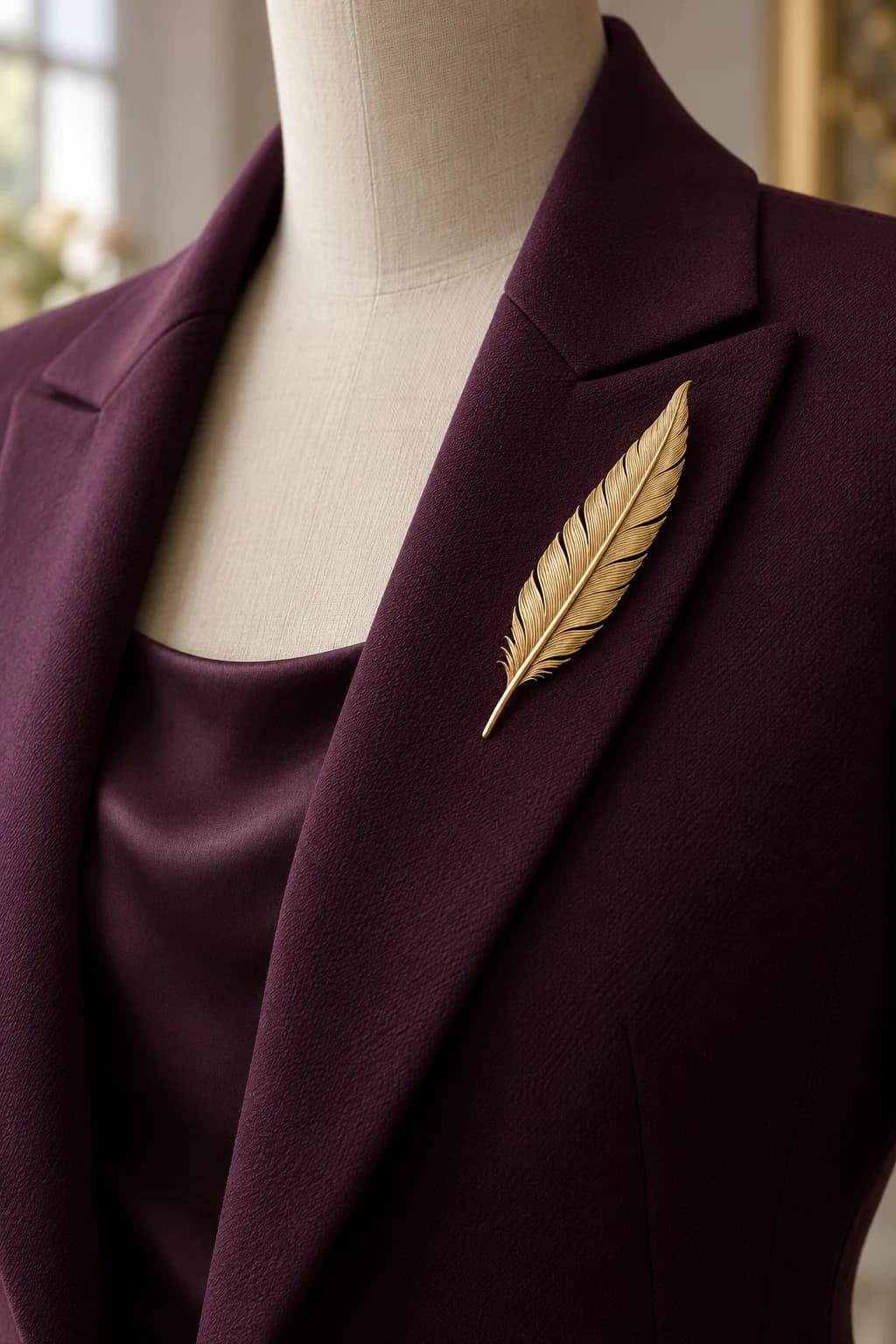
A long leaf, feather, arrow or branch usually looks deliberate when it follows the lapel's diagonal. The brushed-gold feather on this plum blazer points upward and inward, echoing the line towards the face. A round flower or cameo can remain upright, while a fan or spray may look better opened towards the shoulder.
Do not rotate a representational piece so far that it becomes difficult to read. Birds, faces, bows and baskets often have a clear top. Check the back before deciding: the hinge, stem and catch determine how the brooch can sit securely, and the decorative front should not be forced into an angle the fastening cannot support.
5. Centre placement works when the garment provides a frame
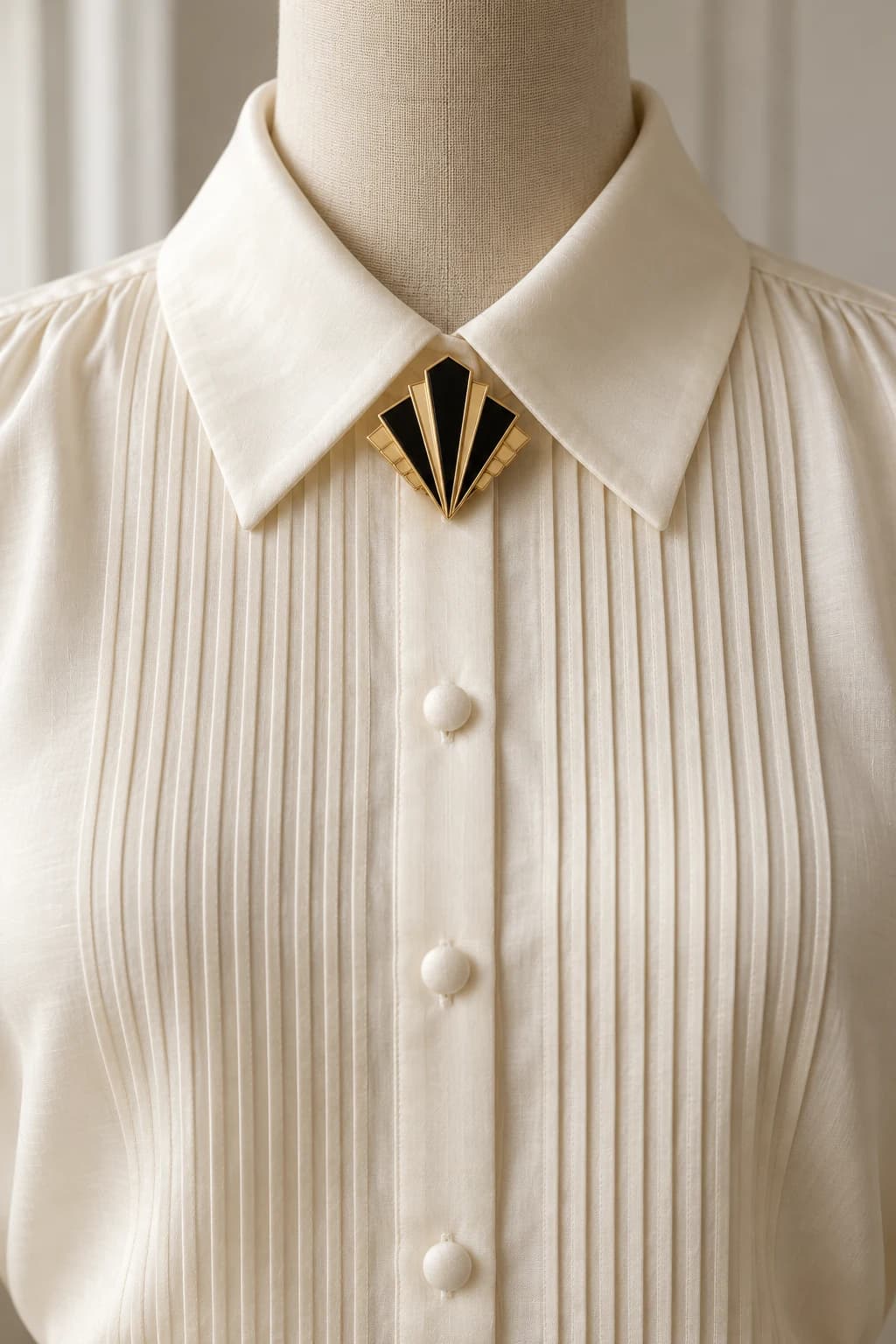
A brooch can sit at the centre when the clothing gives it a clear destination. Good examples include just below a closed collar, at the meeting point of a firm bow or on the reinforced front of a high-neck dress. The small Art Deco brooch shown here is centred beneath the collar of an ivory pintuck shirt, where the placket and collar create a natural frame.
The pin should remain decorative. Do not use an ordinary brooch to hold a gaping shirt closed or carry the tension of a wrap top. Fix the garment fit first. If the brooch tilts, pulls the two sides unevenly or presses against the throat when you sit, move it off-centre or choose a lighter piece.
6. Use the strongest part of the fabric
The visually perfect position is not useful if the cloth cannot carry the brooch. Look for a facing, yoke, lapel, lined panel or firmly woven area. Avoid loose jersey, open lace, fragile vintage silk and the unsupported centre of a fine blouse. If the fabric dips as soon as you release the piece, choose a lighter brooch or another garment.
Decide on the placement while the garment is on, then take it off and lay it flat to fasten the pin. Support the fabric, guide the stem without forcing it through a thick seam and close the catch fully. Put the garment back on and check for pulling, an exposed point or a piece that tips away from the body.
7. Leave space around necklaces, collars and hair
A brooch near the face needs a little empty cloth around it. If you are also wearing a necklace, keep the chain and pendant out of the pin's path. A large collar, scarf or bow may already provide enough detail, so try the outfit without the necklace before adding more.
Turn your head and move your hair as you normally would. Long hair can catch on raised stones, pointed leaves and open settings. Also put on the coat, scarf and bag you expect to use. A placement that looks perfect in front of the mirror may disappear or become uncomfortable once the rest of the outfit is added.
8. Formal medals and honours are a separate case
Do not use casual brooch advice for official medals, decorations or uniform insignia. In Australia, the Department of the Prime Minister and Cabinet states that most Australian awards are pinned above the left breast. The Australian War Memorial notes that relatives wearing another person's medals place them on the right breast. Other countries and organisations have their own rules.
Those protocols explain why many people associate the left side with formal decoration, but they do not create a rule for an orchid, cameo or enamel brooch worn as fashion jewellery. For an ordinary outfit, choose the side that gives the piece support, visibility and enough space to stay comfortable.