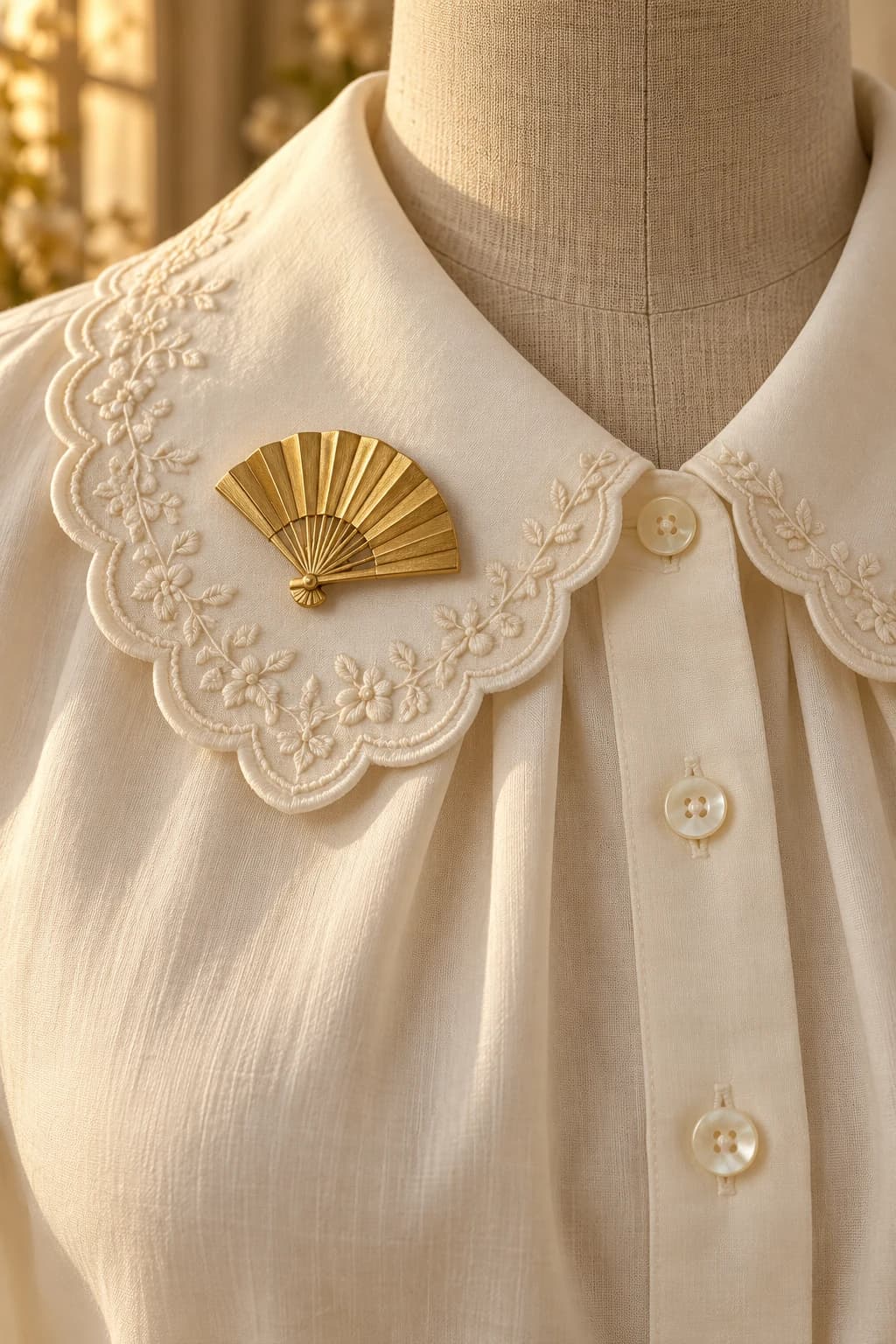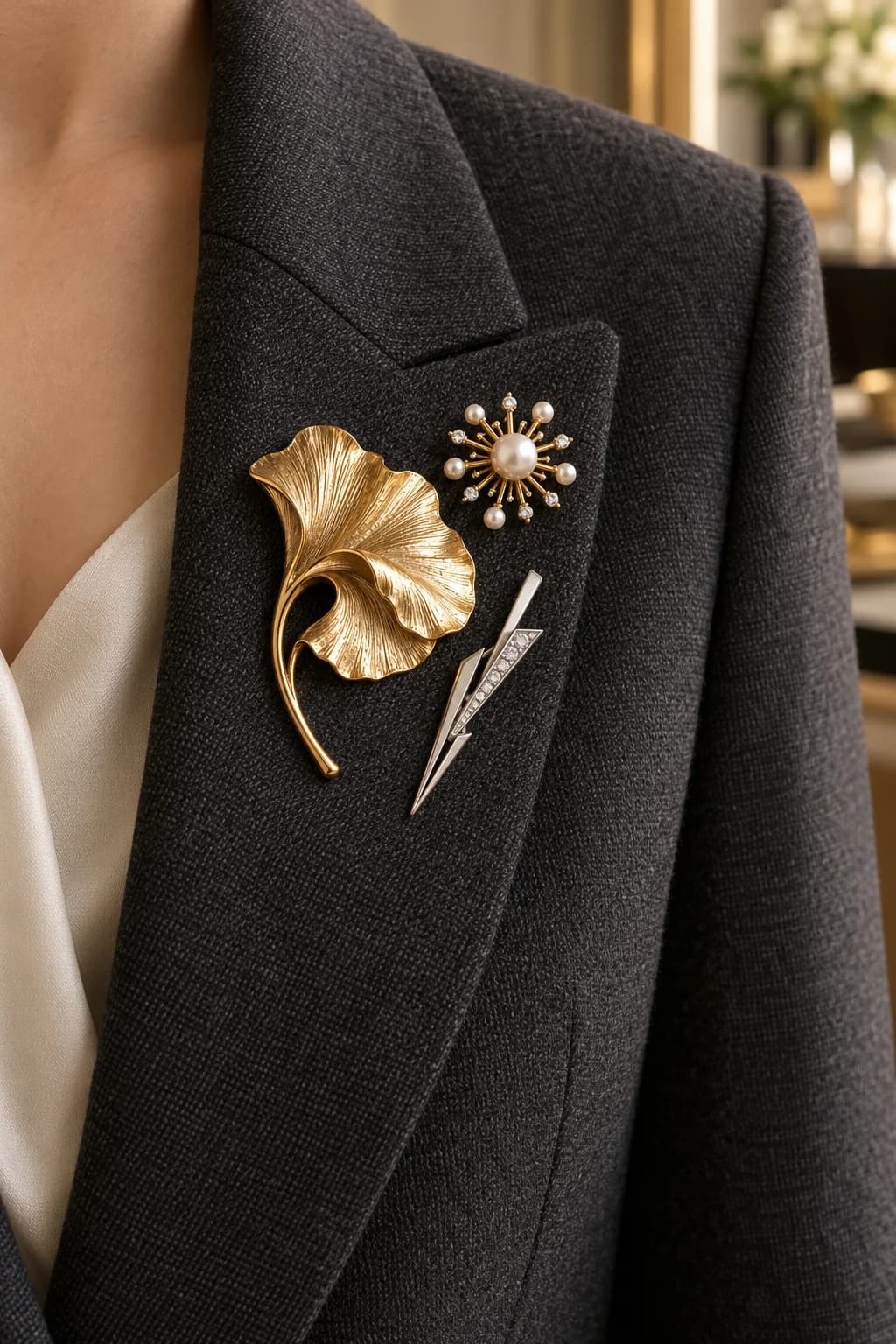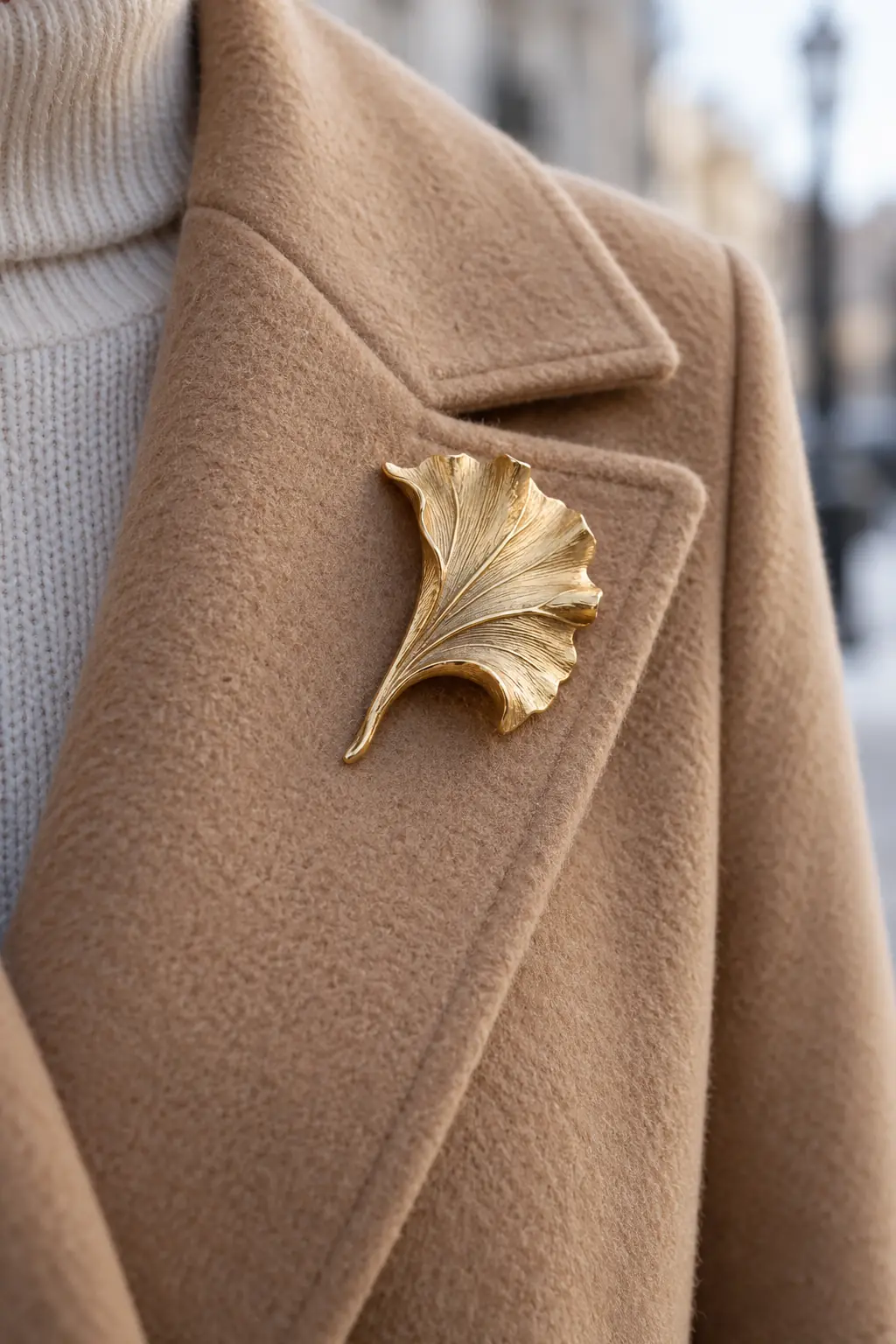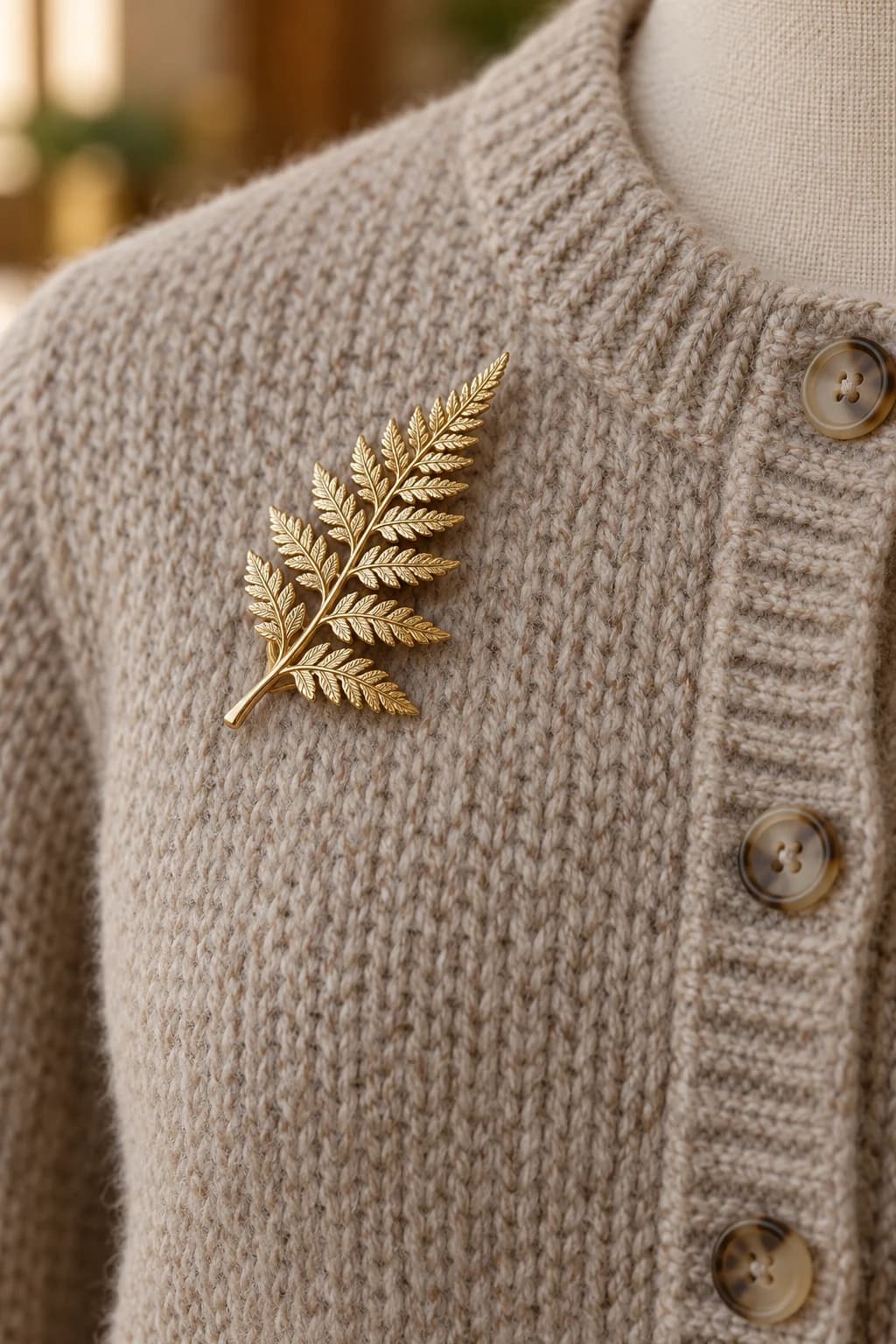
A little gold brooch can be all a plain cardigan needs. The difficulty is keeping it upright without pulling the knit into a dimple. Start with a light piece and a firmly knitted area, then watch what happens when you let go. If the stitches open up or the brooch tips forward, change the placement or choose a different garment. No pinning method can make every sweater safe for a brooch.
Choose the knit before choosing the position
Look at the sweater against the light. A dense knit with small, closely packed stitches gives you a better starting point than a loose, open one. Thickness alone tells you very little: a chunky sweater with large loops may stretch more under a pin than a thinner, tightly knitted cardigan.
Treat fine cashmere, lace knitting, brushed mohair and old or fragile knitwear cautiously. If you cannot guide a pin through an existing space without splitting yarn or stretching a loop, leave it out. ARKET's wool-care guide specifically warns that jewellery can snag delicate fibres. A brooch on the coat worn over that sweater may be the easier choice.
A small brooch is easier to support
Pick up the brooch and turn it over. Look for a smooth back, a straight pin and a catch that closes securely. Rough metal, projecting settings and dangling chains can catch on neighbouring stitches even when the pin itself is well placed.
There is no useful universal weight limit. A wide, hollow metal leaf may weigh less than a small solid ornament. Compare the pieces you own, start with the lightest and avoid clusters until you know how the garment behaves. A jeweller can check an unreliable clasp; do not rely on the sweater to hold a loose pin in place.
On a cardigan, try beside the button band
The upper front beside a firm button band is a useful place to begin. Hold the brooch there with the cardigan buttoned as you intend to wear it. Keep the whole piece on the cloth, with enough space that its edges cannot rub against a button or catch the opening.
Some cardigans have a stable band; others are just as stretchy at the front as everywhere else. Check yours by touch. Avoid forcing the pin through a buttonhole, button stitching or a thick seam. Use the cardigan's own buttons to close it, and let the brooch sit independently.
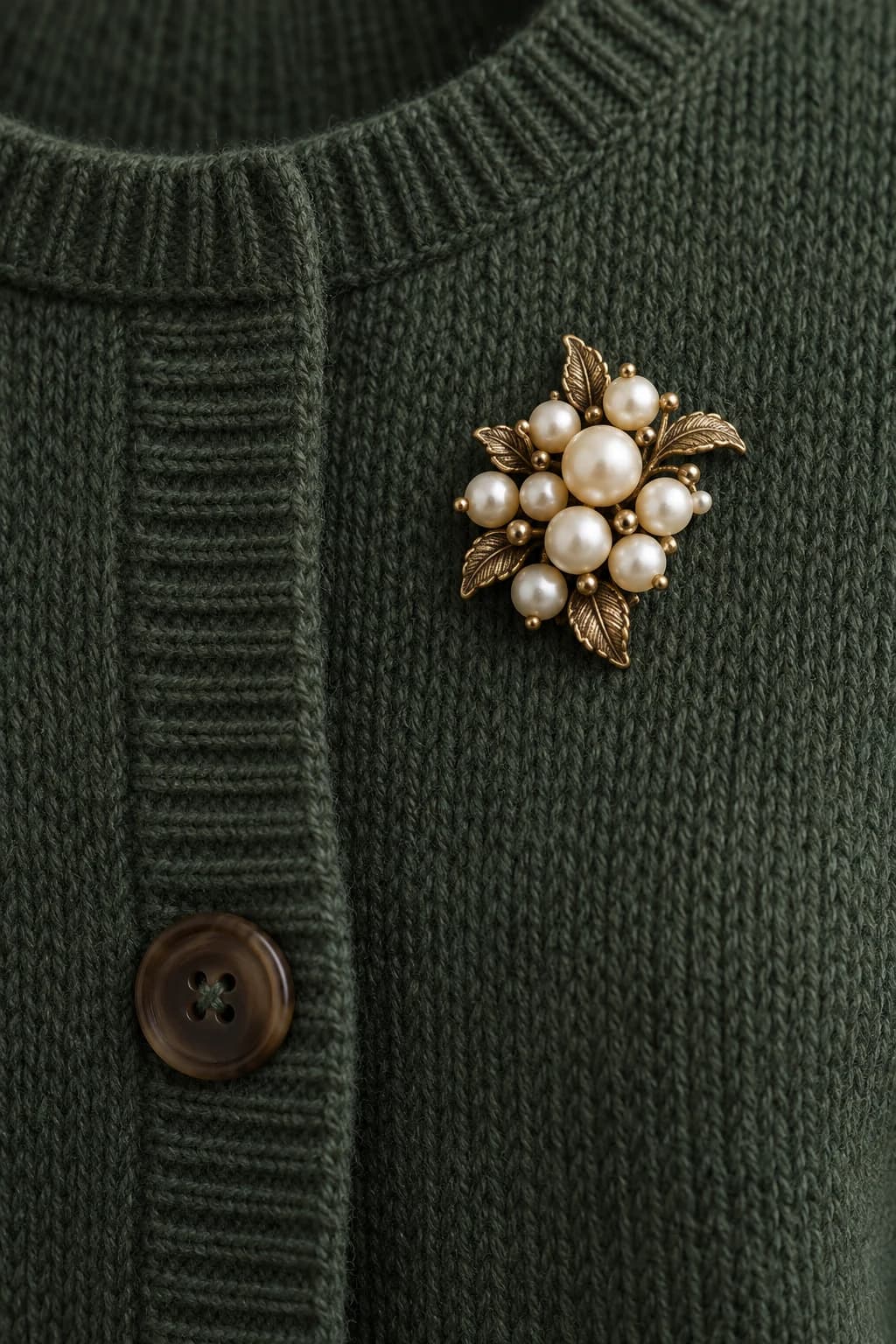
On a crew-neck sweater, leave room below the neckline
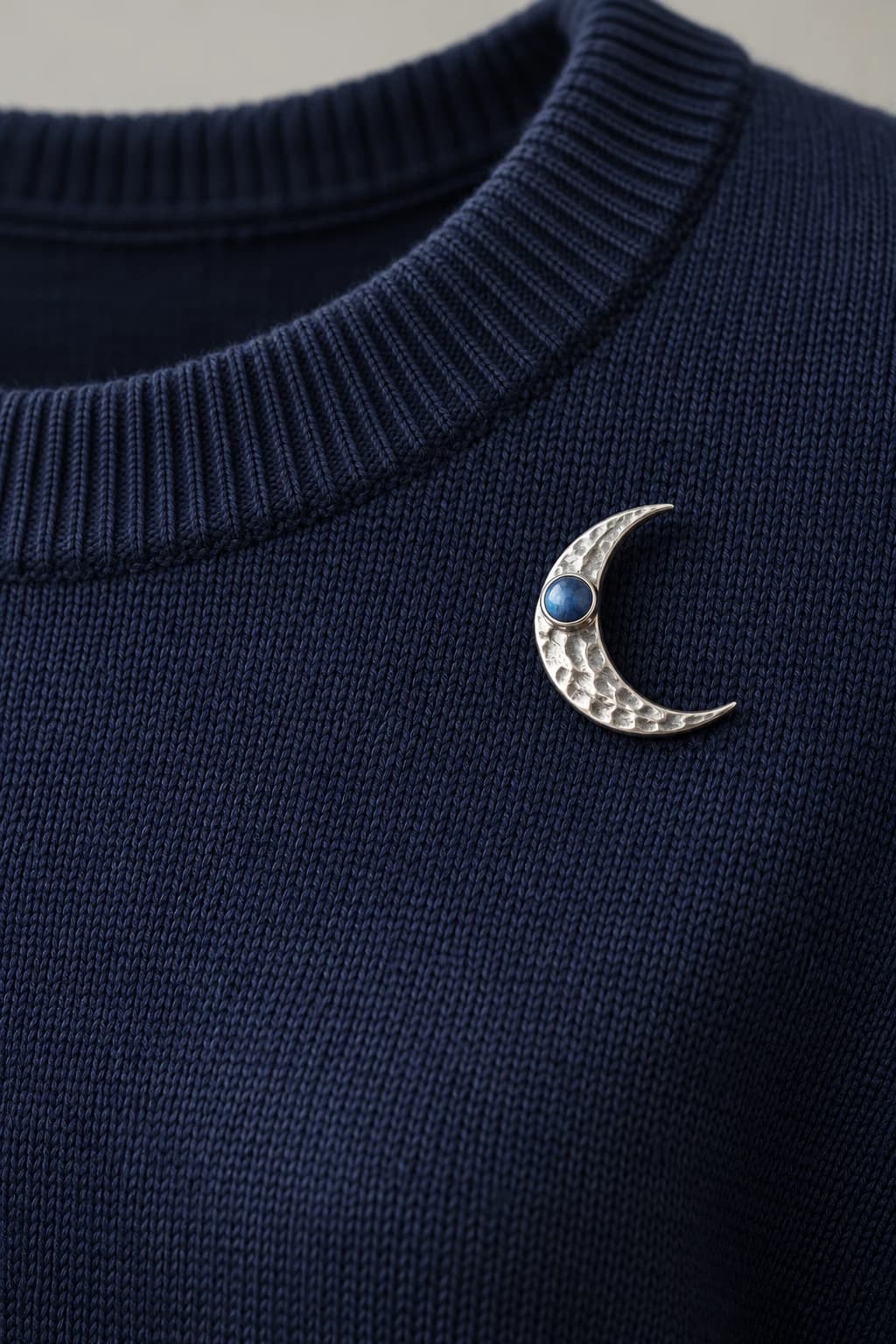
Try one small brooch on the upper chest, a little below and to one side of the crew neck. The gap keeps it clear of the neck ribbing and gives the jewellery a plain background. Silver shows clearly against navy; a warm gold leaf looks softer against oatmeal or brown.
Keep it away from the shoulder where a bag strap rests. Raise your arm, put on your usual jacket and check the position again. If the brooch is pressed against another layer or repeatedly brushes your hair, move it or take it off for that outfit.
Fasten it with the knit relaxed
Decide on the position while wearing the garment, then take it off and lay it flat to fasten the pin. Support the cloth from underneath. Guide the stem gently through spaces between stitches, keeping the fabric at its normal width. Do not push through the yarn itself or stretch the sweater to reach the catch.
Close the catch fully and check that the point is enclosed. Put the garment back on carefully, then release your supporting hand. Watch for a hollow beneath the brooch, widened stitches or a diagonal fold leading away from it. Any of those is a reason to remove it. Try the outfit briefly at home before wearing it for a full day.
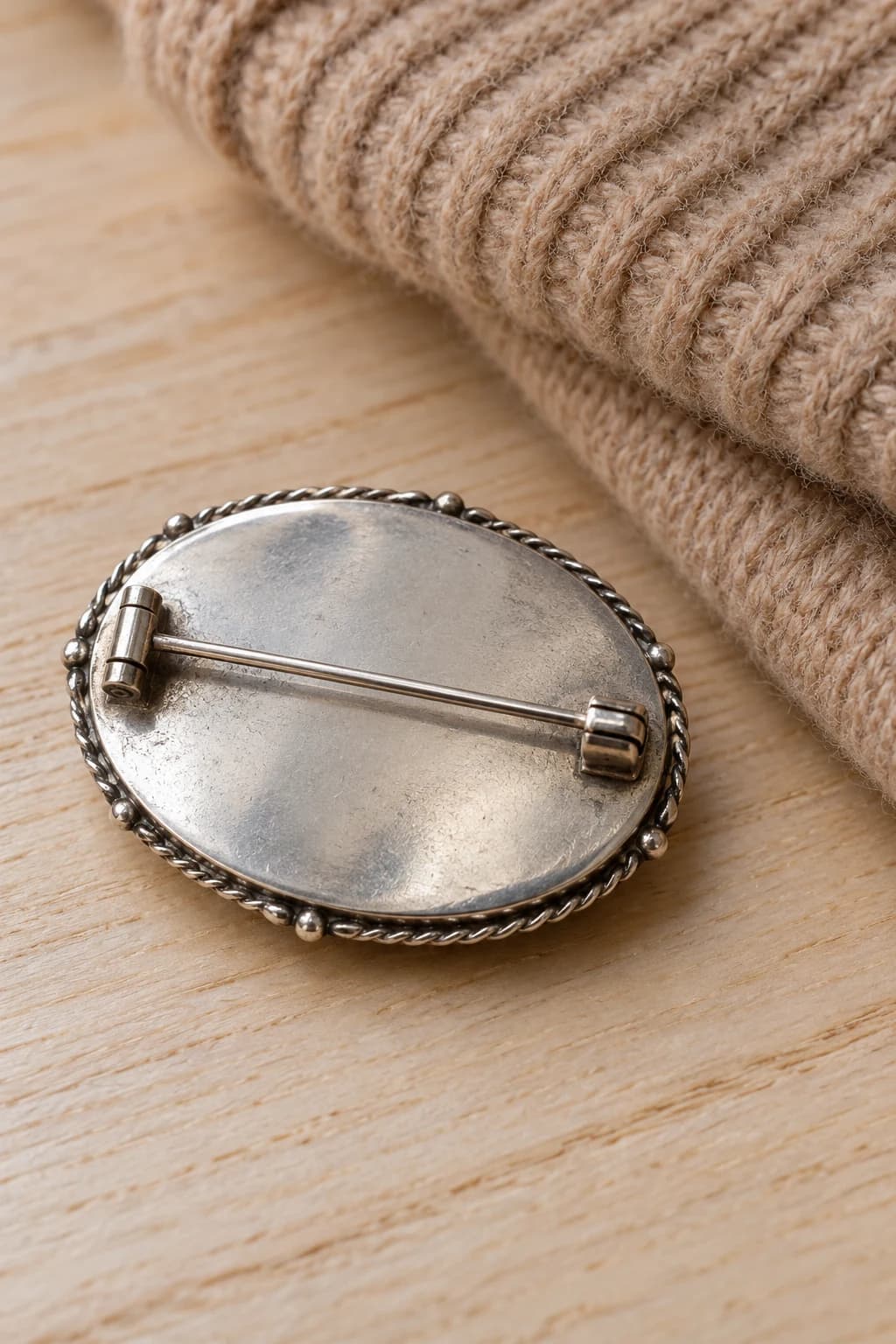
Backing and magnets have limits
A small piece of soft backing fabric can sometimes spread the load behind a stable knit, but it cannot turn a fragile sweater into a firm jacket. A bulky backing may show through or make the brooch tilt. If the pin needs reinforcement simply to stop an obvious sag, choose a lighter piece or another garment.
Magnetic brooch backs avoid a pin passing through the knit, but they still add weight and can compress the fabric. Check that the backing is designed for the brooch and follow its maker's instructions, including medical-device precautions. Adhesive pads are a poor experiment on wool or cashmere because removing them can pull fibres away.
Remove it before putting the sweater away
Open the clasp with the fabric supported, then guide the pin back out along its entry path. If it catches, stop and look for the trapped loop. Pulling harder can turn a small snag into a long drawn thread. An existing snag is a job for a knitwear repairer if you are unsure how to release it.
Woolmark advises removing jewellery before washing or storing wool garments and folding knitted garments for storage. Put the brooch away separately so its pin and settings cannot catch the sweater in a drawer. A piece that looked fine during a short outfit check can still leave a stretched patch if it stays attached for weeks.