Victorian jewellery often carries recognisable flowers, birds, hands, hearts and snakes. It is tempting to translate every motif as if it came from a fixed dictionary. Real pieces are more complicated. Meaning could change with the date, material, inscription, giver and wearer. Use symbolism as a way to ask better questions, then let construction, provenance and family history fill in the rest.
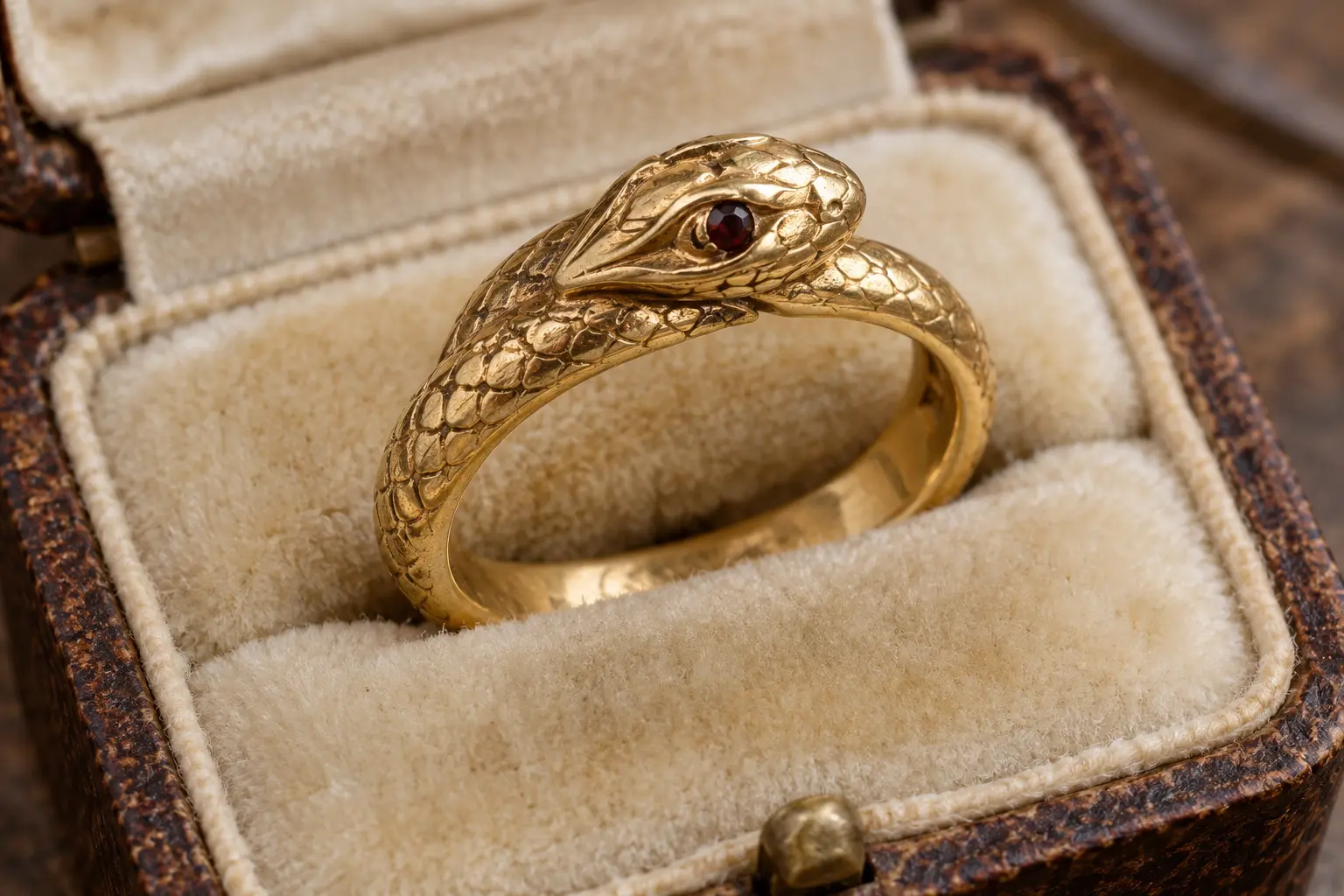
1. Snakes could suggest eternity and devotion
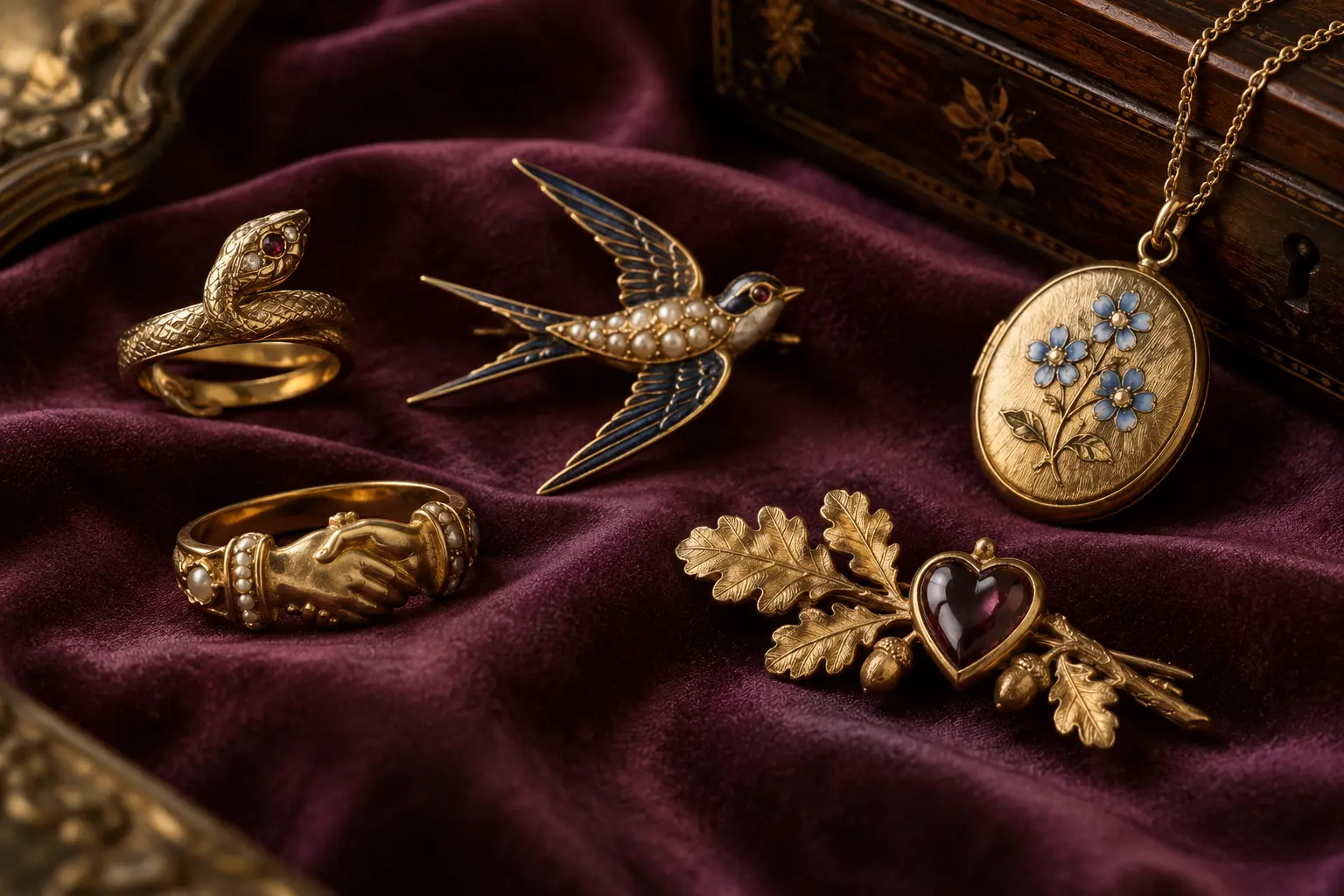
A snake curled into a circle creates an obvious image of continuity. Snake rings, bracelets and necklaces became strongly associated with love and enduring attachment in the nineteenth century. The motif could also carry older ideas of renewal because a snake sheds its skin.
Look at the whole piece. A sentimental ring with an inscription tells a different story from a theatrical snake bracelet made decades later.
2. Swallows spoke of return and faithfulness
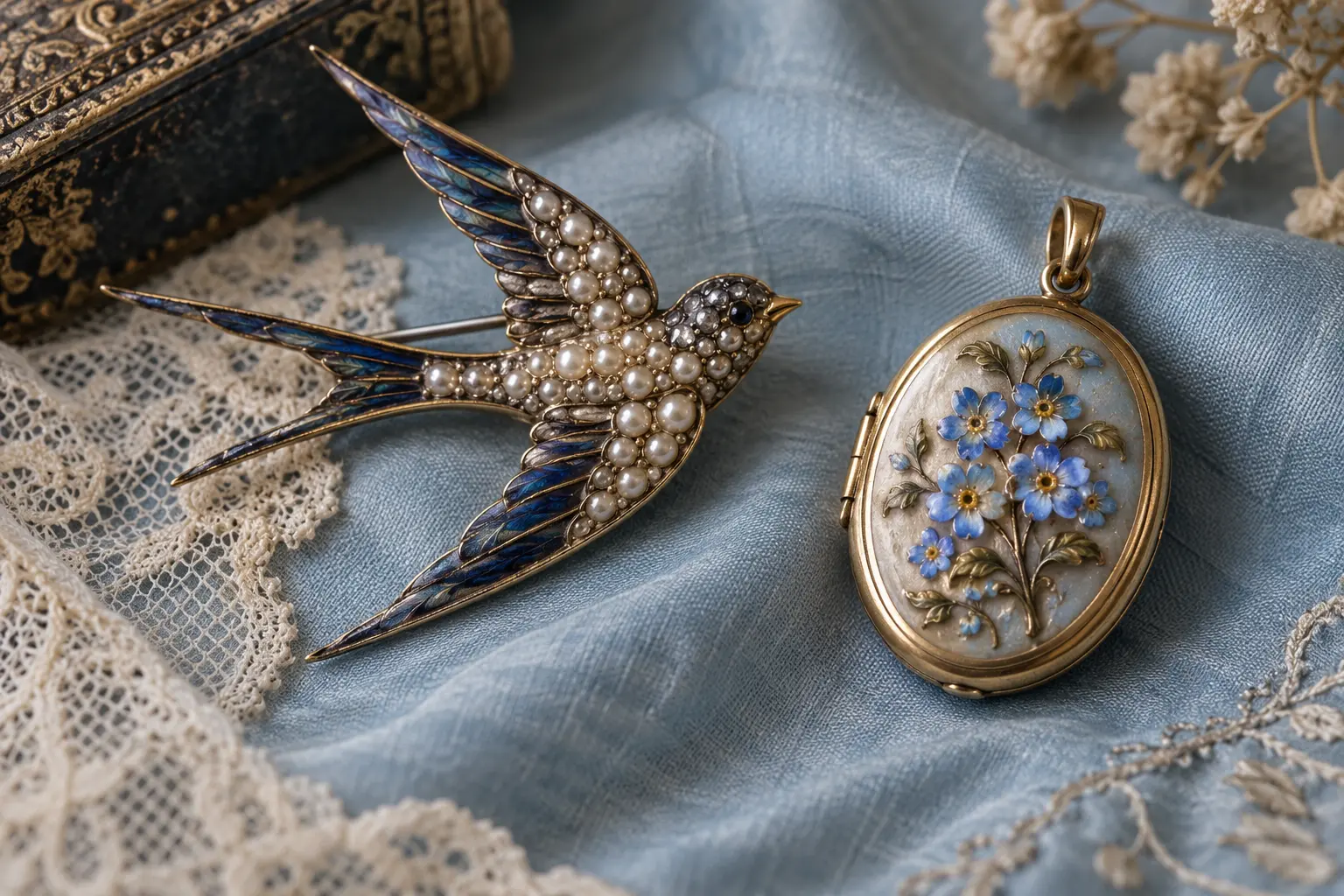
Swallows return seasonally, so their image could suggest coming home safely or remaining loyal across distance. Paired birds may strengthen the romantic reading. The motif appears in brooches, lockets and small pins.
A bird shape alone is not enough to identify a Victorian date. Study the fastening, metal, workmanship and any marks too.
3. Forget-me-nots made remembrance visible
Small blue forget-me-not flowers were a direct visual reminder of memory and affection. They might be painted in enamel, carved, set with turquoise-coloured stones or worked into a larger floral arrangement.
Flowers could be chosen for beauty as well as meaning. An inscription, hair compartment or known gift often provides the stronger evidence for a sentimental interpretation.
4. Hands, hearts and buckles carried promises
Clasped hands can suggest friendship, agreement or affection. Hearts remain closely linked with love, while a belt and buckle can imply loyalty, protection or a bond held securely. These motifs were used alone and in combination.
Initials and dates make a symbolic jewel much easier to read. Photograph them carefully, including unusual punctuation and letter forms.
5. Acorns and oak leaves suggested strength and growth
The small acorn contains the future oak, which made it a useful image for potential and growth. Oak leaves could suggest endurance and strength. Both motifs also suited the Victorian taste for close observation of nature.
They appear in carved, chased and enamelled jewellery. Naturalistic detail can be beautiful, but it does not by itself establish age.
6. Mourning jewellery used material, colour and personal detail
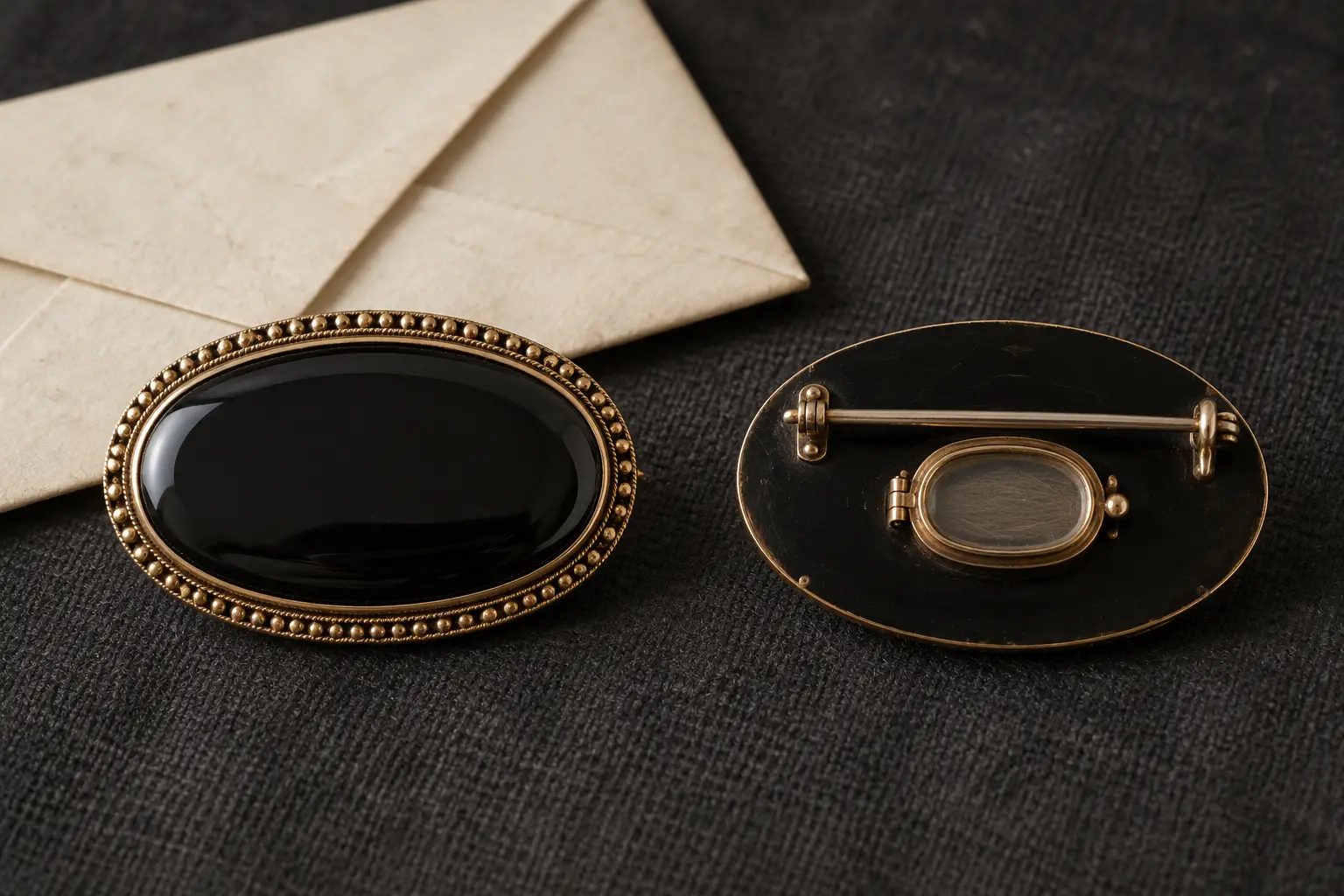
Black jewellery is often called mourning jewellery online, yet black colour alone is not proof. Documented mourning pieces may include an inscription, a name and dates, a lock of hair or imagery connected with loss. Jet became closely associated with mourning dress, but it was also worn for fashion.
Hairwork should be treated with respect and left intact. If a closed compartment contains hair, do not open it simply to satisfy curiosity.
7. Read the object before repeating a meaning
Begin with what can be observed: material, motif, marks, construction, inscription and condition. Then compare the piece with museum examples and dated designs. This keeps an appealing symbolic story from outrunning the evidence.
For an heirloom, record family names and memories now. A short note from someone who knows its history may become more valuable than another confident guess from an online listing.