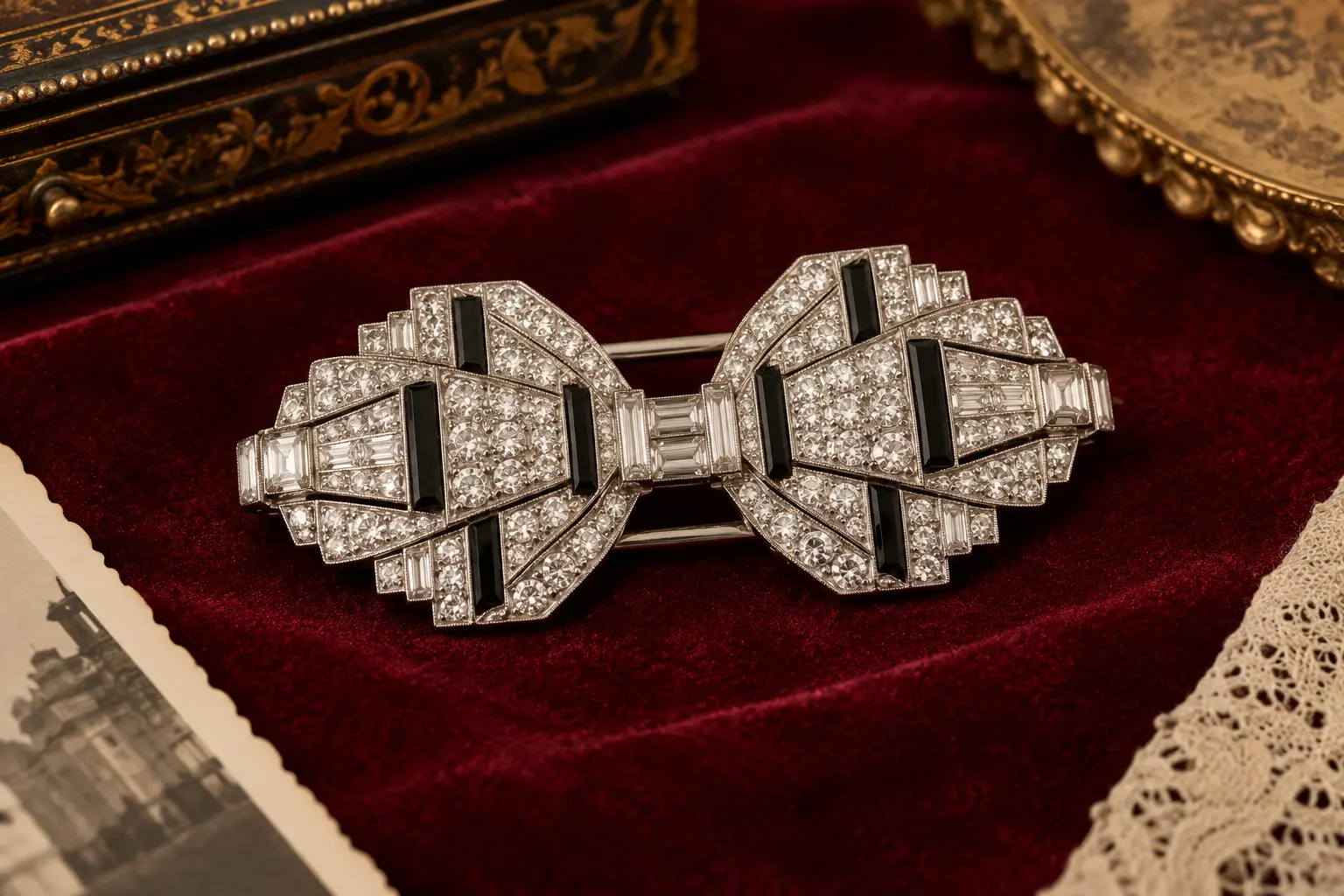
A dress clip is not simply a brooch with a different name. Its fastening grips an edge of fabric rather than passing a pin through it. During the 1930s, matching clips were often designed to detach from a frame, so they could be worn separately or brought together as one brooch. The idea suited a wardrobe in which one jewel might need to change with the neckline, jacket or evening dress.
1. The back tells you whether it is a clip
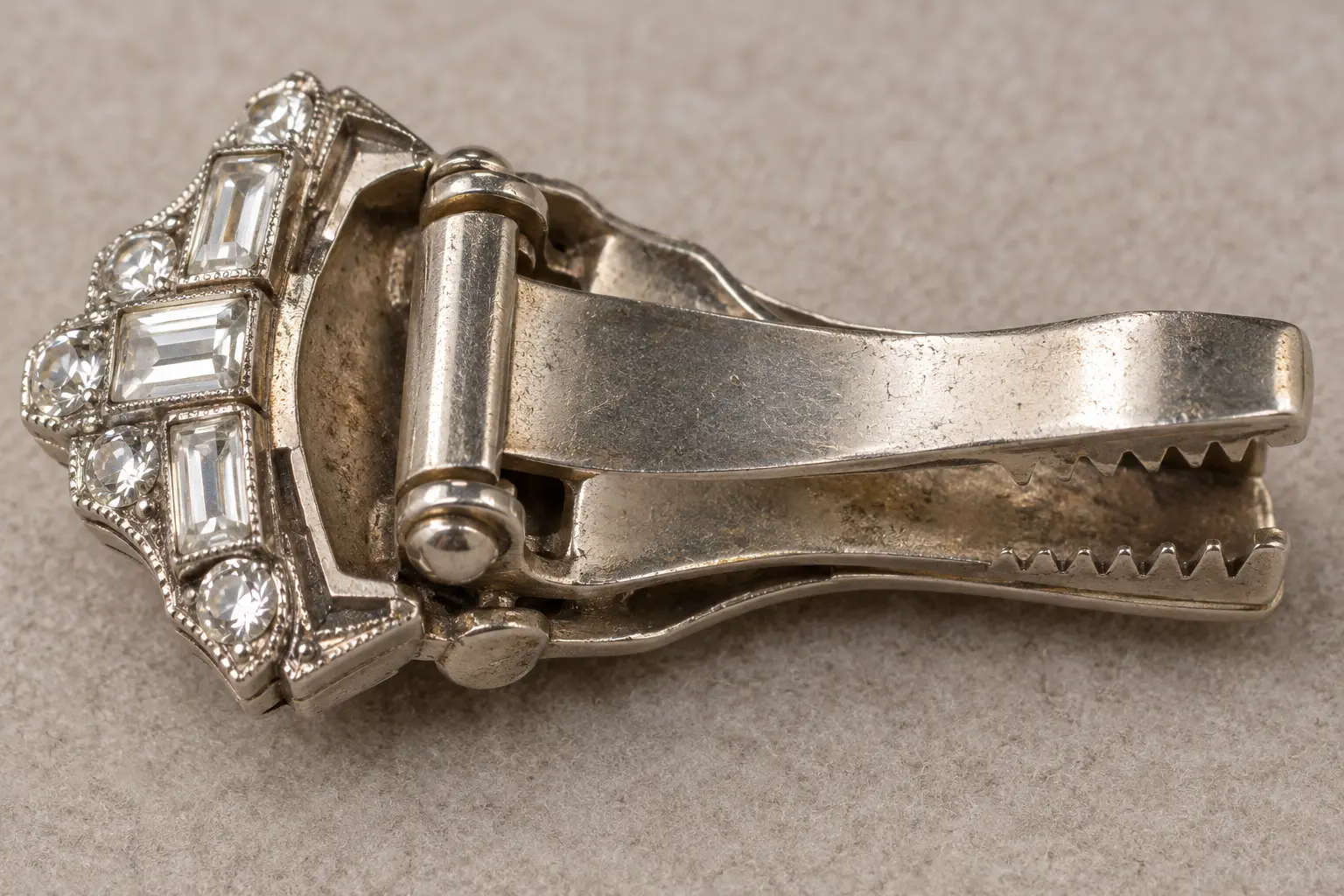
Turn the jewel over and look for a broad hinged fastening rather than a long horizontal brooch pin. The clip opens, slides over a fabric edge and closes under spring pressure. Small teeth may help it grip.
Some later brooches imitate the look from the front, so a clear back view matters. Never snap an unfamiliar mechanism repeatedly just to test it.
2. A double clip begins as a matched pair
The two clips usually mirror one another. Worn on opposite sides of a square or V neckline, they frame the face. Placed on jacket lapels, they create the effect of a balanced pair of brooches.
The designs do not always form a simple identical shape. Their lines may sweep outward separately and lock into a stronger composition when joined.
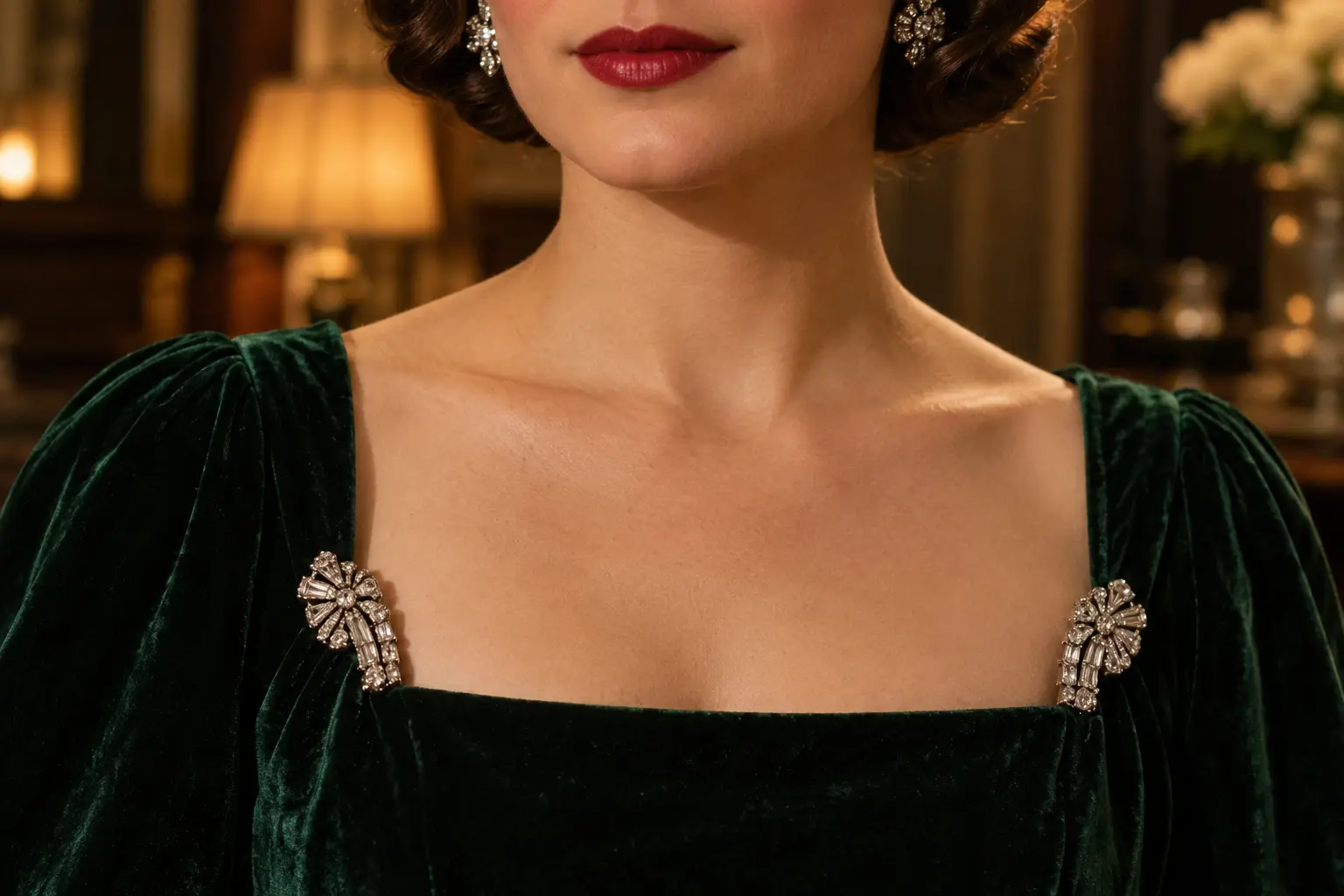
3. The joining frame turns two clips into one brooch
A fitted frame holds both clips together and provides a brooch pin. This creates one larger jewel for a lapel, bodice or coat. Collectors sometimes call the complete convertible arrangement a double clip brooch.
A surviving pair without its frame can still be worn as clips, but it is not the complete original system. Replacement frames should be clearly described as such.
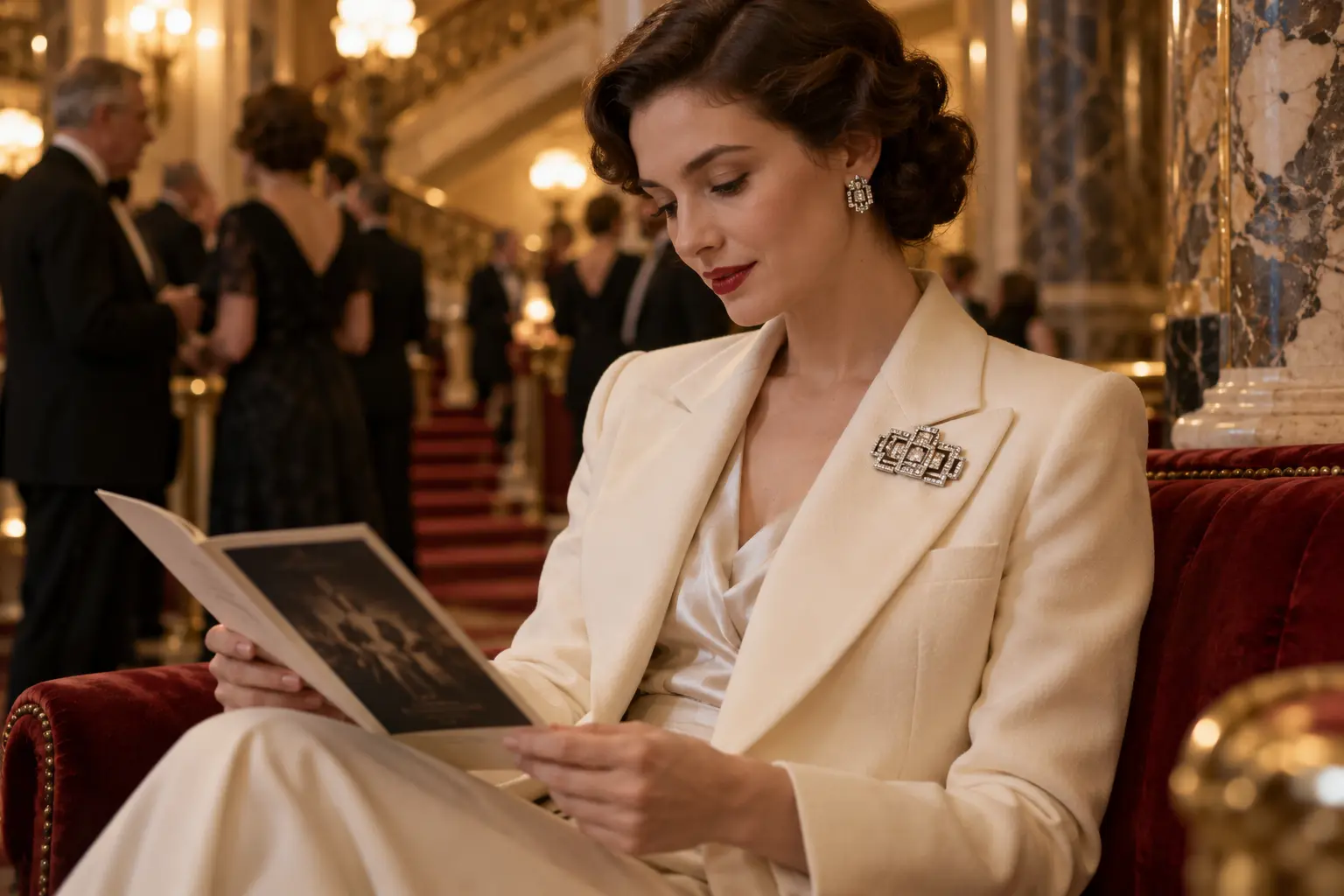
4. One clip could change an asymmetric neckline
A single clip placed at one side of a folded neckline draws the eye without requiring a matching piece. It can also sit at the top of a pocket or at the end of a fabric belt.
The best placement gives the clip a firm edge to grip. Soft bias-cut fabric may pull under a heavy jewel.
5. Clips were made for more than dresses
Period styling included hats, bags, jackets and sometimes shoes. The appeal was flexibility. The same pair could look formal together at night and more restrained as one clip during the day.
Modern owners should be cautious with accessories. A strong old spring can dent leather, scratch hardware or leave a permanent pressure mark.
6. Scale and construction affect how it can be worn now
Small clips can work on a sturdy shirt placket or blazer edge. Larger stone-set examples need structured cloth. A hidden patch of felt or a purpose-made support can spread the weight on a coat or jacket.
Do not clip valuable jewellery to an unfastened outer edge where it can be brushed off. A jeweller can advise whether a safety chain can be added without damaging the piece.
7. Condition matters as much as sparkle
Check whether both clips match, close securely and fit the frame. Look for missing stones, bent teeth, lead solder and worn plating. Repairs are common and should be judged on quality rather than hidden in a description.
For a significant purchase, ask for measurements, weight and photographs of every fastening. The engineering is part of what makes these jewels interesting.