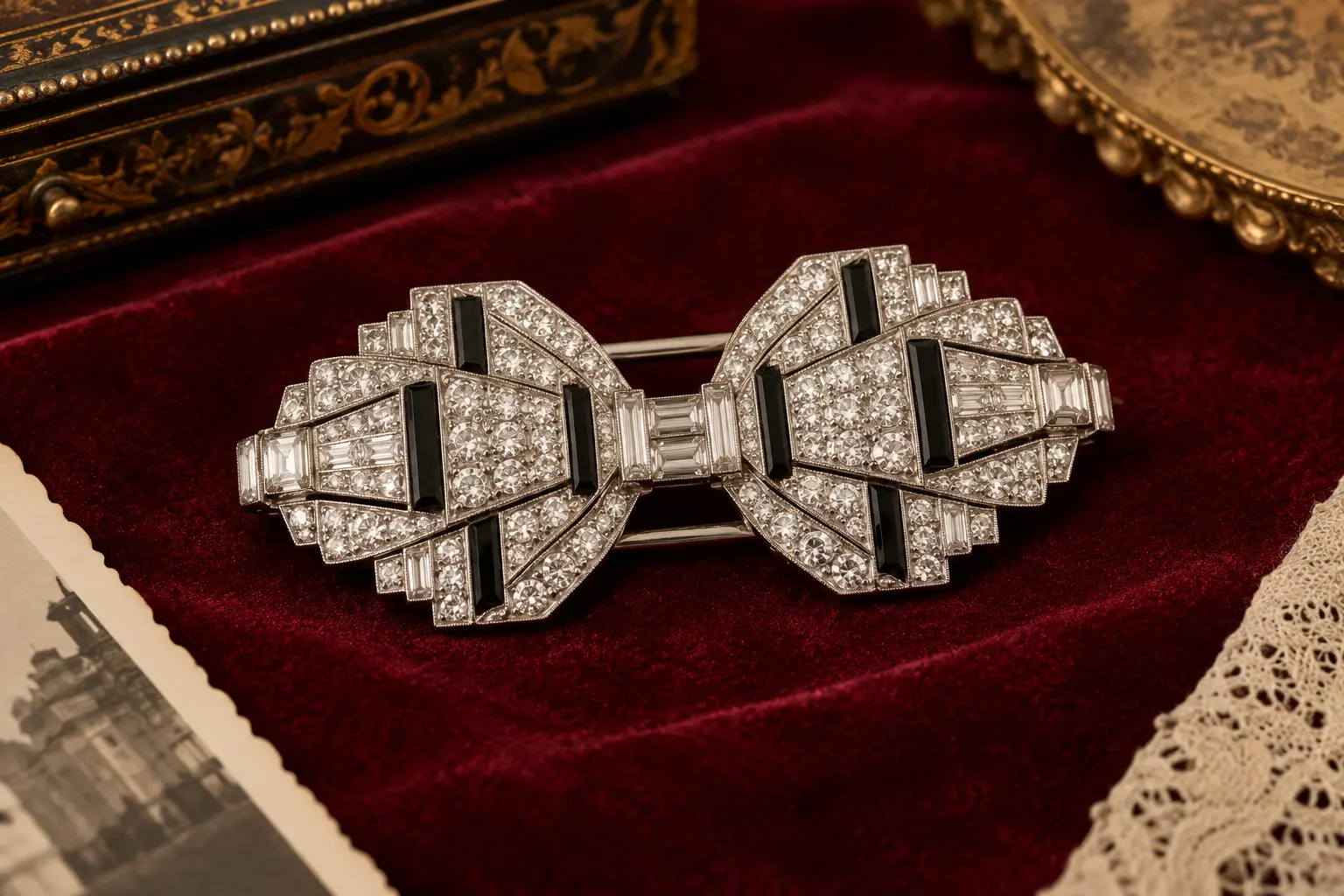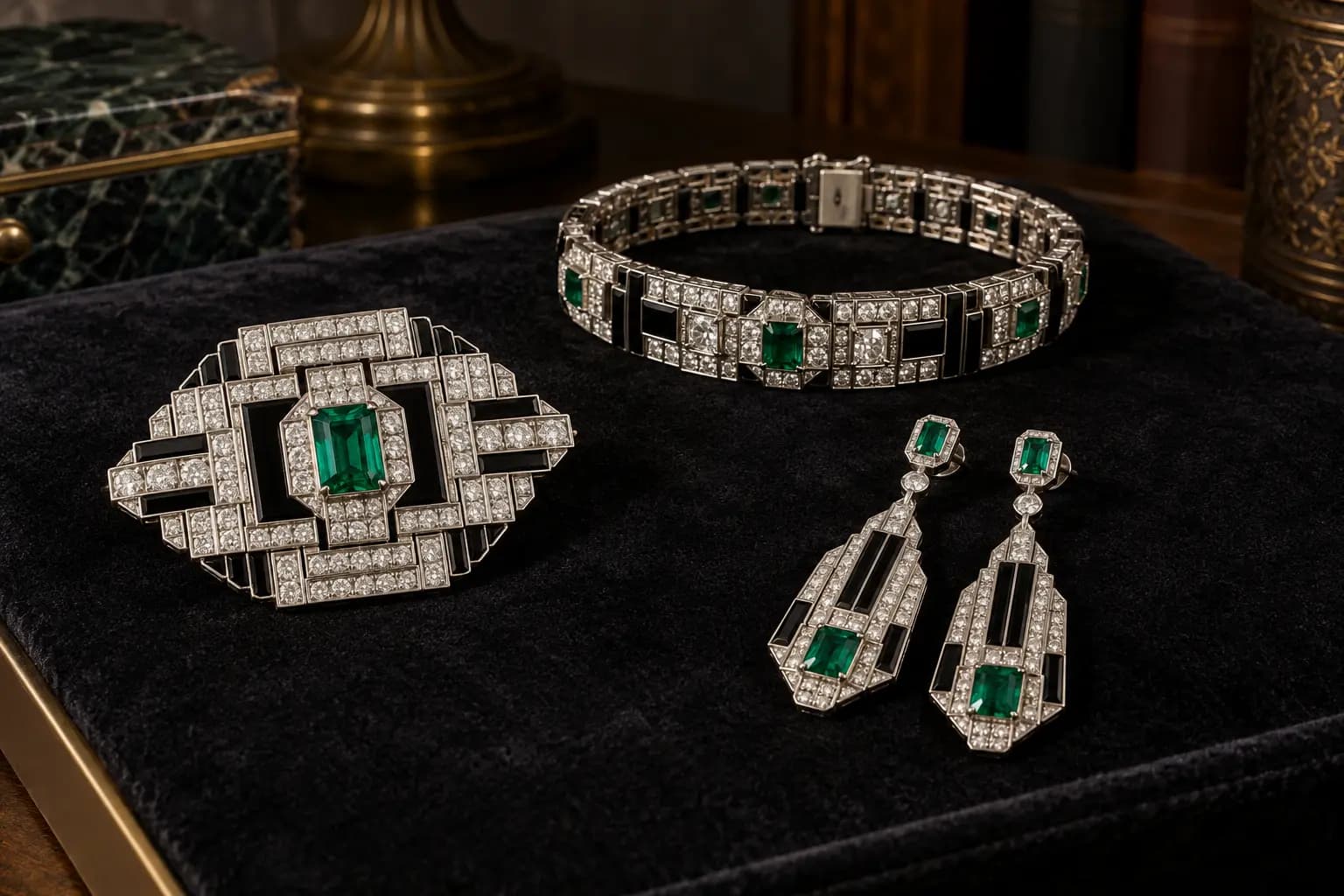
Art Deco jewellery is easy to recognise in broad outline and surprisingly easy to mislabel. A stepped edge or fan motif alone does not prove that a piece was made in the 1920s or 1930s. Look at the whole design, the materials, the construction and any marks together. These clues will help you describe the style more accurately, but an expert examination is still needed before assigning age, maker or value.
1. Start with symmetry and a clear geometric plan
Many Art Deco designs are organised around a strong centre line. Look for mirrored halves, repeated rectangles, circles, chevrons, fans and stepped forms. Even a densely set piece usually has a structure that can be traced with the eye.
Not every piece is perfectly symmetrical. What matters is the sense of order. Later revival pieces often borrow the same geometry, so this is a starting clue rather than a final answer.
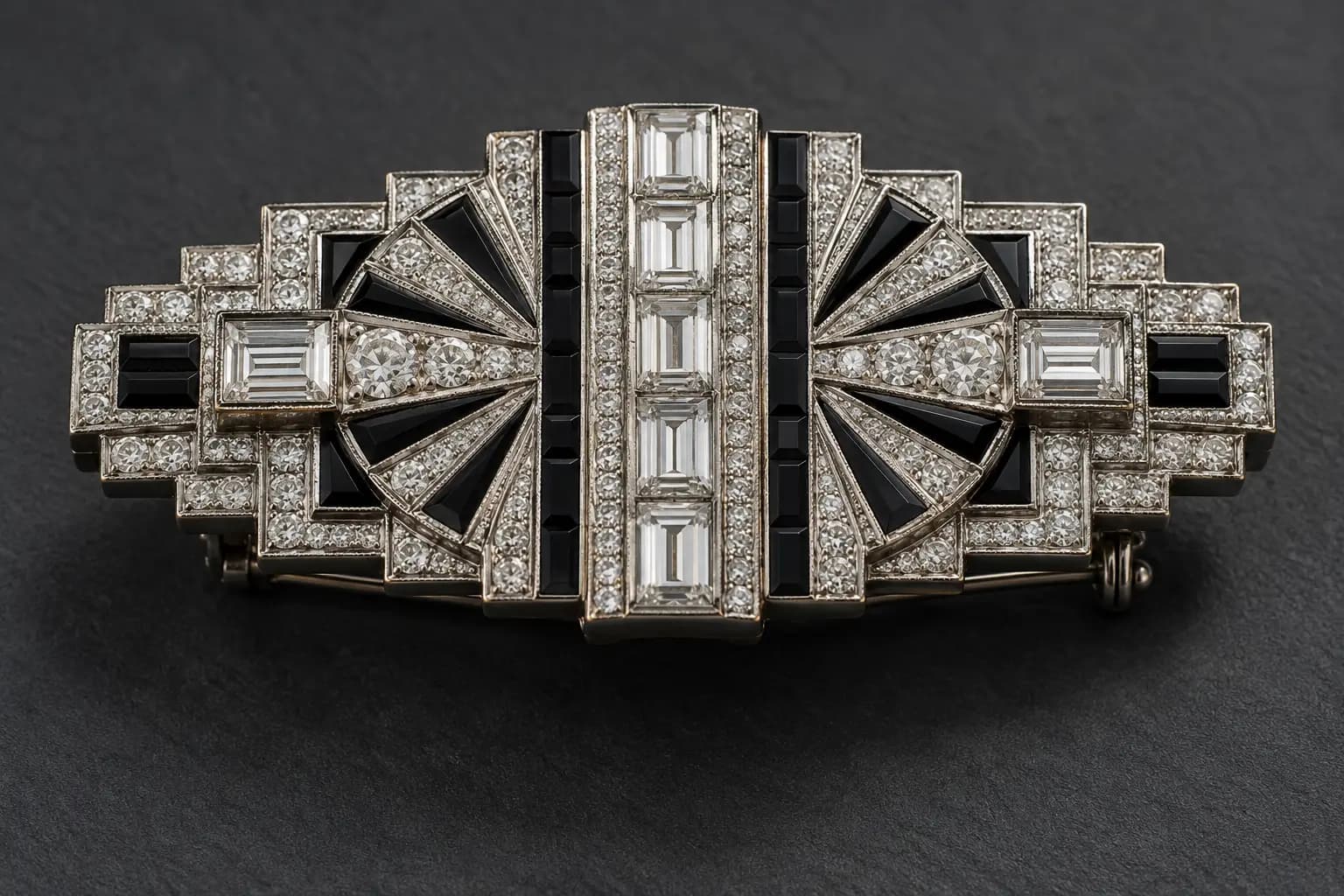
2. Notice crisp colour contrast
Black and white is a familiar Art Deco combination, often created with diamonds or colourless stones beside onyx-like dark material. Emerald green, ruby red, sapphire blue, coral and turquoise can also appear as sharp blocks or accents.
Colour is normally part of the architecture of the design. If bright stones seem sprinkled at random, the piece may be inspired by several periods rather than closely following an Art Deco approach.
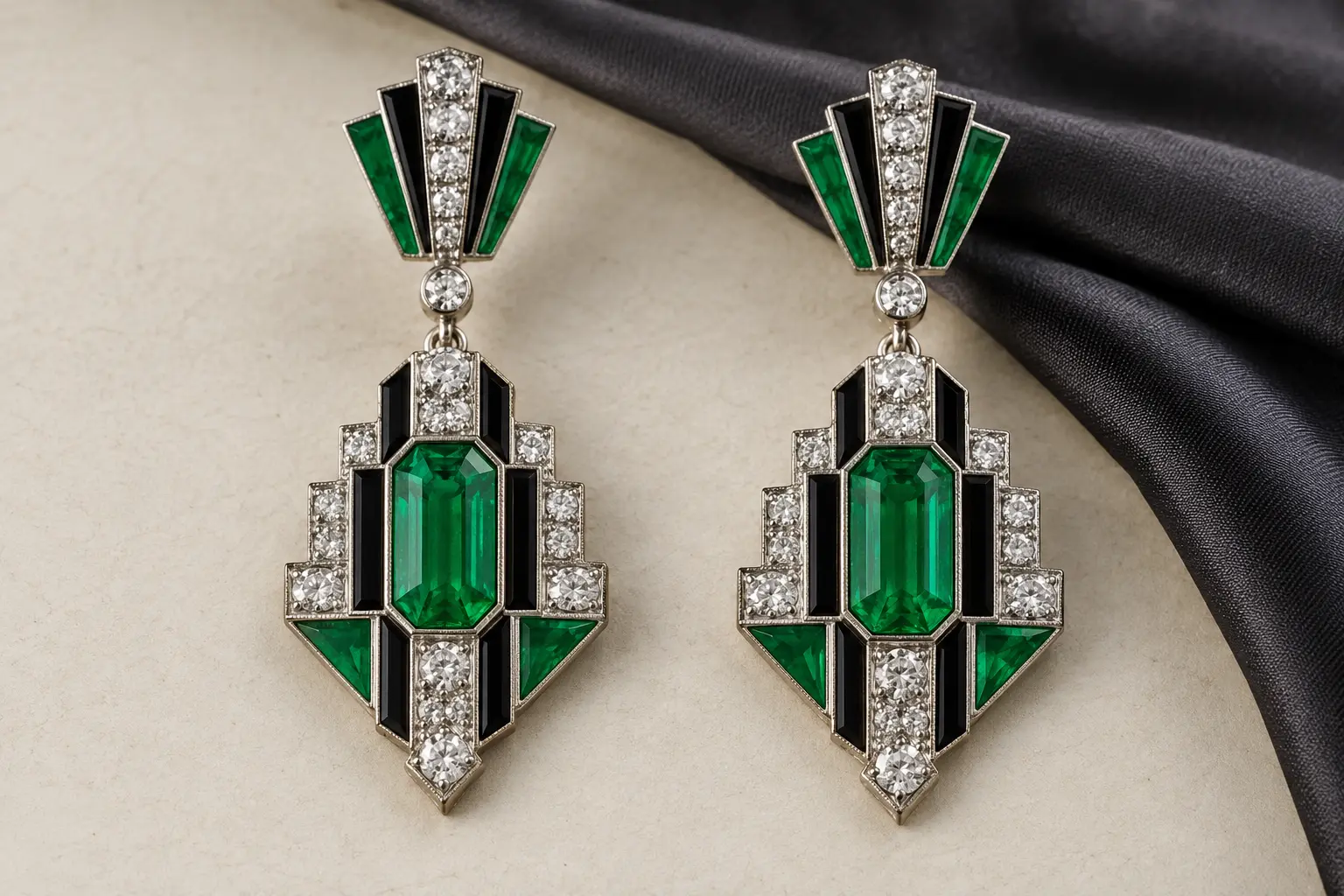
3. Look at how the stones build the shape
Baguette, square, calibré-style and triangular stones can be arranged like pieces in a small building. Round stones may fill curves or create a bright field around those stronger shapes. The setting should support the pattern rather than interrupt it.
Use a loupe if you have one, but do not test or scratch stones yourself. An unusual cut or close-fitting row is interesting evidence, not a safe home identification method.
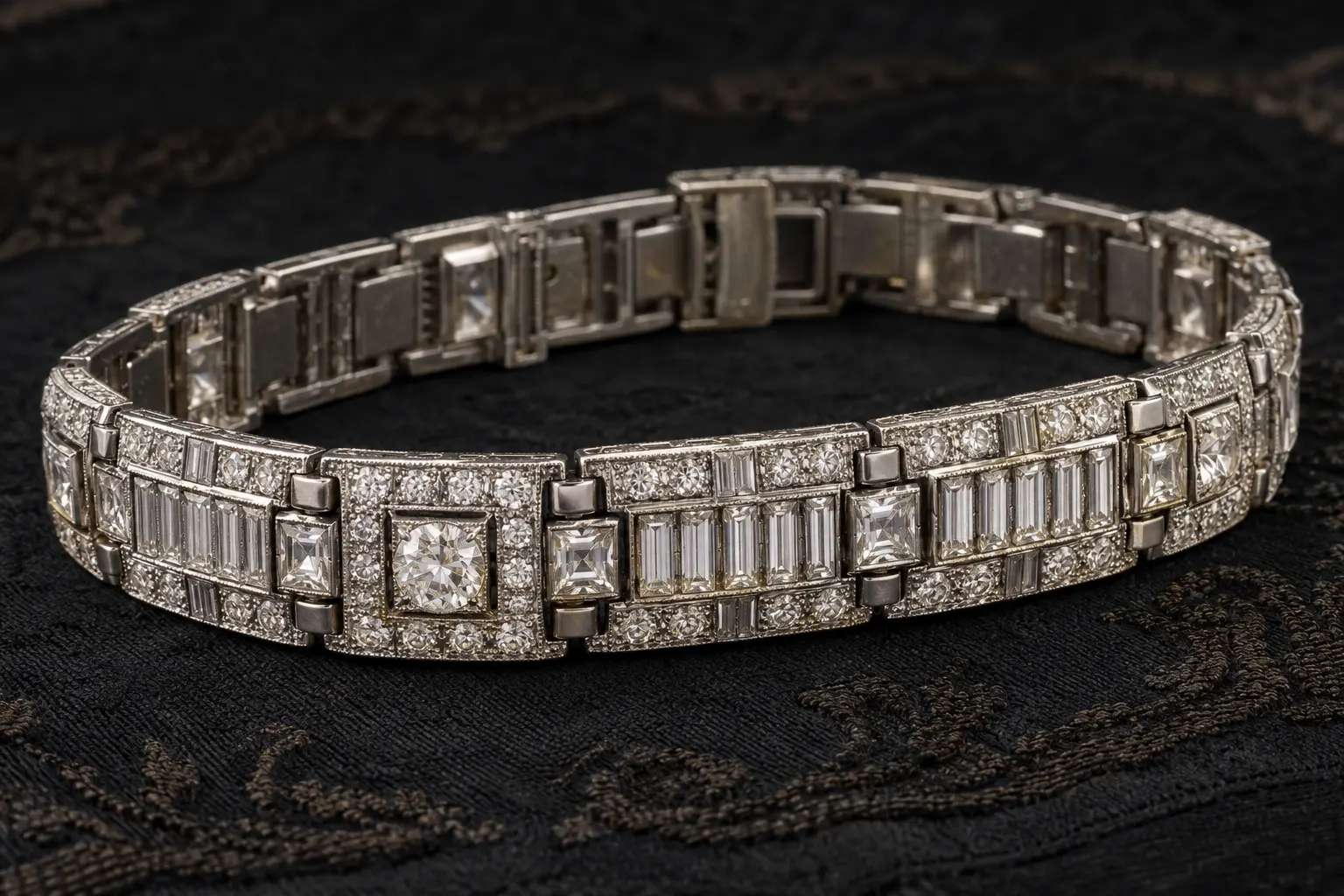
4. Check the metal without relying on colour alone
Platinum was important to high-style Art Deco jewellery because it could support fine, open settings. White gold and silver were also used, and modern reproductions may use any of them. A white appearance does not identify the metal.
Look for readable marks and have them interpreted by someone qualified. Worn, altered or imported pieces may have incomplete marks, and copied marks do exist.
5. Turn the piece over
The back can reveal hinge construction, clasp type, repairs and the care taken over hidden surfaces. Fine openwork may continue cleanly behind the stones. Uneven solder, a replaced pin or a newer safety catch does not automatically make a piece poor, but it changes the story.
Photograph the front, back, clasp and marks in good light before asking for an opinion. Those views are far more useful than one distant picture.
6. Expect movement and versatility in some designs
Bracelets may use articulated links, long earrings may move in sections and clips may separate or combine. This interest in flexible, convertible construction suited changing fashions and evening dress.
Do not force a mechanism that appears stuck. Old springs and catches can be fragile, and a repair can cost more than an initial professional check.
7. Separate period, revival and inspired pieces
A genuine period piece was made during the era. A revival piece was made later in a deliberate return to the style. An Art Deco-inspired piece borrows selected motifs. All three can be attractive, but they should not be described or priced as the same thing.
If purchase value matters, ask for a written description, condition details and an independent assessment. A confident online caption is not provenance.