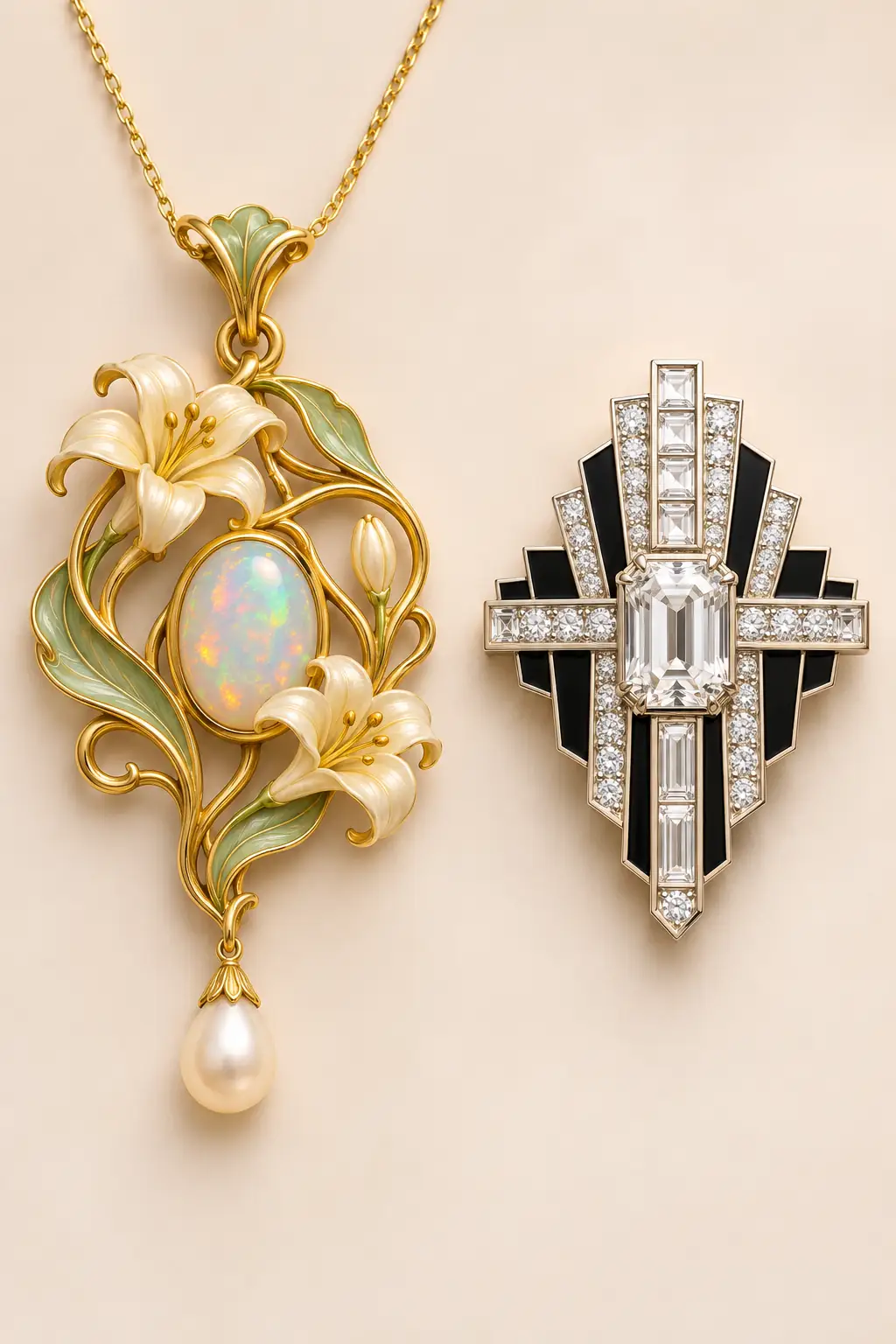
You open a small box and find something beautiful that you almost never wear. Perhaps it is a cameo that belonged to a relative, a short strand of pearls, or an elaborate flower brooch that looks wonderful in your hand and strangely formal beside your clothes. The problem is rarely the jewellery. More often, you are trying to build an entire outfit around its age instead of letting one familiar piece live alongside the wardrobe you already have. A navy blazer, a good cardigan or a plain dress can give older jewellery the space it needs.
1. Start with one piece you would genuinely wear tomorrow
Forget the complete period costume. A pearl necklace does not require tweed, a cameo does not demand lace, and a 1960s-style gold brooch can look excellent on a plain modern jacket. Set the jewellery on your dressing table next to three things you already own: one neutral jacket, one knit, and one dress. The piece that looks convincing with the least adjustment is usually the easiest place to begin.
If you have a carved cameo, let its portrait or colour provide the detail. Try it against a plain camel or charcoal cardigan rather than another highly patterned fabric. With pearls, the useful question is whether the neckline has room for the strand; with a brooch, it is whether the garment can carry the weight. Those practical questions matter more than the date on a seller’s label.
2. A blazer makes an ornate brooch feel contemporary
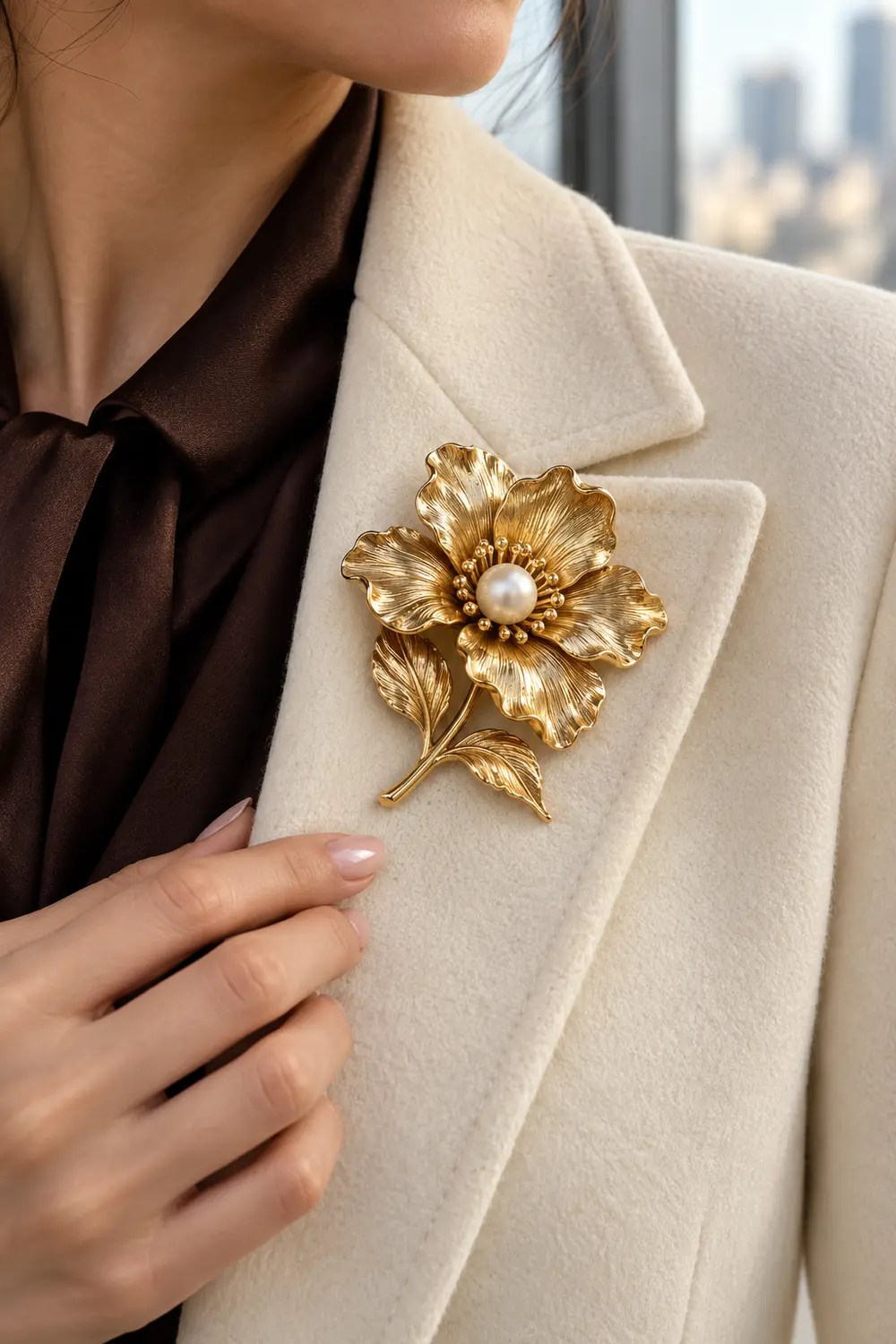
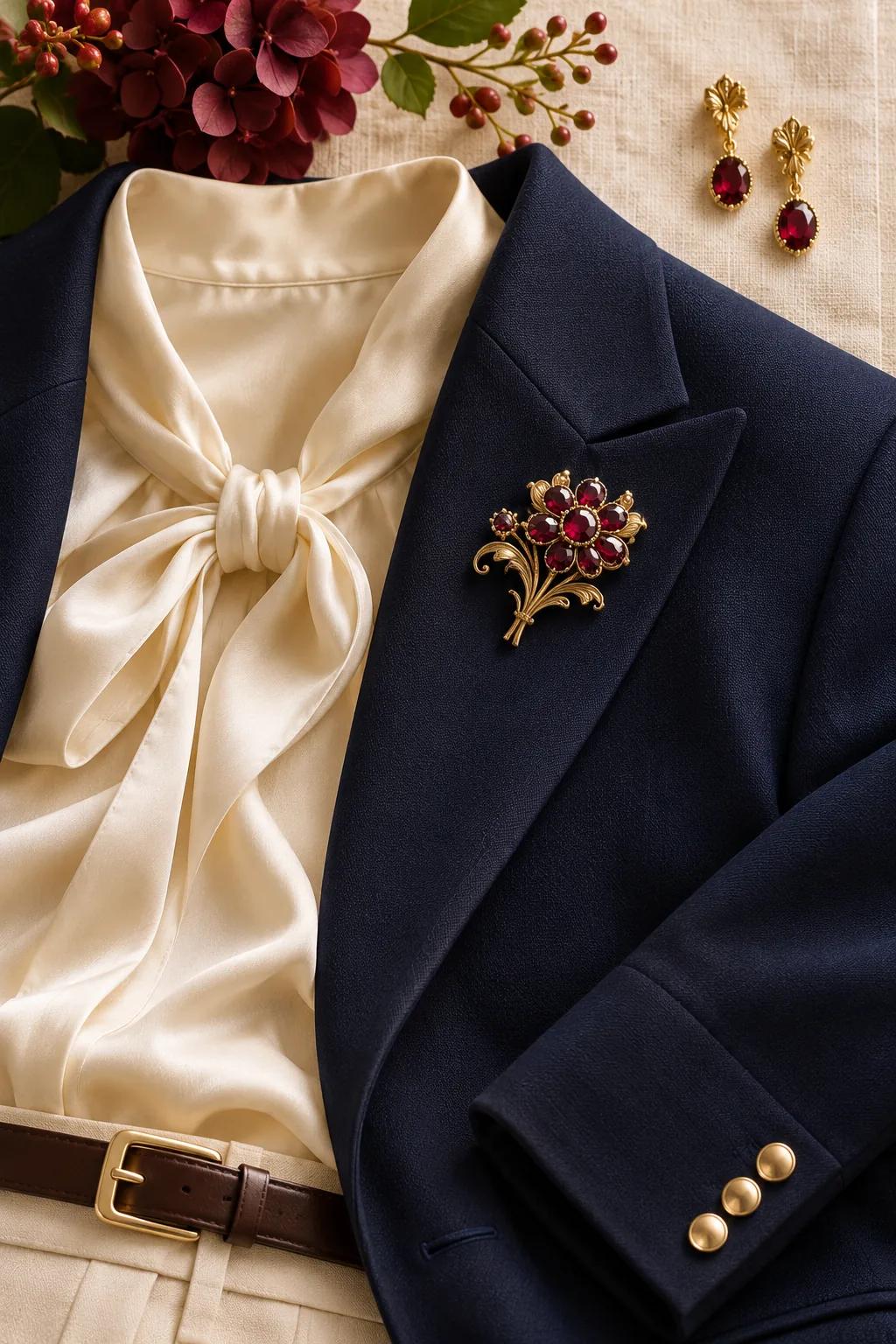
The jacket gives the brooch a clear frame. Pair a navy or charcoal blazer with a soft ivory blouse and tailored trousers, then place a floral pin slightly above the centre of one lapel. Keep the earrings small or choose none. That single asymmetric detail is often all the outfit needs. A bright brooch on an already busy print tends to disappear; on a solid lapel, every curl and stone becomes visible.
Try the jacket on before choosing the exact placement. A thick pin can distort a lightly structured lapel, and a heavy brooch may drag fine fabric. Close and open the pin on a hidden, supported part of the jacket first; if the point is blunt, bent or loose, have the fastening checked before wearing it. Do not force a treasured piece through delicate silk just to complete the look.
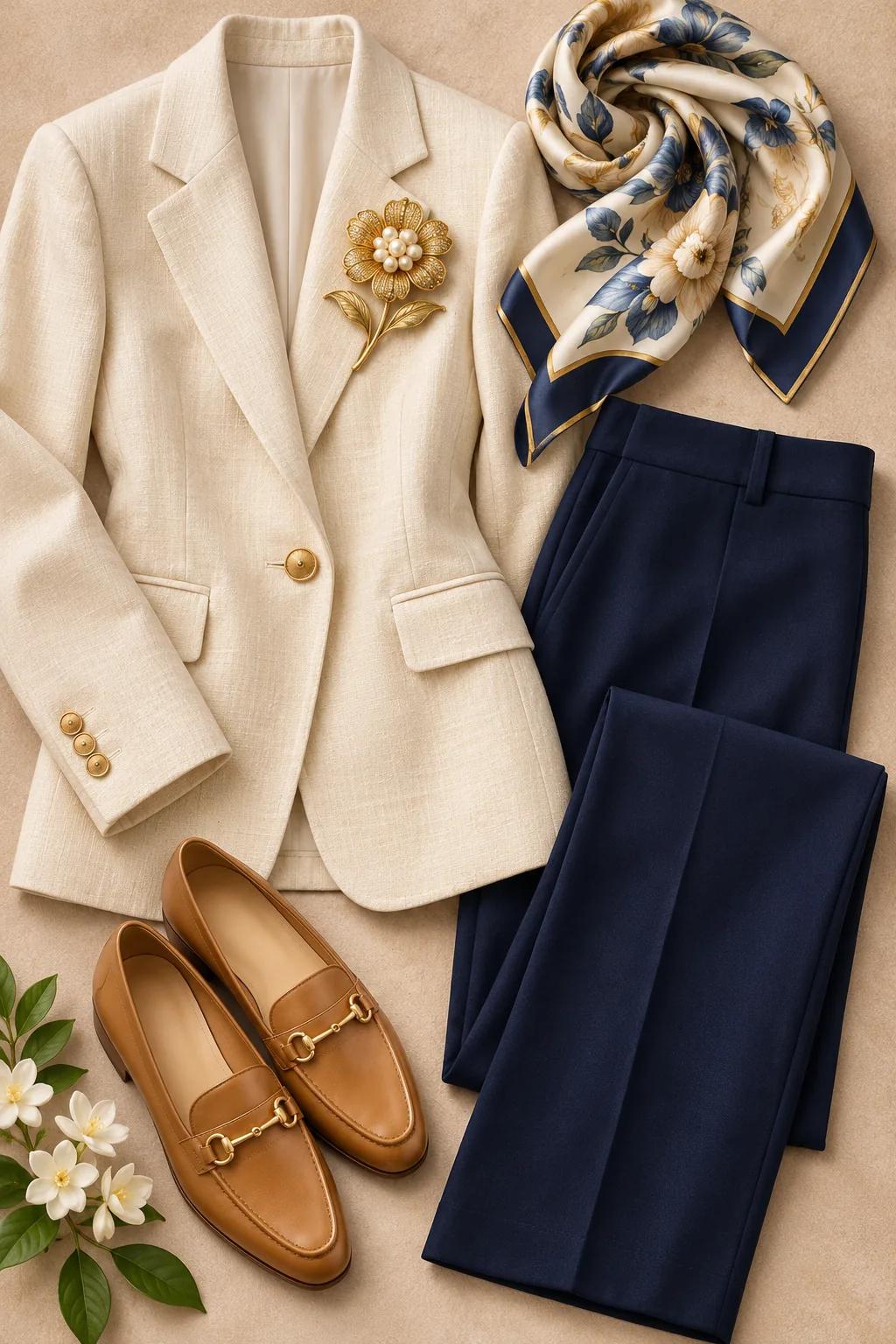
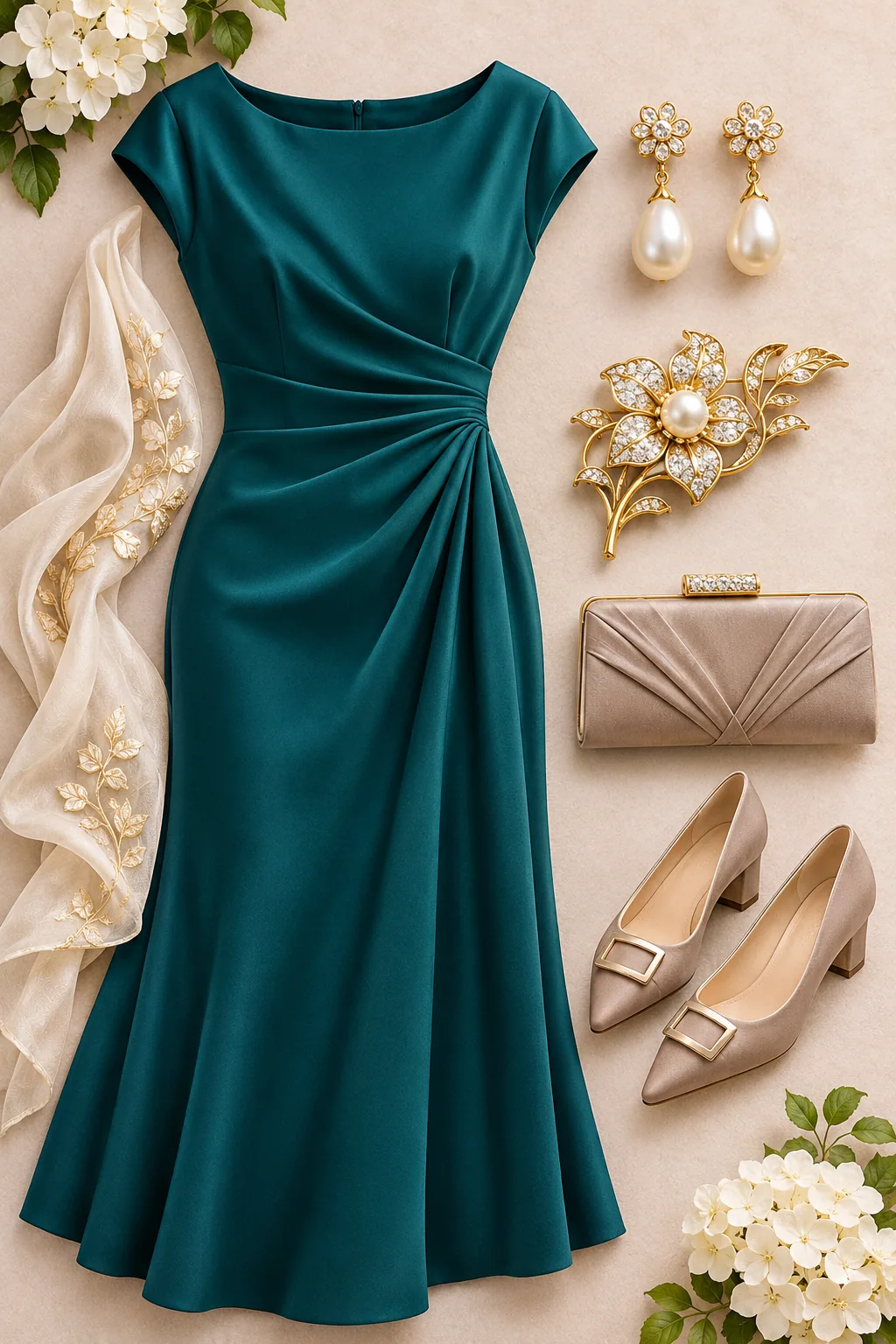
An original classic outfit study. The scarf and brooch are alternatives for emphasis; you do not need both to make the outfit work.
3. Wear a cameo with an ordinary cardigan, not a costume
A cameo can look theatrical when surrounded by ruffles, lace and several other antique-looking pieces. Give it a quieter companion instead: a burgundy fine-gauge knit, a camel cardigan and straight-leg trousers or a simple patterned skirt. The cameo becomes a personal detail rather than the theme of the outfit. Choose a position near the upper edge of the cardigan, where the pin will sit flat and will not be repeatedly pulled by a bag strap.
Do not assume a cameo is old because it depicts a classical face. Modern reproductions are common, and photographs alone cannot establish material or provenance. If the piece is sentimental, its family connection may matter more than market value. Style it confidently without inventing a maker or date.
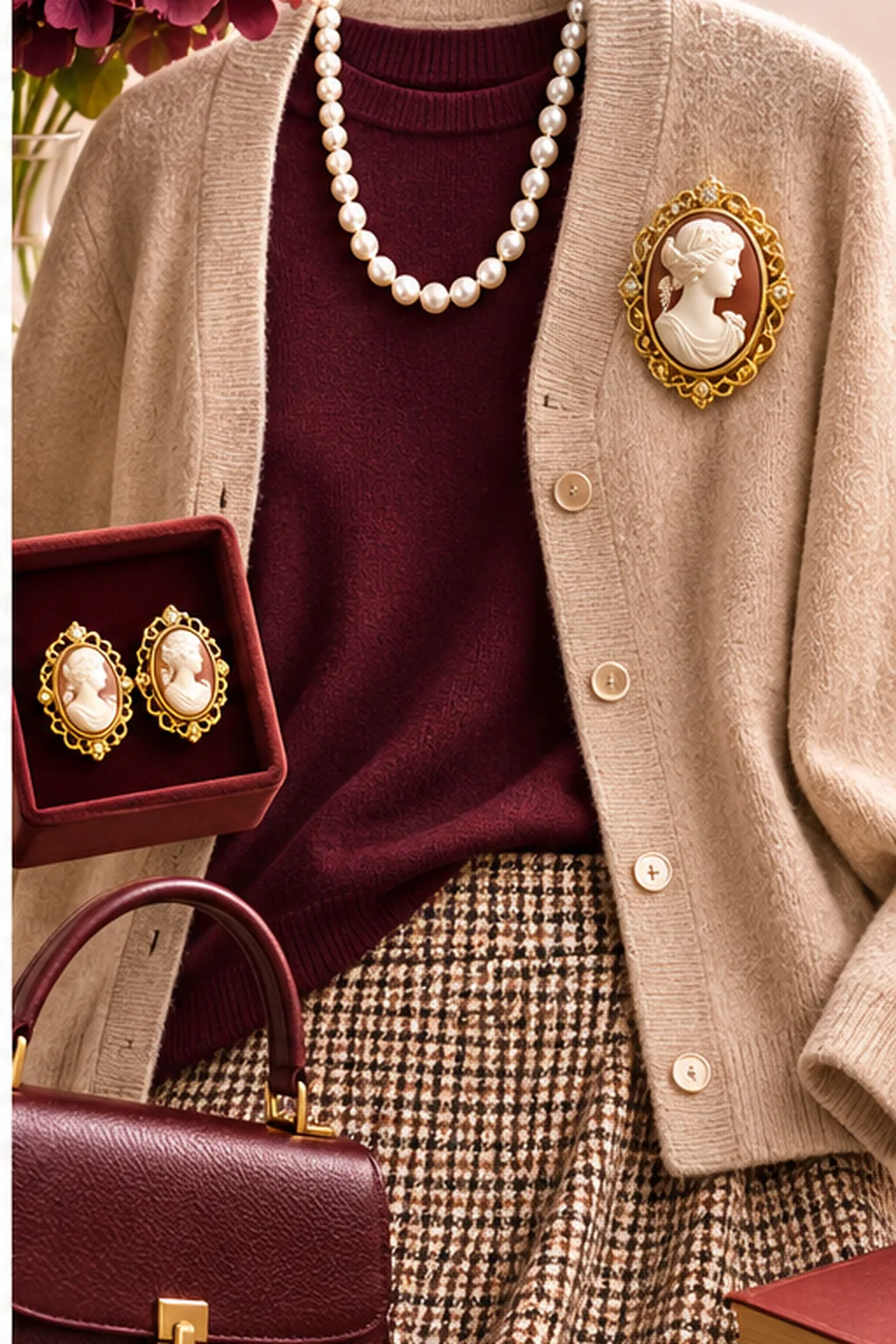
A new editorial still life illustrating a cameo in an everyday outfit; the cameo is illustrative, not authenticated period jewellery.
4. Pearls can be casual without trying to look younger
A short pearl strand with a crisp shirt or fine knit is a classic combination because the clothes are simple and the pearls add light. Leave the other jewellery restrained: a watch, perhaps a plain ring, and no competing necklace. For a longer strand, experiment with wearing it over a smooth knit or under an open jacket rather than layering several necklaces simply because they are available.
Look at the finish rather than the age of the wearer. Cream pearls beside an ivory blouse are subtle; the same strand against navy, forest green or burgundy has much more contrast. A slightly irregular strand can be especially attractive with a relaxed collar or linen jacket. If the pearls are old, check the thread and clasp and consider professional restringing when needed.
5. Let metals relate to the outfit; they do not have to match everything
Gold set against warm camel, cream and burgundy can look coherent, while silver-toned jewellery often gives navy, charcoal and pale blue a crisp finish. These are starting combinations, not restrictions. The handbag buckle does not need to be the same shade as the brooch, and a wedding ring does not oblige you to make every other accessory the same metal.
If a vintage piece has several colours—enamel, coloured stones or pearls—pick up one shade in the clothing rather than all of them. A garnet-coloured brooch against navy with a burgundy bag feels deliberate. Add burgundy shoes, belt, scarf and lipstick as well, and the outfit can quickly become more coordinated than you intended.
6. Protect the jewellery and the fabric at the same time
Older settings and fastenings are not automatically weak, but they deserve attention. Look for loose stones, sharp prongs and unstable pin catches. Test whether a heavy pendant pulls at a worn chain or whether a bracelet clasp opens too easily. A professional jeweller can evaluate repairs without requiring you to polish away patina or experiment at home.
The Gemological Institute of America advises keeping jewellery—especially pearls and porous materials—away from perfumes, hairspray and harsh cleaners. Put these products on first and allow them to dry. Store pieces separately so metal edges and harder stones do not scratch softer ones. For a treasured brooch, also think about the fabric: fragile silk and loose knits are poor places for a heavy pin.
7. Three outfits worth trying before buying anything
First: navy blazer, ivory blouse, straight-leg trousers, gold floral brooch and one restrained pair of earrings. Second: camel cardigan, burgundy knit, neat trousers or a small check skirt, and a single cameo. Third: solid-colour midi dress, comfortable shoes and the pearl strand you already own. None of these depends on a particular body shape or on replacing an entire wardrobe.
Lay each combination out and remove one item if the jewellery is fighting for attention. Photograph the result if that helps you remember what worked. The best vintage piece is not the one that looks most expensive in its box; it is the one that becomes part of your own ordinary, well-used clothes.