A boat-neck dress gives you less empty space around the collarbone than a V-neck or scoop neck. That is part of its appeal: the wide, high line looks finished before you add anything. It also explains why a favourite short necklace can feel unexpectedly crowded. Instead of starting with a necklace, choose which part of the outfit needs attention—the ears, the wrist, a jacket or the waist—and build from there. For a wedding guest, a dinner or a dressier lunch, the principle is the same.
1. Work with the neckline rather than filling it
The boat neck—sometimes called a bateau neckline—runs almost horizontally across the upper chest, often close to the collarbones. It visually frames the shoulders and leaves little space for a short necklace to hang cleanly. A necklace that falls exactly on that seam may twist, catch or interrupt the dress line. That does not make necklaces forbidden; it means they need more thought than usual.
Try the dress on with no jewellery first. Stand naturally and check where the neckline finishes. Add earrings next. If you still want a necklace, place the chain over the dress and check the actual length in a mirror. The right one should look intentional at rest and while you turn, not as though it has slipped onto the neckline by accident.
2. Outfit one: teal dress, pearl drops and a quiet wrist
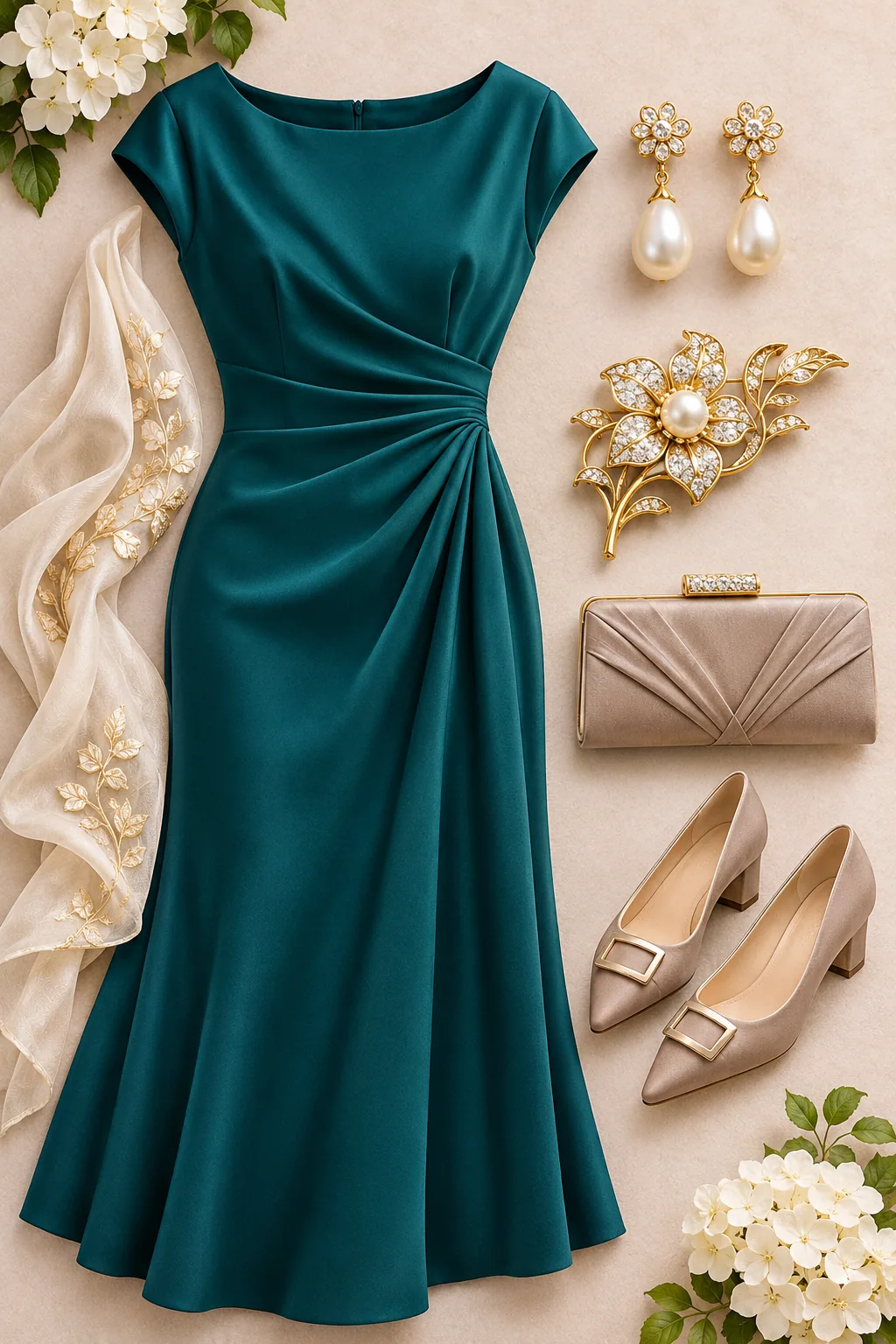
A deep teal midi dress with a plain boat neck needs very little help. Try small-to-medium pearl drops, a slim bracelet and a champagne or taupe clutch. Gold-toned shoes or low neutral heels can finish the look without repeating the pearls everywhere. Choose earrings with enough presence to frame the top of the dress, but not so much movement that they catch on a shawl or collar.
This is the useful combination when your dress already has gathers, a draped waist or a textured fabric. Let the construction of the clothing provide the interest. If the earrings are bold, leave the neck bare. For a less formal afternoon event, swap the embellished clutch for a plain leather bag and the pearl drops for small studs.
3. A brooch can work—but placement matters more than sparkle
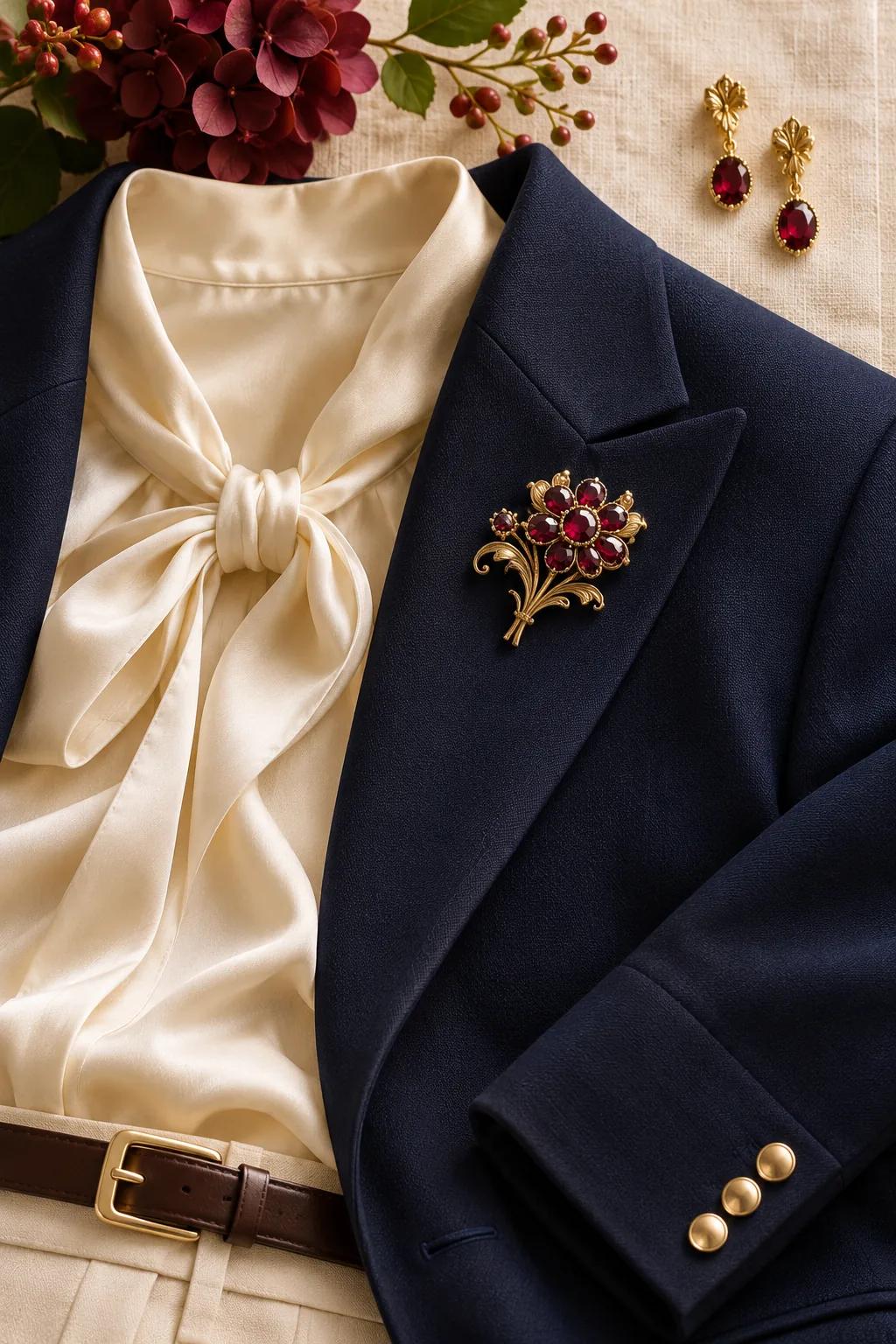
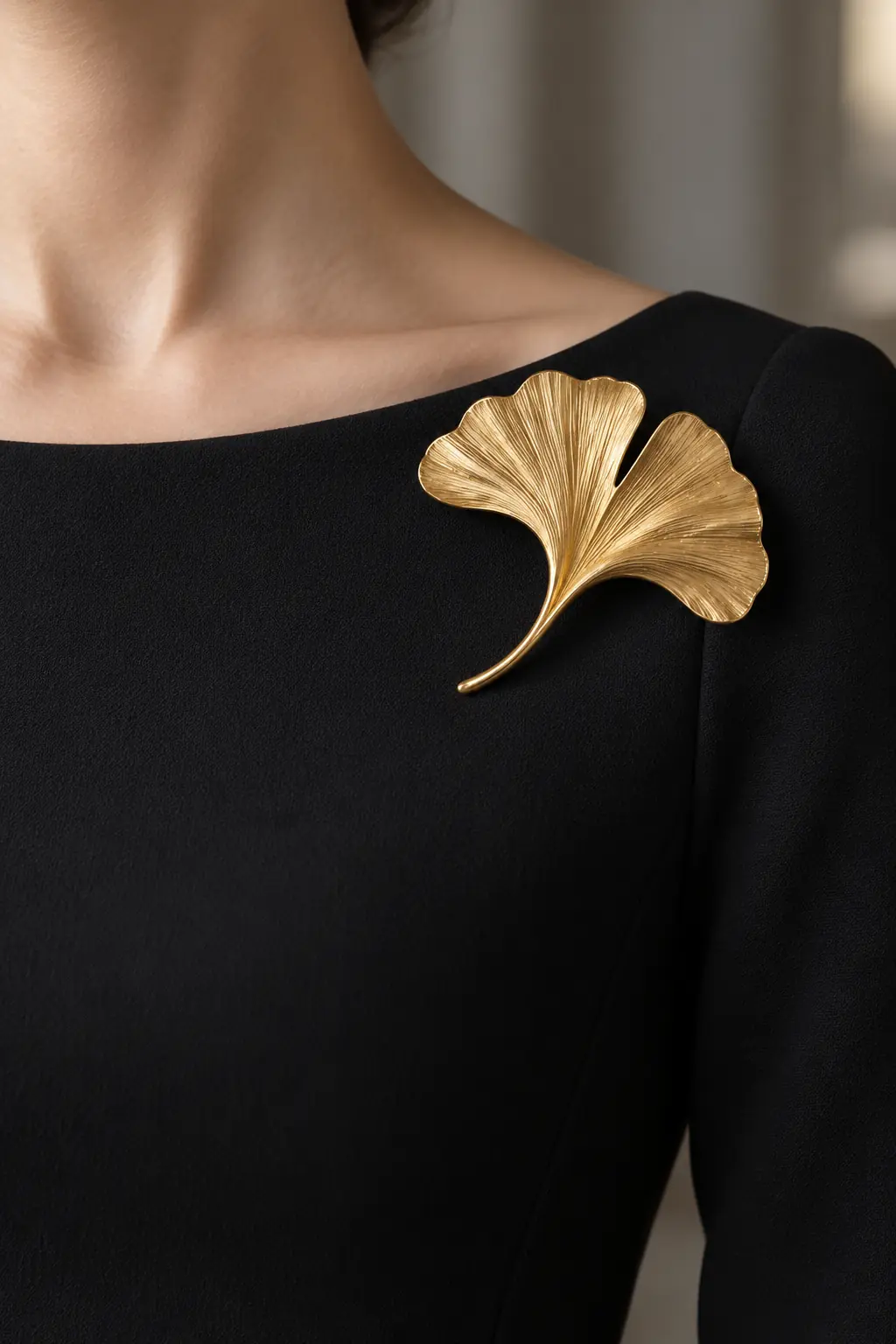
A brooch near the shoulder can bring individuality to an otherwise plain dress, though the pin should sit on a stable, supported section of fabric. A heavily gathered waist, thin satin or loosely woven material may not tolerate the weight. The easiest alternative is often to pin the piece to a structured jacket or wrap rather than the dress itself.
A floral brooch and pearl earrings can look balanced if one is the clear feature. If the brooch is oversized, reduce the earrings to simple studs. If you prefer statement drop earrings, choose a small brooch or omit it altogether. Before leaving, sit down and move your arms in the outfit; a placement that looks elegant in a flat lay may catch on a seat belt or bag strap in real life.
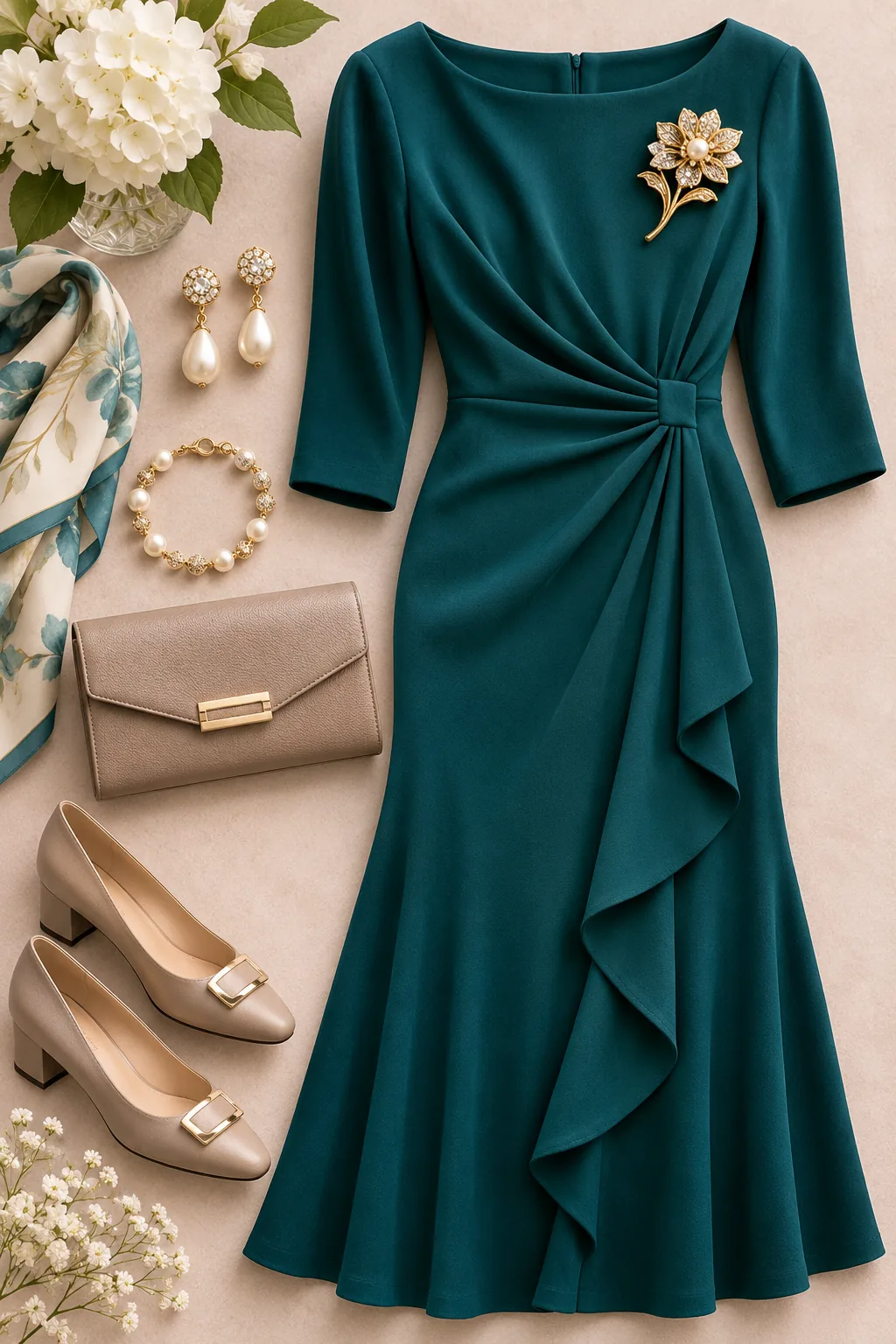
A second, newly made outfit illustration: the gold brooch is a focal point; in real wear, check the weight against the garment before pinning.
4. Outfit two: an understated wedding guest look
For a ceremony or daytime reception, try a plain boat-neck midi dress, pearl drops, a slim bracelet, a low block heel and a compact bag. This is especially useful when you want to be comfortable across a long day without changing clothes. An ivory or taupe jacket can give you coverage at the ceremony and look tidy in photographs without competing with the dress.
The outfit should not be judged only from the waist up. Check the hem with the actual shoes, make sure the bag works with the length of the dress, and see how the shawl falls when carried. A too-large tote or a very heavy necklace can change the proportions more than the difference between two pairs of earrings.
5. Outfit three: burgundy dress with a single bright accent
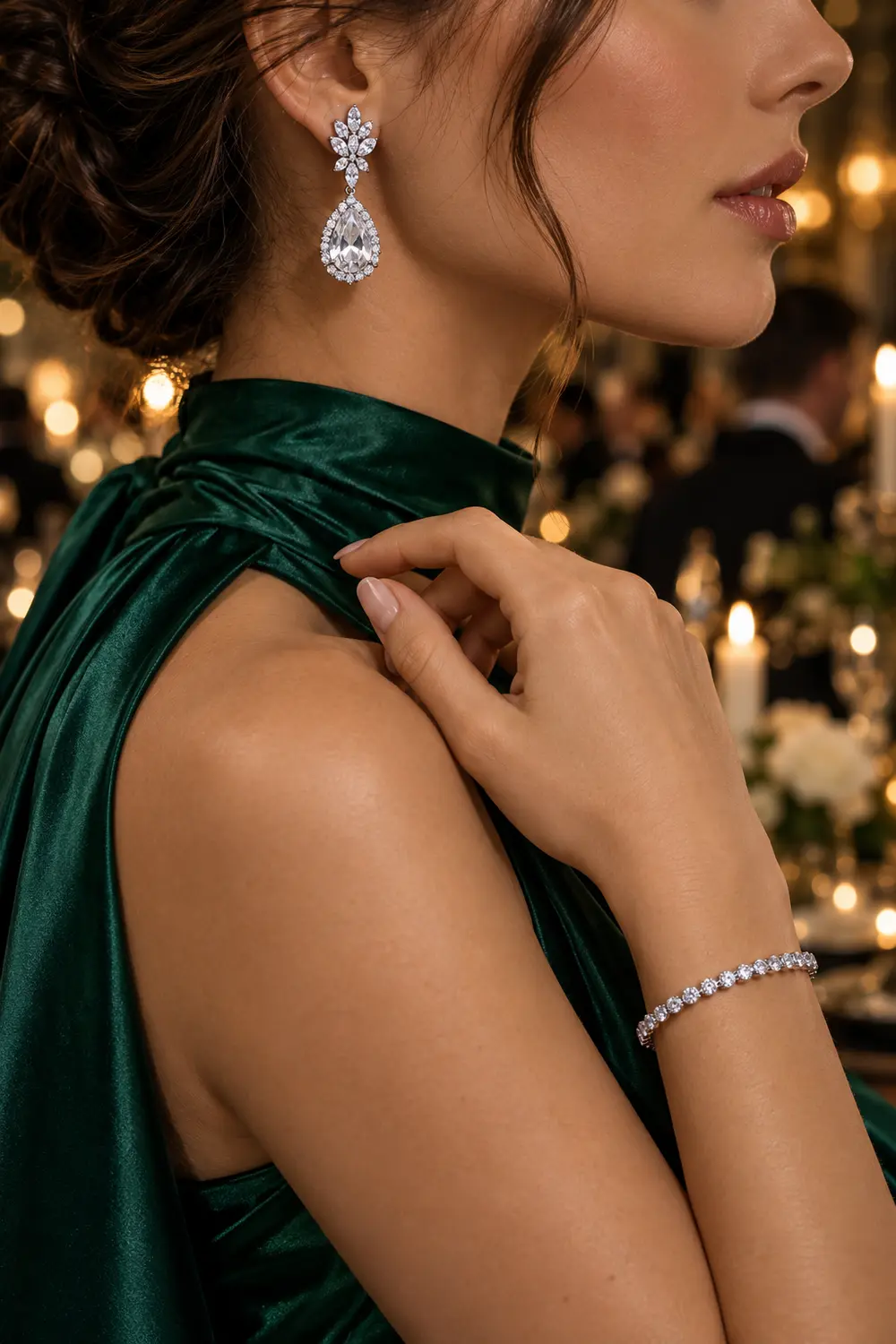
Burgundy is a good partner for clear stones, warm gold, champagne accessories and small pearls. If the dress is unembellished, choose delicate crystal drops and one decorative pin on a coat or jacket. A textured neutral wrap makes the outfit feel softer, while a compact gold or champagne clutch keeps the colour story simple.
Avoid matching burgundy accessories from head to toe. The eye already sees a strong field of colour in the dress. One brighter element—earrings, brooch or bag—is enough. If the dress has lace or elaborate draping, reduce the jewellery again so the texture remains visible.
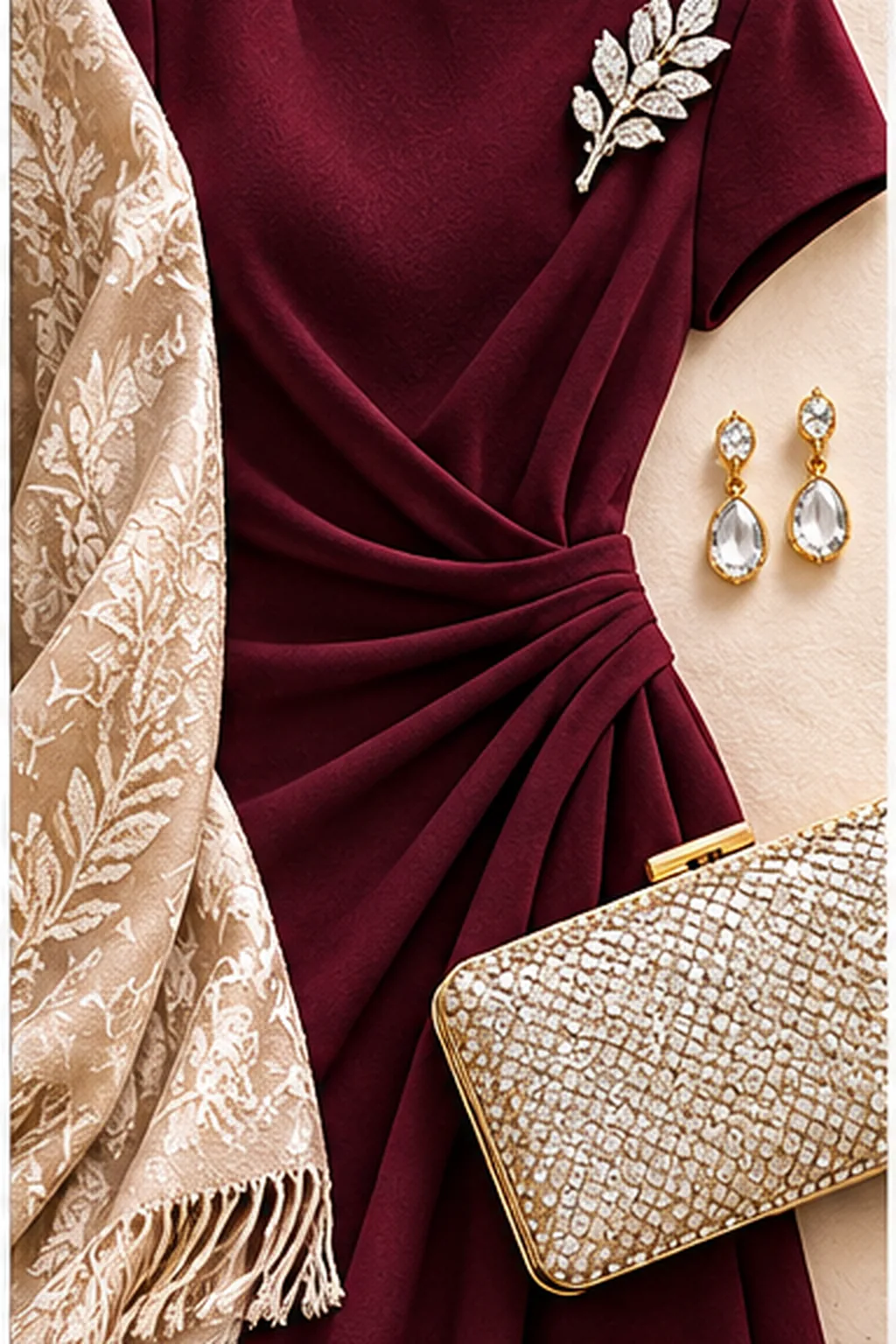
Original ShiningBeads burgundy outfit study; the jewellery shown is illustrative rather than a named retail product.
6. When a longer necklace is better than no necklace
Some boat-neck dresses have plain fabric all the way down the front and can carry a long, thin pendant well. Choose a length that stays comfortably beneath the neckline and does not land awkwardly on a seam, belt or gathered waist. An elegant long chain can add a vertical line to a very simple dress. This works less well with embroidery, a bold waist knot or a printed bodice.
Do not buy a necklace based only on the length printed in a catalogue. Wear the dress and measure where you want the pendant to sit. A chain length can fall differently according to the wearer, the pendant weight and the fabric. If the pendant competes with the neckline when you move, earrings are the simpler answer.
7. The small checks that make the outfit wearable
Before an event, fasten the earrings and practise wearing the shawl, jacket and bag together. Does the shoulder strap rub against a brooch? Will the earrings snag on a scarf? Can you sit comfortably in the shoes? A combination that passes these tests tends to photograph well too, because nothing needs constant adjusting.
For old pearls or inherited pieces, remember that perfume, hairspray and harsh cleaners can damage delicate materials. GIA recommends treating jewellery and its settings with care and storing pieces safely. Put on perfume before jewellery, check older clasps and pins, and avoid forcing a brooch through a fragile dress simply for the sake of an outfit picture. The best finishing touch is one you can wear all day.