Millimetres are not very helpful when you are looking at a product photo on a white background. Six millimetres sounds close to eight, but on a wrist the difference is obvious. The larger bead is heavier, needs fewer pieces and makes a much bolder bracelet.
Start with the look, not the number
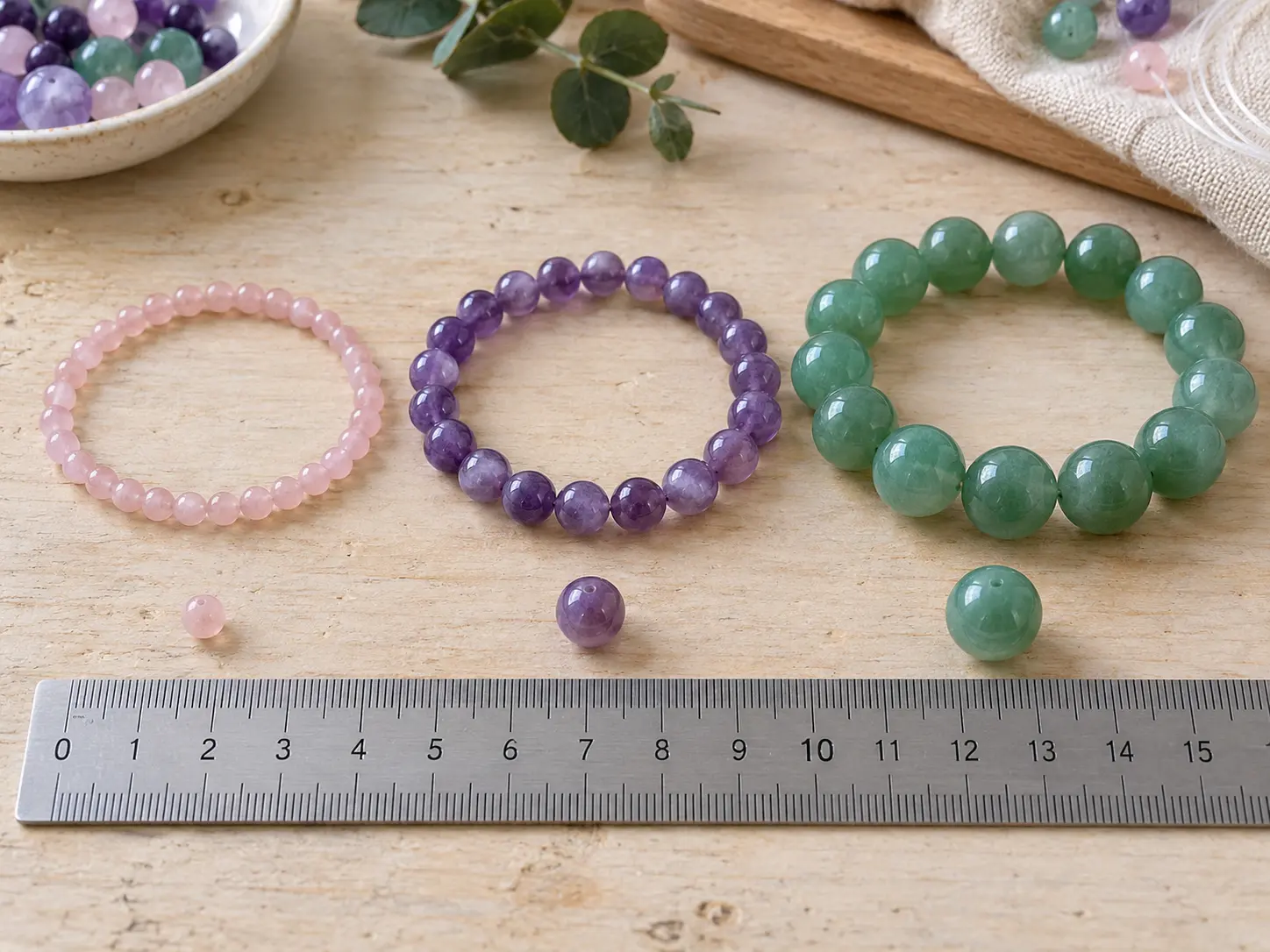
Four-millimetre beads make a fine line around the wrist. They are useful for delicate stacks, but a single strand can disappear beside a watch or wide cuff. Six millimetres has more presence without becoming heavy, which is why it is an easy starting point for an everyday bracelet.
Eight-millimetre rounds give you the classic gemstone strand most people picture. At ten or twelve millimetres, each bead becomes part of the silhouette of the bracelet. That can look wonderful, but the fit needs more attention because large beads take up space on the inside of the circle.
- 4 mm: delicate stacks and small wrists
- 6 mm: easy everyday bracelets
- 8 mm: classic gemstone strands
- 10–12 mm: bold focal bracelets
How many beads make a bracelet?
For an average bracelet around 17.5 cm long, buy roughly 47 beads in 4 mm, 32 in 6 mm, 25 in 8 mm or 20–21 in 10 mm. These are starting quantities, not promises. Knots, spacers, irregular stones and the depth of the beads all change the final count.
Buy a few extras from the same batch. Natural stone and handmade glass can vary, and one chipped hole should not force you to shorten the whole bracelet.
Large beads change the inside fit
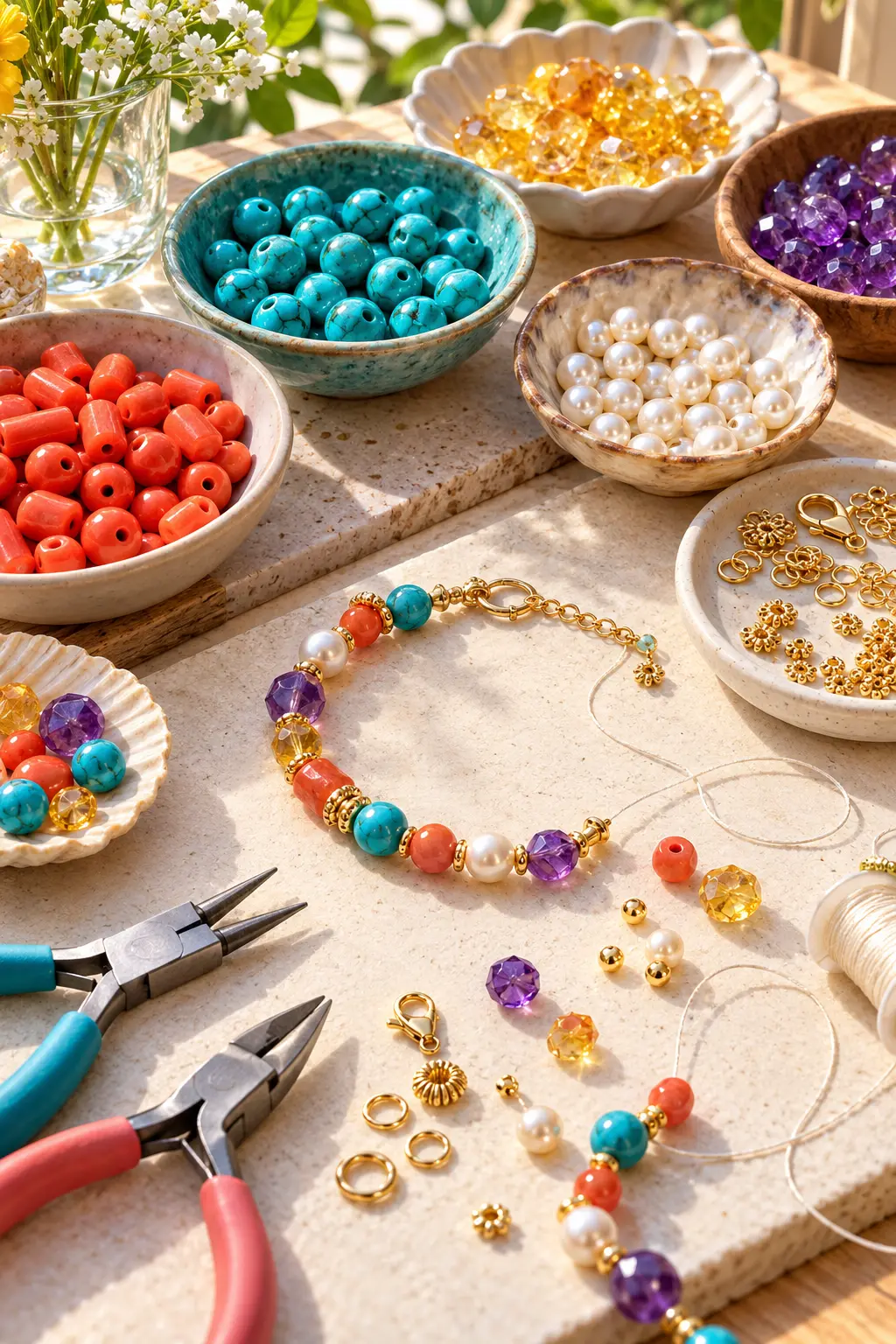
Two bracelets can measure the same around the outside and feel completely different on the wrist. A strand of 10 mm beads has a smaller usable opening than a strand of 4 mm beads because more material sits toward the inside.
When you move up to 10 or 12 mm, test the unfinished strand around the wrist before tying it. Add a bead if the bracelet sits rigidly or leaves deep marks; remove one if it slides over the hand too easily.
Check the hole before choosing the cord
The outside diameter tells you how the bracelet will look. The hole tells you what you can build. Pearls may have much finer holes than glass rounds of the same size, while lampwork and metal beads may have generous openings.
Do not buy thick elastic first and assume every bead will take it. Test the smallest-holed bead in the design, including spacers and the bead intended to hide the knot.
Weight matters as much as diameter
A 10 mm wooden bead and a 10 mm dense stone bead occupy the same visual space but feel nothing alike. Heavy beads pull harder on elastic and swing more when the bracelet is loose. If you want a large look without much weight, mix a few stone focal beads with lighter glass, wood or hollow metal elements.
Very small metal spacers can also add up. Lay the complete design in your palm before stringing; if it already feels heavier than jewellery you normally wear, it will not become more comfortable once finished.
Measure the beads you actually received
Natural stone, pearls and handmade glass are rarely identical. Line up ten beads with their holes facing the same direction and measure the row. Dividing that measurement by ten gives you a more useful working average than judging one bead.
This also reveals whether a strand contains noticeably smaller end beads. Put those aside for earrings or another project instead of scattering them through a bracelet that is meant to look even.